


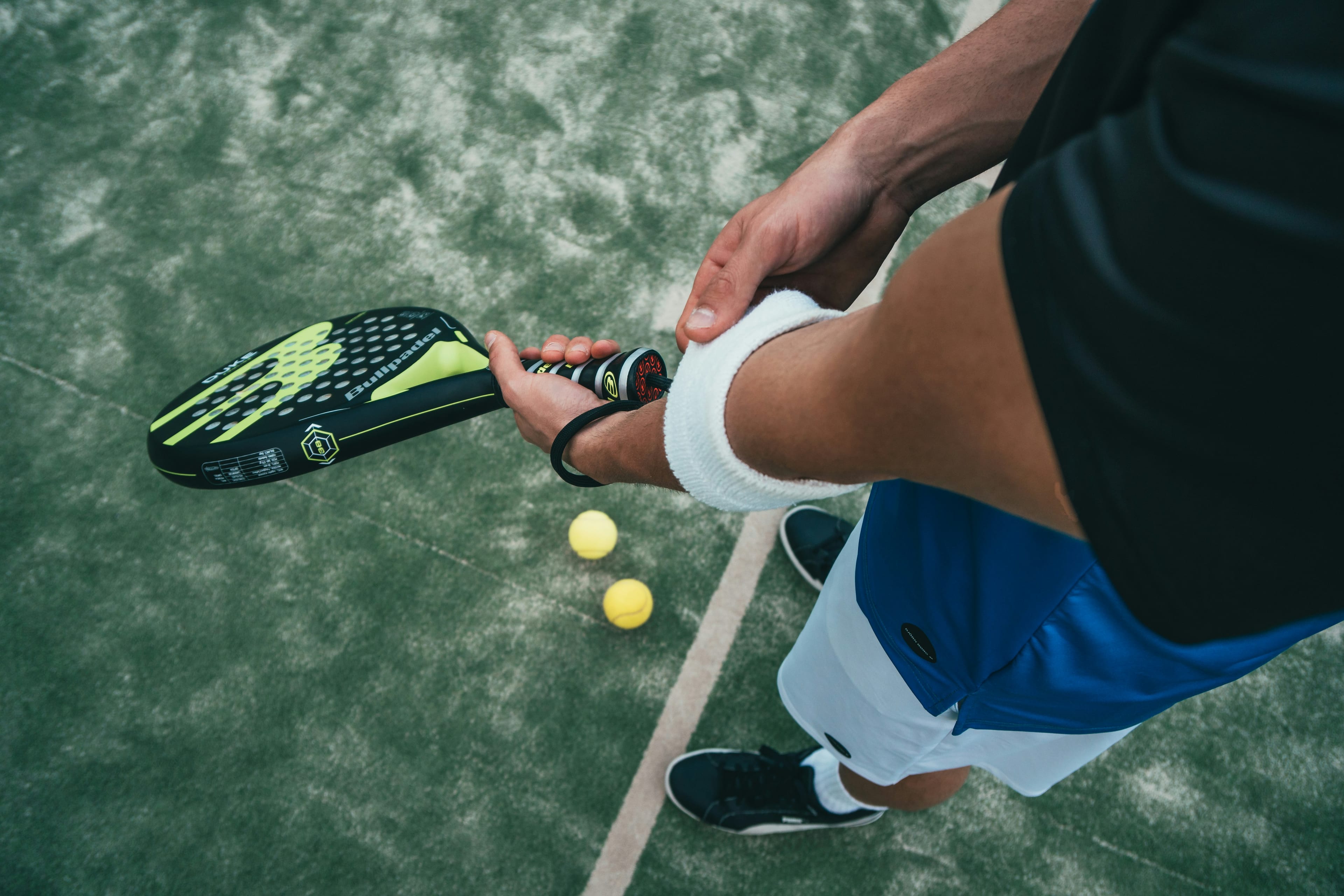
Padel Racket Warranty in the US: What's Actually Covered

Padel Racket Warranty in the US: What's Actually Covered
What the four US stores and the brands themselves actually publish about cracked frames
You are holding a frame that cost three hundred dollars and now has a crack in it. You search "padel racket warranty", and every result is a European retailer's policy page written under Dutch or Spanish law. None of them answers your question, because your question is a US question.
So we read the actual documents in October 2026: the published terms of the four US stores selling padel gear, and the brands' own warranty pages. Everything below is quoted from those pages. The short version — a warranty covers a factory mistake, your claim runs through the shop rather than the brand, and your window is thirty days.
Manufacturing defect vs impact damage
Every policy in this sport covers one and excludes the other. A manufacturing defect means the racket was built wrong. Impact damage means the racket was hit. Your claim comes down to which bucket an inspector puts your crack in.
The crack pattern that usually gets approved
A single clean break, in a part of the frame with no dents, no scuffs and no paint loss, on a racket only a few months old.
Babolat's US warranty spells out the losing case precisely enough that you can read the winning one out of it. Claims fail where a racquet has "multiple breaks, show[s] signs of impact on the frame, signs of visible wear, impact on butt cap, bumper or grommet, or visible frame fibers". Invert that list and you have the profile that survives inspection.
The crack pattern that almost never does
PadelShop, the Dutch retailer whose warranty page dominates every English search on this topic, is blunt: "Damage caused by impact is almost never a manufacturing defect." Its published list of what gets treated as impact or usage damage instead:
- "Cracks that start on the outside of the frame, or clear impact marks such as dents and scratches on the frame"
- "Contact with glass, fencing, net posts, or the floor and ground"
- "Damage caused by heat or sun exposure (for example left in a car), improper storage, or misuse"
- "Normal wear and tear or signs of use (paint, protector strip, grip, and similar)"
Read that second line again. Padel's rules send the ball off the glass, and the walls sit within swinging distance of every defensive shot. The thing that breaks most rackets is the thing every warranty criterion in the sport classifies as your fault.
Why brands look at fracture direction and impact marks
PadelShop says it assesses claims "using detailed inspection protocols supplied by the manufacturers", and that brands "study fracture patterns, impact marks, and material behaviour to distinguish a genuine manufacturing defect from impact or usage damage."
That is a real distinction, not a brush-off. A failure starting inside the carbon layup or at the bond between face and core propagates differently from one starting where a ball or wall struck the outside. An inspector reads origin and direction — which is why your photographs decide the claim, not your account of what happened.
Stop playing with it
If you take one sentence from this article, take PadelShop's: "If you suspect a defect, stop using the product. Continued use can worsen the damage and can make it difficult, or impossible, to determine the original cause. Damage that is shown to have worsened through continued use may be partly or fully excluded from warranty handling."
A hairline crack you play through for three more weeks becomes an un-assessable mess — you lose the claim not to a punitive rule but because nobody can tell where the failure started any more. Nor should you box it up yet. Padel USA puts that in writing: "Please do not send an item back without submitting a return request first. Returns sent without approval may be refused or delayed."
Who you actually claim from
The retailer is usually your counterparty, not the brand
Babolat USA states it about as plainly as a brand can: "All warrantied racquets must be returned to the authorized dealer with proof of purchase. Babolat will not accept any returns directly from consumers except for Babolat.us online purchases." StarVie says the same from Spain — take the racket to "the shop where you bought the product with the original purchase receipt", and that shop contacts StarVie's warranty department for you. PadelShop is explicit about where responsibility sits: "As the seller, PadelShop is responsible for handling your claim and for your statutory warranty rights."
So the terms governing your broken racket are the shop's. Here is what the four US stores publish.
Racket Central gives you thirty days: "If you discover a defect in the paddle within 30 days of purchase, we will promptly send you a replacement paddle along with a prepaid return label for the defective item." It is also the only US store that tells you where you stand afterwards — "If your concern falls outside this timeframe, we recommend contacting the manufacturer directly for assistance with warranty-related issues."
Padel USA runs a thirty-day window through a portal that asks for photos. For a damaged or defective item it lists the outcomes as "a replacement, exchange, refund, store credit, repair/warranty direction, or another resolution". Note that third-from-last option: being pointed at the manufacturer is itself a published result.
padelpadel.us also works to thirty days, requires a receipt, puts return shipping on you, and scales a restocking fee by condition — full refund if never opened, 25% if opened but never used, 50% if "opened and used". It publishes no warranty terms beyond that.
Tennis Express is the only US store with a dedicated racquet warranty process, and it is a genuine one: "A new racquet purchase includes a one-year manufacturer's warranty, with replacements granted at the manufacturer's discretion." You email photos and an order number, ship the frame to its Houston warranty department, and "racquets must be sent to the manufacturer for evaluation before any replacement or credit can be issued". If no replacement exists, you get credit "for the original purchase price of the frame only". One claim per purchase; replacements carry no new warranty.
One catch deserves naming: that process was written for tennis. It requires frames "sent back strung" and warns that "the strings on the racquet must remain intact... a claim may be denied if the racquet is returned unstrung". A padel racket has no strings — the closest thing the US has to a published racket warranty workflow hasn't been rewritten for this sport yet. Ask before you ship.
What a US buyer does when the brand has no US entity
HEAD, Wilson and Babolat run real US operations, and it shows. Babolat publishes a US warranty claim form. Wilson publishes a term: "Most Wilson products carry a one-year limited warranty from the date of purchase by the original purchaser from Wilson.com or an authorized dealer", settled with a voucher usable only on "the same product or a comparable product".
The padel-native brands are another picture. Bullpadel's own store sells under Spanish law, names Spanish courts as the jurisdiction, and offers the EU's fourteen-day withdrawal right — nothing aimed at a US buyer. Nox publishes exactly one warranty instruction, and it is a useful one: "By registering your racket you are activating the warranty." Do that the day the racket arrives, not the day it breaks.
StarVie publishes the most thorough terms of any padel brand — a three-year warranty, with any defect in the first two years "presumed to have originated from the factory, unless proven otherwise". But read the citation underneath: it rests on Spanish consumer law, Royal Legislative Decree 1/2007. That statute protects a consumer in Spain. It is not a promise to a buyer in Dallas.
Elsewhere the trail stops. We found no published US racquet warranty term on head.com. Adidas padel has no working brand site, so that route runs through whoever sold you the racket. Black Crown's warranty page is password-protected, and Osaka offers free US returns within thirty days but publishes no warranty terms at all. For brands with no US foothold, see padel gear you cannot buy in the US.
What's never covered
Grips, overgrips and protectors as consumables
Nobody warranties them. PadelShop files "paint, protector strip, grip, and similar" under normal wear and tear, and Padel USA requires accessories, grips and overgrips back "unused, unopened where applicable" even for an ordinary return — so there is no route once you have played with them. Treat them as running costs; our guide to how long a padel racket lasts covers replacement intervals.
Scraped frames, wall contact and lead tape
Modifications are the quiet claim-killer, and the brands are specific. StarVie excludes "aesthetic or structural damage resulting from the improper installation or removal of accessories, such as protectors, which may compromise the paint or frame", and voids coverage for "any intervention not carried out by STARVIE's official technical service". Babolat excludes anything "caused by negligence, abuse, faulty stringing, maintenance, handling, or normal wear and tear".
The practical reading: a racket protector is the cheapest insurance in padel, but tearing one off cold can take the paint and the top layer with it. StarVie's own advice is to "carefully remove the protector by applying heat". Lead tape, custom weighting and home repairs sit on the wrong side of the same line.
Used frames carry nothing. Babolat's warranty is "only valid for purchases made directly from Babolat or authorized Babolat dealers", and its pickleball terms add that it "is not transferrable". If you are buying a used padel racket, price it as a frame with no recourse — because that is what it is.
How to file a claim that gets approved
Photograph it before you ship it
PadelShop's required photo set is the best checklist published anywhere in the sport, and it will serve a claim at any US store:
- The entire racket — front, bottom, top and every side
- Close-ups of the damage from several angles, in good light
- The serial number
- One shot from a distance showing the whole racket in a single frame
Shoot all of it before the racket moves. Once it is in a box, you can no longer prove what it looked like when you stopped playing.
Keep the receipt and the original packaging
Every policy we read requires proof of purchase — StarVie "always with the original purchase receipt", Babolat "with proof of purchase", Tennis Express an "order number or a copy of your original receipt". Packaging counts too: Padel USA can "refuse the return or adjust the refund amount" on anything "missing packaging, missing tags, missing protective plastic".
Then email first and wait for instructions. An unannounced parcel is the easiest thing in the world for a warranty department to refuse.
Realistic expectations
A warranty covers a factory mistake, not a broken racket. Every published criterion in the sport treats contact with glass, fencing and the floor as your damage rather than the maker's. Most cracked frames are not claims, and no amount of correct paperwork changes that.
Your window is thirty days, not a year. All four US padel stores operate on a thirty-day footing for defects. Only Tennis Express publishes a one-year route, and only through a workflow built for strung tennis frames. Everything past day thirty depends on a brand that may have no US presence at all.
Buying from Europe makes a claim harder, not easier. Those longer EU statutory warranties are rights against an EU seller, exercised in the EU. Tennis Warehouse Europe states the consequence outright: replacements ship free inside the European Union, while "international customers will pay for the return shipping and related import costs". With the US de minimis exemption gone, those costs now reach even modest shipments. Buying your gear in the US is the cheaper way to own a claim you can use.
The strategy that works is the boring one: a protector on the frame from day one, a bag that isn't the trunk of your car in August, a registration filed the week you buy, and a receipt you can still find eight months later. For what frames cost to begin with, see our US padel racket price guide; for which makers have a reputation worth leaning on, the 2026 brand guide.
Frequently Asked Questions
Continue Reading
GLDN PNT: Miami's Padel Apparel Brand, Now with Reebok
GLDN PNT: Miami's Padel Apparel Brand, Now with Reebok
Miami-born GLDN PNT is the first American padel apparel brand to land a major sportswear collaboration. What the Reebok x GLDN PNT collaboration includes, what it costs, and why a padel-native label matters for US players.
Padel Shoe Size Conversion: A US Buyer's 2026 Guide
Padel Shoe Size Conversion: A US Buyer's 2026 Guide
A men's “US 10” padel shoe is built for a foot anywhere between 27.3 cm and 28.5 cm, depending on the brand. We pulled the current size charts from Bullpadel, Babolat, Asics, Joma, Wilson and Head and mapped each brand to the US store that will swap the box if it doesn't fit.
Padel Racket Balance Explained: Low, Medium & High
Padel Racket Balance Explained: Low, Medium & High
Balance decides how a padel racket feels more than any other spec, and it is the one brands report least consistently. Here is what the millimetre figure means, why shape does not determine it, and how to measure and shift your own racket's balance.