


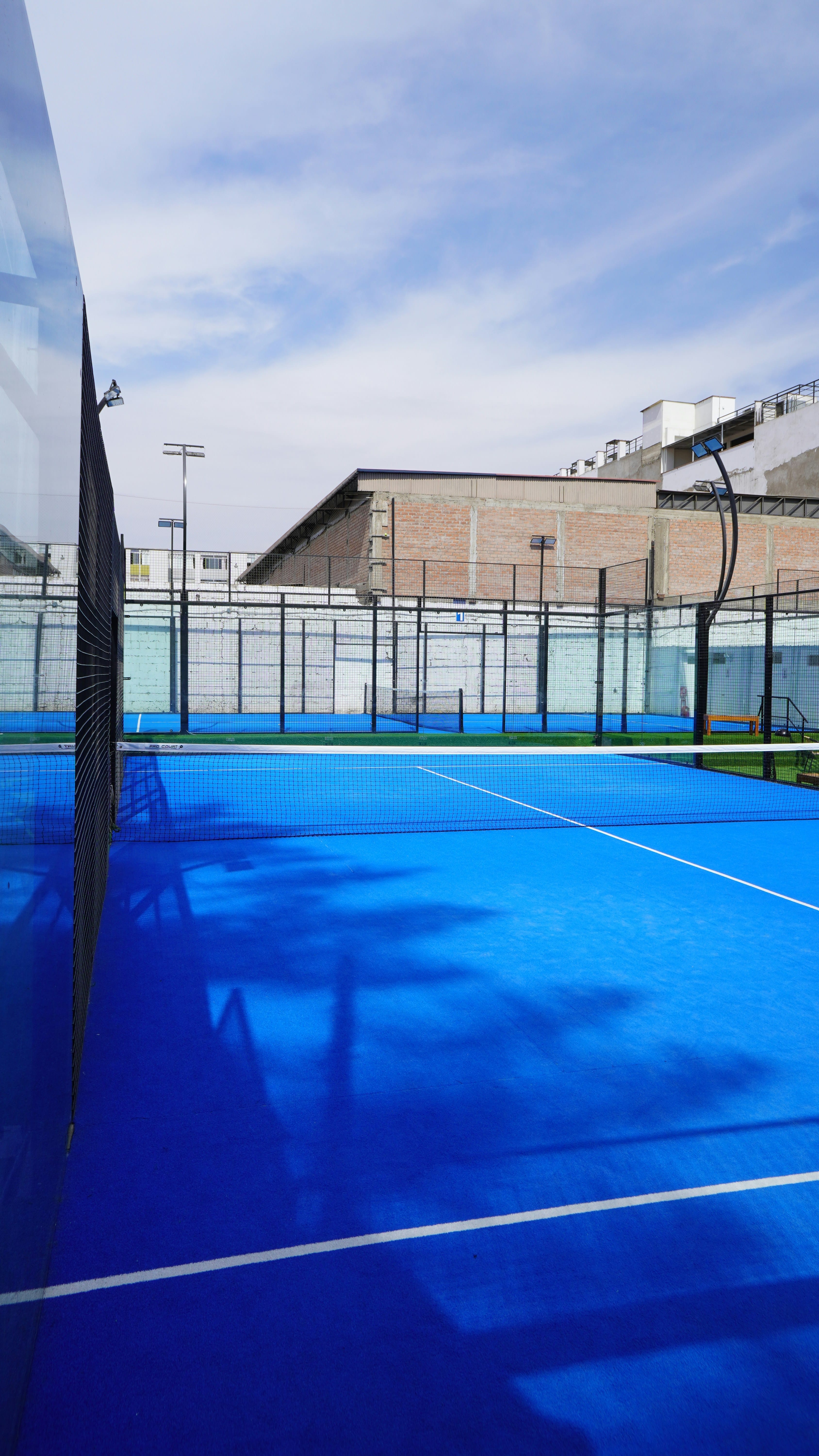
How Long Does a Padel Racket Last? Signs to Replace

How Long Does a Padel Racket Last? Signs to Replace
Wear, care, and the six signs your frame is finished
Padel rackets do not fail the way tennis racquets do. There are no strings to snap, no obvious moment where the thing is clearly finished. A padel racket dies quietly: the foam inside compresses, the ball stops jumping off the face, and you spend three months blaming your timing for something the racket is doing to you.
Here is how long a racket actually lasts, what wears out first, and the six signs yours is done.
The short answer
Most recreational padel rackets last five to fourteen months. The range is wide because lifespan is counted in impacts, not calendar days.
| How often you play | Realistic lifespan |
|---|---|
| 1–2 times per week | 10–14 months |
| 2–3 times per week | 5–12 months |
| 4–5 times per week | 3–5 months |
| Competitive / academy training | Visible wear at 4–8 months |
A useful benchmark: the EVA in a mid-range racket starts breaking down microscopically around 10,000 impacts — roughly 50–70 hours of play. Two 90-minute sessions a week gets you there in about six months.
Pros are a different species: they hit harder, hit more, and their rackets are free, so many rotate through a new frame every few weeks. Ignore that number.
What actually wears out
The core — the failure nobody sees
This is the important one. A padel racket is a foam core between two composite faces, and the core returns energy to the ball. Every impact compresses it slightly. Most of that compression is elastic, but a small fraction is not, and over thousands of hits the cell walls inside the foam collapse permanently.
The result is a racket that looks brand new and plays dead — no cracks, nothing to point at, just a frame that quietly lost its rebound. "My racket looks fine" is not evidence that your racket is fine.
Core material sets the timeline. Dense EVA resists permanent compression far better than soft EVA or the FOAM cores sold to beginners — the tradeoff nobody mentions when selling you a comfortable racket. Our EVA vs FOAM guide covers what that means for feel; the durability half is that soft is comfortable now and tired sooner.
Cracks in the face
Cracks in the hitting surface usually start at the perforations and spread outward. Fiberglass forgives mishits but scuffs and cracks earlier than carbon, and heavier carbon weaves hold up longer under repeated smash contact — part of what you pay for in a 3K, 12K or 18K carbon frame.
Frame cracks and delamination
Frame damage almost always comes from hitting something that is not a ball: glass, fencing, the back wall, your partner's racket. A hairline crack does not stay hairline — it opens under load, and once the face separates from the core, the racket is finished.
Grip and handle
The only genuinely renewable part. Overgrips are consumables and should be swapped long before they go shiny; the base grip underneath lasts longer but eventually flattens, and a flat handle makes you squeeze harder.
Six signs it is time to replace your racket
- Visible cracks through the face, particularly around the perforations.
- Any crack in the frame, however small.
- A compressed core. Press hard on the middle of the face with your thumb. A healthy racket resists and springs back. A dead one gives, then feels like pressing a board.
- A dull, hollow, or muted sound on contact. You know what a live racket sounds like. When that changes, the core has changed.
- New elbow, wrist, or shoulder soreness with no change in how much you play.
- Lost depth on shots you used to hit comfortably. If your lobs suddenly land short and your technique is the same, it is not you.
Signs 3 through 6 are the ones people miss, because none of them are visible. Two at once means the racket is done.
A worn racket is an injury risk, not just a performance one
A padel racket has no strings. There is no string bed doing the shock absorption a tennis racquet gets for free — the frame and core are the entire damping system. When the core stops absorbing impact, the energy from every ball still has to go somewhere, and where it goes is up your forearm into the common extensor tendon at the elbow.
A dead racket also makes you compensate: you swing harder for depth you used to get for free and grip tighter on a flattened handle. More force, worse mechanics, less damping, same number of repetitions — a straightforward recipe for the lateral epicondylitis that is the sport's most common injury.
If you already have arm pain, replacing a worn frame matters more than any brace or exercise — our rackets for tennis elbow guide covers the soft-core, low-vibration options.
What makes one racket last longer than another
Construction. A premium carbon face over a dense EVA core outlasts a fiberglass-and-soft-foam beginner racket by a wide margin. That is the real argument for spending more: the expensive racket still plays like itself on day two hundred.
Play style. Wall players and heavy smashers destroy frames fastest — one meets glass regularly, the other loads the core near its limit every point. Control players who work the middle of the face can get eighteen months out of the same frame. Shape correlates, since diamond frames belong to the people hitting hardest; our racket shapes guide explains why.
Where you play. Outdoor courts are harder on equipment: UV degrades resins and adhesives, abrasive surfaces chew the frame on every low volley, and temperature swings cycle the core. Play outdoors year-round in Florida or Texas and you should expect the short end of every range above.
How to make your racket last longer
Fit a protector on day one. A bumper strip along the top of the frame absorbs the hits from glass, fencing, and the court surface that would otherwise crack it. Racket Central stocks the Osaka padel bumper at $9 and a Gamma bumper guard at $9.99 — nine dollars against a $265 frame is not a close call. Fit it before the first chip, not after.
Never leave it in the car. The biggest avoidable killer, and worse in the US than anywhere the European guides are written for. Research on parked cars found that on a 95°F day, cabin temperatures average 116°F within an hour and dashboards reach 157°F. A Phoenix or Dallas trunk in July sits well past what EVA tolerates, and heat-softened foam does not fully recover. Cold does its own damage: an unheated garage through a Northeast winter makes the core brittle, and brittle cores crack.
Use a thermal bag. Most padel-specific bags include an insulated racket compartment for exactly this reason. At Padel USA, 14 of the 25 bags in stock advertise thermal lining, from $64.95 to $164.95; our padel bags guide covers the options. A gym holdall gives you none.
Rotate two rackets if you play four or more times a week. Almost nobody gives recreational players this advice, and it is the best value on the list. Two alternated rackets do not last twice as long — they last closer to two and a half times as long, because the foam recovers between sessions instead of being loaded on consecutive days. You are also never stranded mid-league when a frame cracks. Keep last season's racket as the spare rather than trading it in.
Replace overgrips before they slide. An overgrip costs $8–$11 and lasts a few weeks; a slick grip makes you squeeze harder, which is an elbow problem waiting to happen. Wipe the face down after outdoor sessions so grit does not sit in the perforations. Our overgrips guide has the picks.
Repair or replace?
Cosmetic damage is repairable. Structural damage is not.
Worth fixing: scuffs and paint chips, a worn overgrip, a flattened base grip, a frayed wrist strap, a shredded bumper — all cheap consumables. A replacement grip runs about $18 and a wrist strap about $13 at Racket Central.
Not worth fixing: any crack in the frame or face, delamination, or a compressed core. Epoxy repair kits hold cosmetically but restore neither stiffness nor core rebound, and a repaired frame usually fails again in the same place within weeks.
What replacement costs in the US right now: Racket Central lists 165 padel rackets in stock from $79.95 to $850, median $265, with 28 under $150. Padel USA has 113 in stock from $99 to $600, median $296.80. There is a real racket at every level — you do not need to spend $400 to replace a dead $200 frame.
Replacing? Start with our best padel rackets of 2026, or the how to choose a padel racket guide if it is time to rethink what you play with entirely. Our US retailer guide covers who ships domestically — plenty of padel search results point at European stores that quote in euros.
The honest summary: if you play twice a week, budget for a new racket roughly once a year, spend $9 on a protector, and stop leaving it in the car. That is most of the durability problem solved.
Frequently Asked Questions
Continue Reading
Best Padel Rackets Under $150 in the US: 2026 Picks
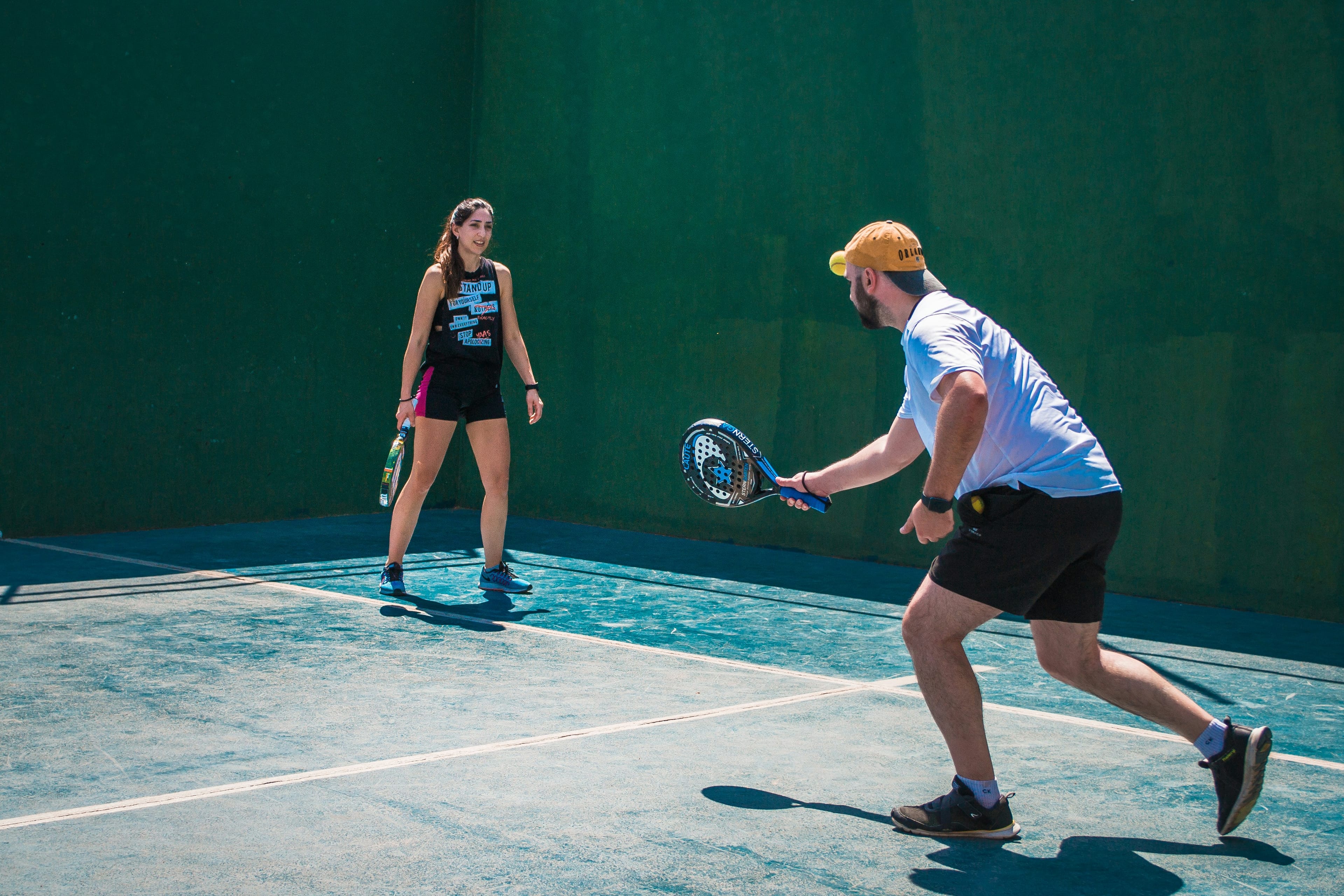
Best Padel Rackets Under $150 in the US: 2026 Picks
A $150 ceiling buys more padel racket than you would think: the whole entry band plus last season's mid-range on markdown. We swept all four US padel retailers, pulled every frame's own published specs, and picked seven that are in stock today — from a $79.99 entry frame to a 35%-off Bullpadel that normally costs $225.
How to Spot a Fake Padel Racket: A US Buyer's Guide
How to Spot a Fake Padel Racket: A US Buyer's Guide
Counterfeit padel rackets are real, but a low price alone proves nothing — the US also has a large grey-import trade that isn't fake at all. Here are the five checks that actually work, including the weigh-and-measure test no other guide covers, and what to do if you have already bought one.
GLDN PNT: Miami's Padel Apparel Brand, Now with Reebok
GLDN PNT: Miami's Padel Apparel Brand, Now with Reebok
Miami-born GLDN PNT is the first American padel apparel brand to land a major sportswear collaboration. What the Reebok x GLDN PNT collaboration includes, what it costs, and why a padel-native label matters for US players.