
Best Padel Rackets for Tennis Elbow 2026: Soft Picks

Best Padel Rackets for Tennis Elbow 2026: Soft Picks
Soft cores, round heads, and certified damping — the rackets that keep you playing through padel elbow.
Padel Elbow Is Real — and Your Racket Matters
If your forearm aches after a long session or you feel a sharp twinge on the outside of your elbow during a backhand, you are not imagining it. "Padel elbow" is the sport's version of lateral epicondylitis — the same overuse injury tennis players have battled for decades. Repeated impact sends vibration up the handle and into the tendons that attach to your elbow, and over thousands of shots those micro-stresses add up.
Technique, conditioning, and how often you play all feed the problem. But the single piece of gear with the biggest say in how much shock reaches your arm is the racket in your hand. A stiff, head-heavy, hard-cored frame transmits far more vibration than a soft, balanced one. Switching rackets won't cure an injury on its own, but the right frame can be the difference between playing through discomfort and sitting out the season.
This guide covers what actually makes a padel racket arm-friendly, then four 2026 picks — all available in the US — for different budgets and playing styles.
What Makes a Racket Arm-Friendly
A handful of design choices separate a comfortable racket from one that lights up your elbow:
- Soft EVA or foam core. A softer core compresses on contact, cushioning the ball and damping the shock that travels back through the frame. This is the most important factor for sore arms. (For how cores and shapes interact, see our guide to padel racket shapes.)
- Round or oversized shape. A round head puts the sweet spot in the center of the face and lowers the balance point, so off-center hits punish your arm less. Diamond shapes do the opposite.
- Lower weight (340–360g). A lighter racket has less swing weight, which means less rotational force loading the elbow on every stroke.
- Head-light or neutral balance. Keeping mass toward the handle reduces the lever effect that strains the forearm during fast volleys and defensive blocks.
- Vibration-damping technology. Frame channels, soft bumpers, and damped grips all cut the buzz that reaches your hand. Some are marketing; a few are genuinely lab-tested.
- Fiberglass faces. Fiberglass flexes more than raw carbon, giving a softer, more forgiving response than a stiff high-carbon face. (If you're weighing carbon grades, our 3K vs 12K vs 18K explainer breaks down the trade-offs.)
One caveat worth internalizing: a soft core alone does not make a racket safe. The Bullpadel Vertex Comfort, for example, pairs a genuinely soft tri-density core with a diamond head and high balance — great for power players who want a little cushion, but the shape still transmits more shock than a round frame. When your elbow is the priority, every spec needs to point the same direction.
Best Arm-Friendly Padel Rackets 2026
We chose these four around the criteria above — soft cores, forgiving shapes, manageable weight, and real damping — and limited the list to rackets you can buy in the US right now. If you're brand new to the sport, also check our best rackets for beginners, since beginner-friendly and arm-friendly overlap heavily.
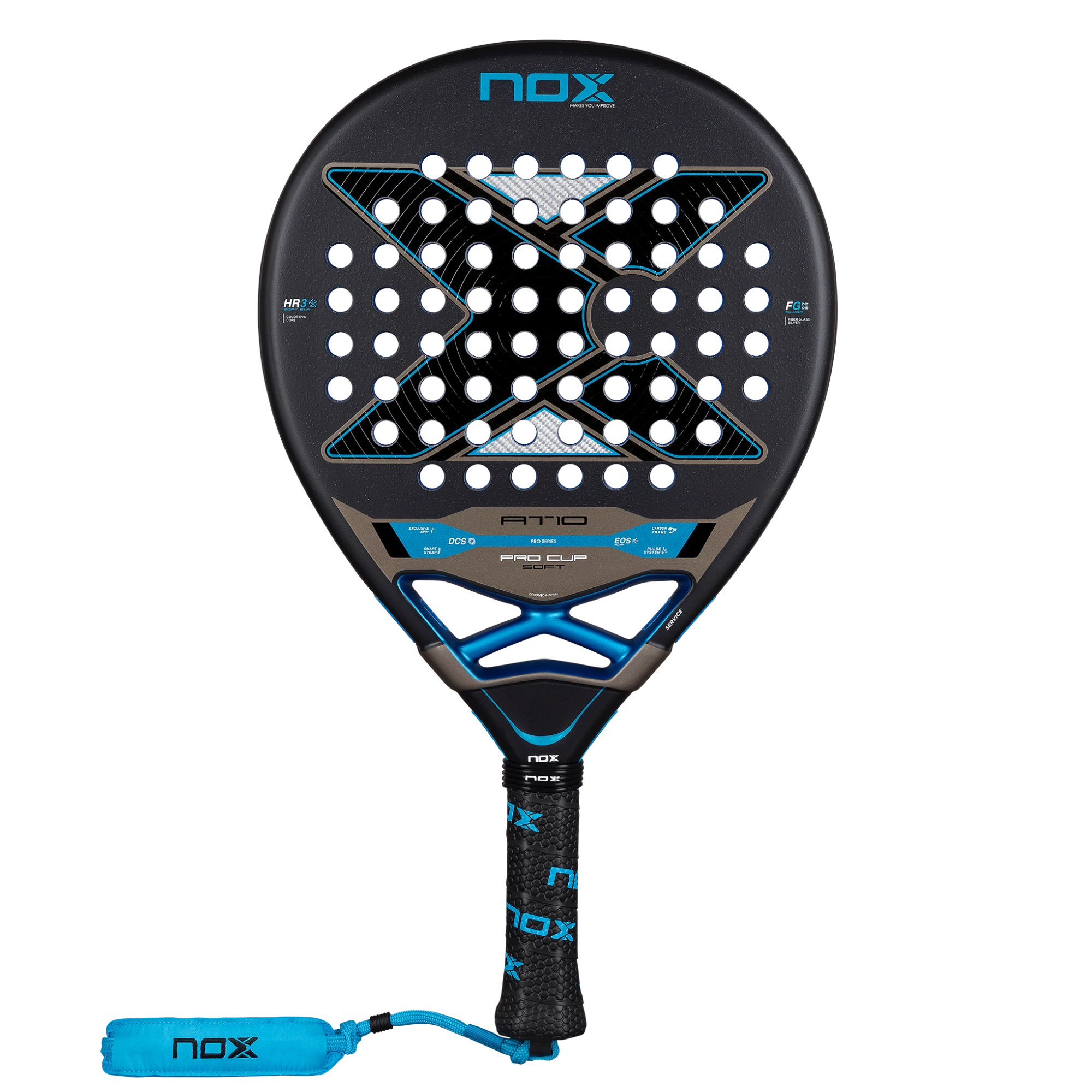
Nox AT10 Pro Cup Soft 2026
This is the comfort-tuned version of Agustín Tapia's signature frame, and it hits the sweet spot between protection and playability. The HR3 Soft EVA core and aluminized fiberglass face give a soft, springy response, while Nox's Pulse System filters vibration out of the frame. The headline feature for sore arms is the Nox Custom Grip, certified by independent lab Testea Padel to cut vibration transfer to the hand by 29%. It's a hybrid teardrop rather than a pure round head, so you keep some attacking pop — making it the best all-around choice for an intermediate or advanced player who refuses to trade away performance to save their elbow. See where it sits in our full Nox lineup.
Weight: 360–375g | Shape: Teardrop (hybrid) | Level: Intermediate–Advanced Price: $220.50 | Shop at Padel USA
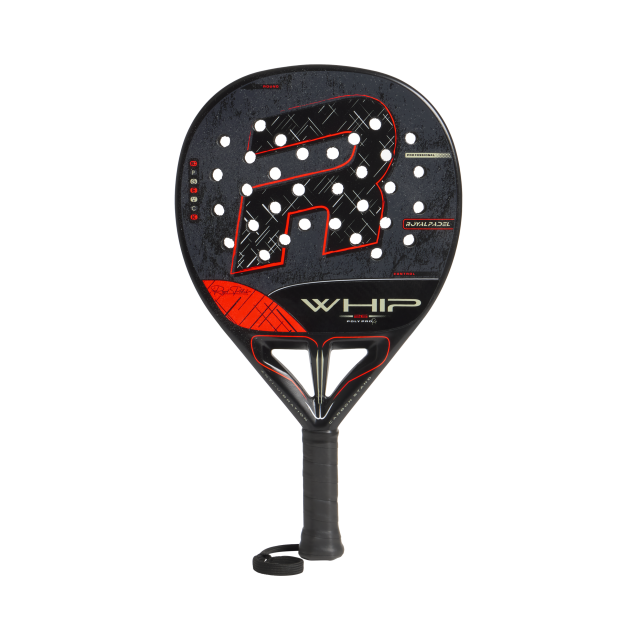
Royal Padel Whip Poly 2026
If you are easing back from an elbow flare-up, few rackets are gentler than the Whip Poly. Royal Padel builds it around an ultra-soft polyethylene core wrapped in fiberglass, and the brand rates its vibration absorption a perfect 10/10 — the result of a dedicated shock-absorption system designed expressly to spare the elbow and shoulder. It's round, low-balance, and forgiving, so it rewards placement over muscle and lets you swing freely without flinching. Power players will find it too soft, but for active recovery and control-first play it is in a class of its own. It's harder to find in US retail than the others here, so order directly from Royal Padel or a specialist importer.
Weight: 360–375g | Shape: Round | Level: Intermediate Price: ~$280 | Shop at Royal Padel

Head EVO Extreme 2025
You don't need to spend $250 to protect your arm. At under $100, the EVO Extreme delivers the two things that matter most: a genuinely soft foam core and a forgiving fiberglass face, plus Head's Innegra fibers woven into the frame to knock down vibration. The teardrop shape and large sweet spot make it easy to time the ball, which itself reduces the jarring mishits that aggravate tennis elbow. It's the racket we'd hand a recreational player who wants comfort without overthinking the spend. More options in our Head racket guide.
Weight: 365g | Shape: Teardrop | Level: Beginner Price: $99.95 | Shop at Padel USA
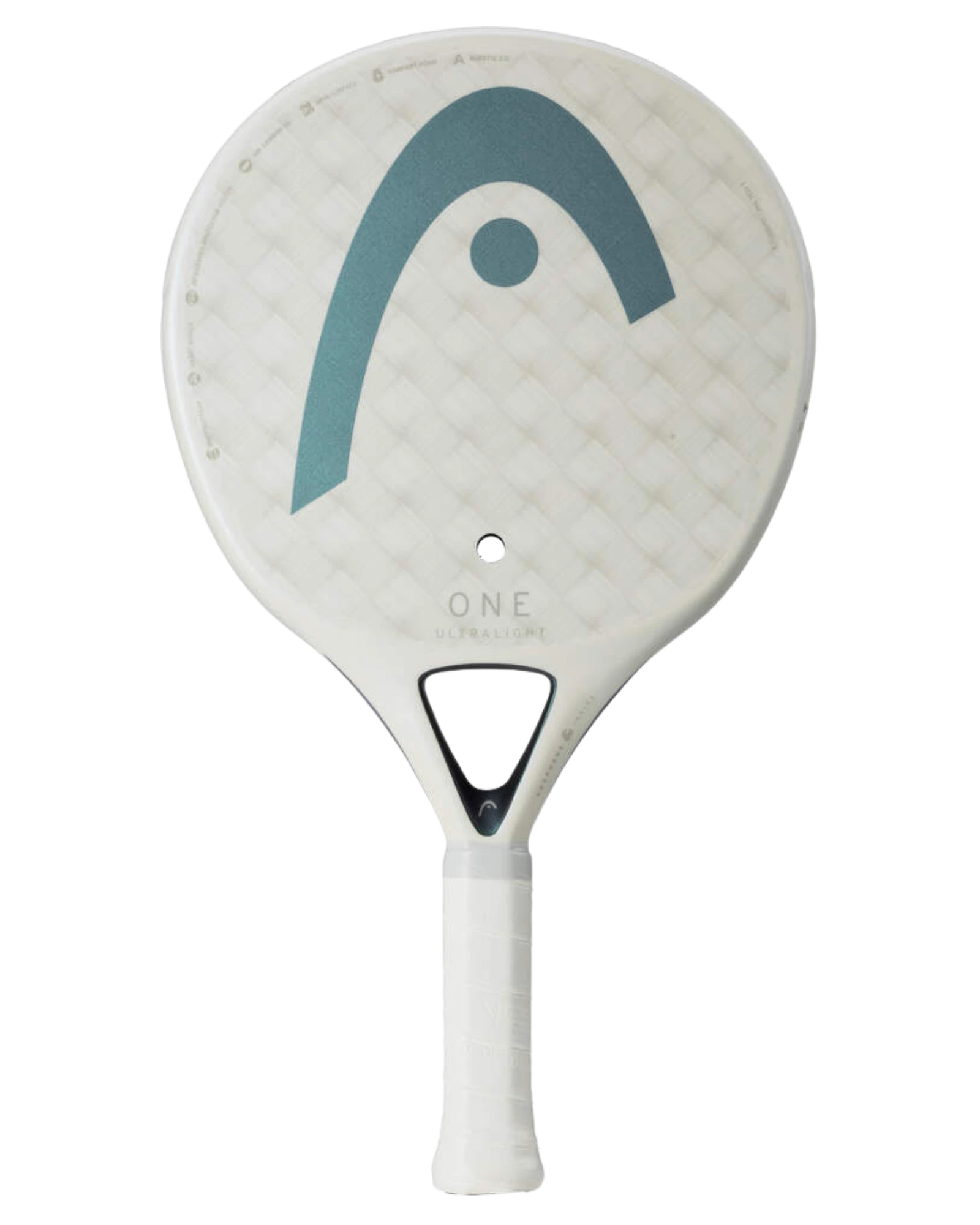
Head One Ultralight
At 300 grams, the Head One is billed as the lightest adult padel racket on the market — and that weight is its whole arm-friendly argument. Less mass means less swing weight and less rotational load on the elbow over a two-hour session. It's round for a centered sweet spot, uses a Comfort Foam core, and adds a Soft Butt Cap for extra dampening at the handle. The trade-off is stability: very light frames can get pushed around on hard smashes. But for players who fatigue quickly, smaller-framed players, or anyone whose elbow flares with a heavier racket, it's the easiest swing here. It's also a frequent pick in our best rackets for women.
Weight: 300g | Shape: Round | Level: Beginner–Intermediate Price: $199.95 | Shop at Padel USA
Setup Tips Beyond the Racket
The racket is the biggest lever, but it isn't the only one. A few cheap adjustments can take real load off your arm:
- Dial in your grip size and overgrip. A handle that's too thin makes you squeeze harder, which feeds elbow strain. Build it up with one or two overgrips until it fills your hand comfortably — and choose a cushioned overgrip over a thin tacky one for more shock absorption. Our overgrip guide covers the options.
- Ignore the "string dampener" myth. Padel rackets have no strings, so the vibration dampeners that work on tennis racquets don't exist here. Comfort comes from the core, frame, and grip — not an add-on.
- Play with softer, fresher balls. A dead, low-pressure ball forces harder swings and lands with more shock. Fresh balls compress and release more cleanly. See our padel ball buying guide.
- Warm up the forearm. Cold tendons absorb shock badly. A few minutes of wrist and forearm mobility before you step on court makes a real difference — our 10-minute warmup routine includes the key moves.
- Fix the technique trigger. Tennis elbow in padel often traces back to a wristy backhand or late contact. A single lesson to clean up your backhand can do more than any gear swap.
When to See a Doctor
Gear and technique tweaks help with mild, activity-related soreness. But see a physician or physical therapist if you have pain that persists at rest, weakness gripping everyday objects, numbness or tingling in the hand, or discomfort that hasn't improved after a couple of weeks of reduced play. Lateral epicondylitis usually responds well to rest, targeted strengthening, and load management — but the longer it's ignored, the longer it takes to settle. A lighter, softer racket is a smart move; it is not a substitute for proper treatment when the pain is more than a nuisance.
Frequently Asked Questions
Continue Reading
Best Round Padel Rackets 2026: Control & Forgiveness
Best Round Padel Rackets 2026: Control & Forgiveness
Round is the most forgiving shape in padel and the least rewarding on a smash. We checked live US stock at Racket Central and Padel USA, verified every shape against the manufacturer’s own spec sheet, and pulled the published power and control scores for all 41 round frames in the catalog. Here are five worth buying.
When to Buy Padel Gear: Black Friday 2026 Calendar
When to Buy Padel Gear: Black Friday 2026 Calendar
Black Friday 2026 lands on November 27, but it is only one of three moments worth waiting for. We scanned live listings across four US and European storefronts to map when padel rackets, shoes and balls actually get discounted.
Padel Racket Grip Size Guide 2026: How to Measure and Choose
Padel Racket Grip Size Guide 2026: How to Measure and Choose
US players searching for padel racket grip size get handed tennis charts — the wrong scale entirely. Here is what L1, L2 and L3 actually mean in padel, three ways to measure at home, and what happened when we checked 304 rackets across three retailers for a grip-size option.