
Best Padel Overgrips 2026: Tacky, Dry & Pro Picks
Best Padel Overgrips 2026: Tacky, Dry & Pro Picks
Tacky or dry? The right overgrip for your hands, your climate, and your game — plus where to buy in the US.
The overgrip is the only part of your padel racket that actually touches your hand — and it is the cheapest piece of gear you will ever upgrade. A fresh overgrip costs a few dollars, takes two minutes to wrap, and can be the difference between a confident bandeja and a racket that twists on contact. Here is how to choose the right one for 2026, with picks for every hand type and a buying guide for US players.
Why Overgrips Matter in Padel
A padel racket ships with a base grip, but almost no one plays on it bare. The overgrip sits on top, and it does three jobs: it dials in the handle size, it manages sweat, and it gives you the tack you need to hold the racket lightly. Because padel uses a continental grip for nearly every shot, a secure but relaxed hold is what lets you switch from a volley to a bandeja to a vibora without re-gripping. (New to grips? Start with our padel grip guide.)
Grip Size & Comfort
Padel handles are short and thin compared to tennis, so a single overgrip noticeably changes how the racket feels. One wrap adds a touch of size and cushioning; two wraps build a fuller handle for players with larger hands or those who want more shock absorption. If your hand cramps after long sessions, adding a second overgrip is the simplest fix before you consider a thicker replacement grip.
Sweat Absorption vs Tackiness
This is the core decision, and it splits overgrips into two camps:
- Tacky grips (polyurethane) feel slightly sticky and give instant confidence in dry or mildly humid conditions. They are the default for most players.
- Dry grips (cellulose, like Tourna) feel almost like paper out of the wrapper and only activate once your hand sweats, absorbing moisture instead of getting slick.
Quick decision tree: dry hands, indoor club → tacky. Sweaty hands or hot, humid play → dry/absorbent. If you play outdoors in Florida, Texas, or Arizona heat, lean dry — a tacky grip turns slick once it is saturated, while an absorbent grip just keeps working.
When to Replace
Overgrips are consumables. Replace yours when it feels slick, looks shiny, or starts to unravel at the edges. Frequent players swap every 2–4 sessions; weekend players can go a few weeks. Dry grips like Tourna wear faster than tacky polyurethane ones, so factor that into the pack size you buy.
Best Overgrips by Use Case
We picked one grip for each common need. All are available from US retailers (see the buying section below).
Wilson Pro Overgrip
The grip you will find on more rackets than any other, across tennis and padel alike. Wilson's Pro Overgrip is thin, stretchy, and lightly tacky when dry — the safe default if you are not sure where you land on the tacky-vs-dry spectrum. It feels secure in dry to moderately humid conditions and is forgiving to wrap, which makes it a great first overgrip.
Best for: Most players · Feel: Lightly tacky · Price: ~$10 (3-pack)
Tourna Grip XL Original
The legendary light-blue dry grip, and still the only major overgrip made in the USA. Out of the wrapper Tourna Grip feels like paper, but the moment your hand sweats it absorbs moisture and grips harder — the opposite of a tacky grip that goes slick. If you play outdoor padel in humidity or just have perpetually damp hands, this is the answer. The trade-off: it wears faster, so buy the multipack.
Best for: Sweaty hands, hot/humid play · Feel: Dry/absorbent · Price: ~$20 (10-pack)
HEAD XtremeSoft
HEAD's most popular overgrip, built around a super-tacky elastomer with large perforations for absorption. It is noticeably grippier than the Wilson Pro and stays thin, so it will not balloon the handle. If you like the racket to feel glued to your palm — especially for aggressive smashing — XtremeSoft delivers. Works equally well for tennis, padel, and pickleball.
Best for: Players who want max tack · Feel: Very tacky · Price: ~$9 (3-pack)
Nox Pro Overgrip
A padel-first brand rather than a tennis crossover. Nox Pro overgrips are tuned for the continental-grip, vibration-heavy demands of padel, with a perforated surface for sweat and enough elasticity to dampen shock through the wrist and elbow. Sold in singles, blisters, and bulk cans — the 120-count can is how clubs and serious players buy. Bullpadel's HaC overgrip is a close padel-specific alternative.
Best for: Dedicated padel players · Feel: Tacky, padel-tuned · Price: ~$8 (3-pack) / ~$60 (can of 120)
HEAD Prime Pro
At about 0.55mm, the Prime Pro is one of the thinnest quality overgrips you can buy. It uses a chemical reaction to open more cells on the surface, giving a dry-tacky feel with good absorption while barely adding to the handle size. This is the pick if you love your racket's stock handle and just want grip and sweat control without changing the feel.
Best for: Players who want minimal build-up · Feel: Thin, dry-tacky · Price: ~$9 (3-pack)
Babolat Pro Response
A favorite of tour players who want tack without bulk. Babolat's Pro Response is very thin, genuinely tacky, and still absorbent — a rare combination that explains why it shows up on so many pro rackets. If you have outgrown your starter grip and want a more refined, connected feel with the racket face, this is the upgrade.
Best for: Intermediate-plus players · Feel: Thin + tacky + absorbent · Price: ~$10 (3-pack)
How to Wrap a Padel Overgrip
It takes about two minutes once you have done it a couple of times:
- Remove the old grip and peel the small backing sticker off the new overgrip's tapered (thin) end.
- Start at the bottom of the handle, lining the tapered end up with the butt cap. Right-handers wrap so the grip climbs to the right; lefties mirror it.
- Wrap upward in a spiral, overlapping each turn by about 1–2mm. Keep light, even tension — pull just enough to remove slack without stretching it thin.
- Stop a few centimeters up where the handle meets the racket throat, and cut the excess at an angle so it lies flat.
- Seal the top edge with the finishing tape included in the pack.
- Press the whole grip down with your palm to bed it in. Done.
For padel specifically, do not wrap too far up the throat — you want clean access to the continental grip without the overgrip bunching.
Padel Overgrip vs Tennis Overgrip
Here is the good news: they are the same product. There is no meaningful difference between a padel and a tennis overgrip — the materials, widths, and lengths are interchangeable, which is why brands like Wilson, HEAD, and Babolat sell one overgrip for both. The only real distinction is length: padel handles are shorter, so a single standard overgrip easily covers a padel handle (and a tennis XL grip will leave you extra). Buy whichever is in stock and on sale; just match the feel (tacky vs dry) to your hand. Padel-native brands like Nox and Bullpadel exist mostly for branding and bulk padel-club packs, not because the grip is fundamentally different.
Where to Buy in the US
For padel-specific selection, start with Racket Central and Padel USA — both stock the padel-native brands (Nox, Bullpadel) plus the crossover staples. For the tennis-heritage grips (Wilson Pro, Tourna, Babolat Pro Response, HEAD Prime Pro), Tennis Express carries deep multipacks at the best per-grip prices. A few tips:
- Buy multipacks. Per-grip cost drops sharply at 12+ counts, and you will always have a fresh one in the bag.
- Stock both types if you play year-round — a tacky grip for cool indoor sessions and a dry grip for summer heat.
- Grab finishing tape if your grip did not include any; it keeps the top edge from peeling mid-match.
Once your grip is sorted, round out your kit with the right shoes and on-court apparel — and if you are still choosing a racket, see our beginner racket guide.
Frequently Asked Questions
Continue Reading
Padel Racket Balance Explained: Low, Medium & High
Padel Racket Balance Explained: Low, Medium & High
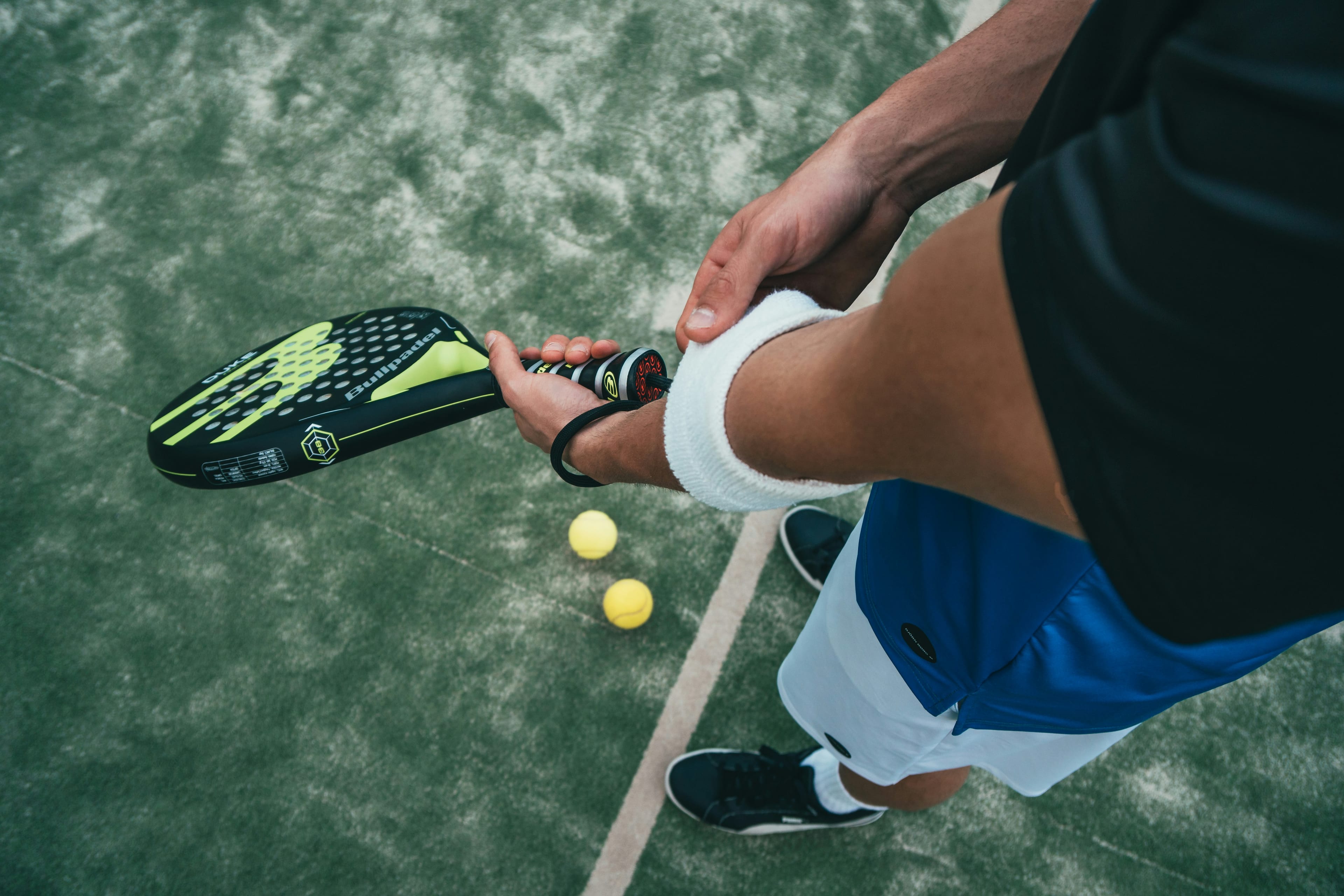
Balance decides how a padel racket feels more than any other spec, and it is the one brands report least consistently. Here is what the millimetre figure means, why shape does not determine it, and how to measure and shift your own racket's balance.
Best Padel Ankle Brace & Knee Supports 2026: US Picks
Best Padel Ankle Brace & Knee Supports 2026: US Picks
The ankle and foot is the most commonly injured region in padel, ahead of the elbow — yet almost every padel brace guide that ranks is a UK or EU storefront. Here are six ankle and knee supports you can buy from US retailers in 2026, what each category actually does, and why a bulky brace can cost you half a shoe size.
Padel Gear You Can't Buy in the US (and What to Buy)
Padel Gear You Can't Buy in the US (and What to Buy)
US padel gear guides are mostly written for European buyers, so they recommend shoes and frame protectors you simply can't buy here. We pulled the live product feeds of four US storefronts to see what is genuinely missing in 2026 — and found the gap has closed in two places nobody has written about yet.