
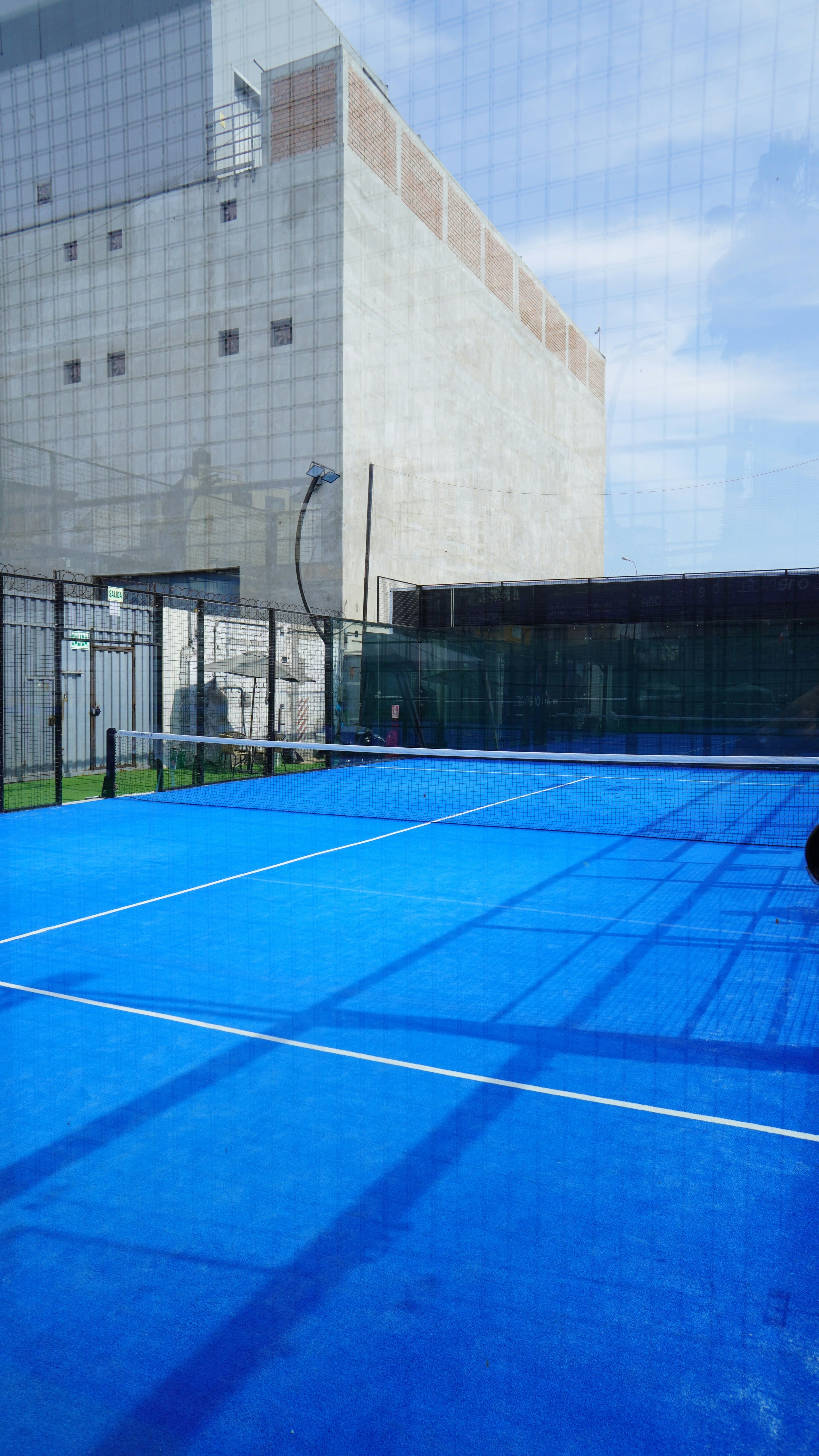
3K vs 12K vs 18K Carbon in Padel Rackets Explained

3K vs 12K vs 18K Carbon in Padel Rackets Explained
What the K-count on your racket face actually changes — and what it doesn't.
Walk into any padel shop — or scroll any product page — and you'll see carbon weaves advertised like horsepower: 3K, 12K, 18K, even 24K. The natural assumption is that bigger is better, and that an 18K racket is simply a "more premium" version of a 3K one. It isn't that simple. The K number tells you how the carbon face is woven, not how good the racket is — and weave count affects feel far less than the marketing suggests once you factor in the core, the shape, and the balance.
Here's what 3K, 12K, and 18K actually mean, how each tends to feel, and how to choose without overpaying for a number.
What the "K" in Carbon Actually Means
"K" stands for thousands of filaments bundled into a single carbon thread (technically a "tow"). A 3K thread contains roughly 3,000 individual carbon filaments; 12K holds about 12,000; 18K around 18,000. Those threads are then woven into the sheet of carbon fabric that forms the racket's hitting face.
The practical upshot: a lower-K weave uses finer, thinner threads, so the fabric has more crossings per square inch and a tighter, denser-looking surface. A higher-K weave uses fatter threads, producing a more open pattern with fewer crossings. That's the whole difference at the fabric level — filament count per thread. Everything else you feel on court comes from how that fabric is combined with the rest of the racket.
One thing K does not tell you: the total amount of carbon, the quality of the resin, or the number of carbon layers. A racket can have a flashy 18K face over a single thin layer, or a "plain" 3K face backed by several layers of carbon and fiberglass. The headline number is only the top sheet.
3K vs 12K vs 18K (vs 24K): Feel & Performance
Here's where most buyers get it backwards. The intuitive story — "more K means more carbon means stiffer and more powerful" — is mostly wrong. In practice the relationship is subtle and often runs the other way.
3K Carbon — Tight Weave, Dry and Precise
Because 3K uses fine threads with many crossings, the surface tends to feel dry, firm, and crisp at contact. There's very little "trampoline" to it, which is exactly what control players want: the ball goes where you aim it, with predictable, repeatable response. 3K faces show up on a lot of round, control-oriented rackets — think the NOX ML10 Ventus Control 3K or Head's Radical line — and on entry-level frames where forgiveness and a clean, honest contact matter more than raw pop. Racket Central's house "The Lob" 3K is a good example of a friendly, control-leaning 3K frame for newer players.
12K Carbon — The Versatile Middle
12K is the most common weave on the market for a reason: it's the all-rounder. The slightly fatter threads give a touch more elastic give than a tight 3K weave, so the face feels a hair softer and livelier without turning into a springboard. That balance of comfort and response makes 12K the default for hybrid and "do-everything" rackets — the Bullpadel Vertex with its X-Tend Carbon 12K face, or the NOX AT10 12K, are typical. If you don't know what you want yet, a 12K racket is rarely the wrong call.
18K Carbon — Open Weave, Springy Response
18K's fatter threads and more open weave tend to feel more elastic and responsive, not less. This is the counterintuitive part: the "premium" high-K faces often feel softer and springier than a tight 3K weave, not harder. Brands lean into this with aluminized 18K faces — like the NOX AT10 Luxury Genius 18K Alum — that add a comfortable, lively pop and pair naturally with power-leaning teardrop and diamond shapes. More K here means more rebound and arm comfort, which is the opposite of the "bigger number = stiffer board" assumption.
A Note on 24K and Marketing Hype
24K exists, and it photographs beautifully — a glossy, large-pattern weave that looks high-tech. But by the time you're past 18K, the on-court differences are marginal and easily swamped by core and shape choices. Treat 24K as a premium aesthetic and a small comfort bump, not a performance tier that justifies a big price jump on its own.
How Carbon Interacts With Core, Shape & Balance
The carbon face is one ingredient, not the recipe. Two rackets with identical 12K faces can feel completely different depending on what's underneath:
- Core: A soft EVA or FOAM core absorbs shock and slows the ball's exit for comfort and control; a dense, hard EVA core returns more energy for power. The core does more to define "soft" or "hard" feel than the weave does.
- Shape: Round, teardrop, or diamond sets where the sweet spot sits and how head-heavy the racket swings. A diamond 18K plays like a power tool; a round 18K plays like a comfortable all-rounder.
- Balance and weight: A head-heavy racket amplifies whatever the face and core are doing on the attack; an even balance keeps things forgiving.
So the honest way to read a spec sheet is: weave count tells you something about surface feel, but core, shape, and balance tell you how the racket will actually play. Don't shop by K alone.
Which Carbon Should You Buy?
For comfort & forgiveness
If your arm is sensitive or you're still building consistency, prioritize a soft core and a round shape over any specific weave — then a 3K or an aluminized 18K face both make sense. Our beginner racket guide leans this way. Avoid stiff, head-heavy frames regardless of the carbon number.
For versatility
Want one racket that does most things well? A 12K face on a teardrop shape with a medium core is the classic all-rounder. Start with our how to choose a padel racket walkthrough, and our control picks if you value precision a touch more than pop.
For aggressive finishing
If you live at the net and want to put balls away, look at higher-K (12K/18K) faces on diamond shapes with dense cores and head-heavy balance — the combinations in our power players guide. Here the weave choice is the least important of the three variables; the shape and balance do the heavy lifting.
Common Myths (More K ≠ Always Stiffer)
- "Higher K is always stiffer." Usually the reverse — finer 3K weaves often feel drier and firmer, while higher-K weaves feel more elastic. Stiffness is driven far more by core density and construction.
- "More K means more carbon." No. K is filaments per thread on the top sheet only. Layer count, resin, and backing materials matter more for total stiffness and durability.
- "18K or 24K is automatically better." It's a different feel and a premium look, not a quality grade. Plenty of pros win on 3K and 12K frames.
- "The weave determines power or control." It nudges them. Shape, balance, and core decide them.
Bottom line: use the K number as a tiebreaker, not a starting point. Nail the shape, core, and balance for your game first — our racket shapes guide and 2026 buyer's guide are the place to start — and treat 3K, 12K, or 18K as the finishing touch on a racket that already fits.
Frequently Asked Questions
Continue Reading
Best Round Padel Rackets 2026: Control & Forgiveness
Best Round Padel Rackets 2026: Control & Forgiveness
Round is the most forgiving shape in padel and the least rewarding on a smash. We checked live US stock at Racket Central and Padel USA, verified every shape against the manufacturer’s own spec sheet, and pulled the published power and control scores for all 41 round frames in the catalog. Here are five worth buying.
When to Buy Padel Gear: Black Friday 2026 Calendar
When to Buy Padel Gear: Black Friday 2026 Calendar
Black Friday 2026 lands on November 27, but it is only one of three moments worth waiting for. We scanned live listings across four US and European storefronts to map when padel rackets, shoes and balls actually get discounted.

Padel Racket Grip Size Guide 2026: How to Measure and Choose
Padel Racket Grip Size Guide 2026: How to Measure and Choose
US players searching for padel racket grip size get handed tennis charts — the wrong scale entirely. Here is what L1, L2 and L3 actually mean in padel, three ways to measure at home, and what happened when we checked 304 rackets across three retailers for a grip-size option.