
Best Outdoor Padel Rackets 2026: All-Weather Picks

Best Outdoor Padel Rackets 2026: All-Weather Picks
How sun, heat, and humidity change what to look for — and the four rackets we would trust on an open-air court.
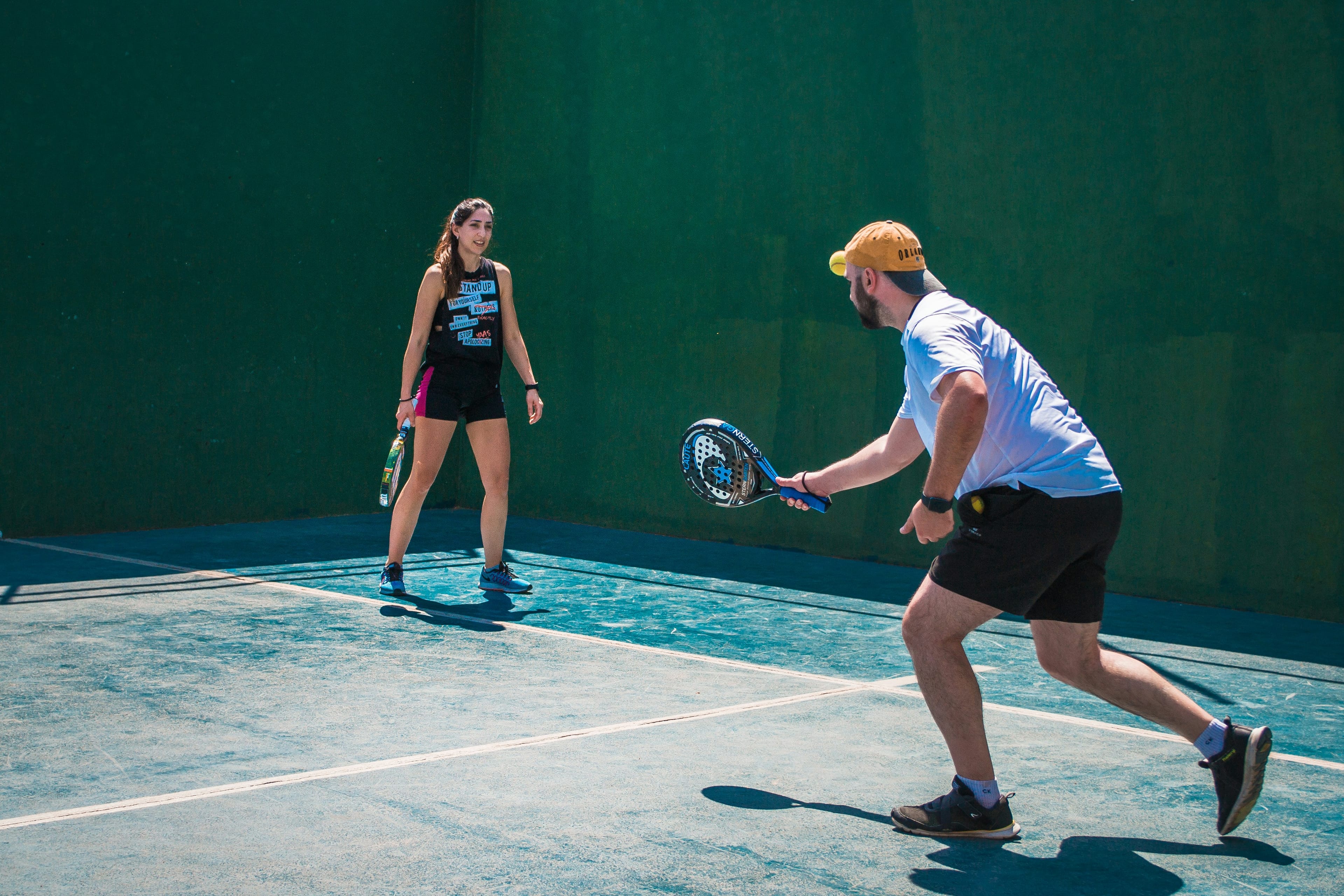
Padel was born outdoors, and in much of the US that is still where you will play it — on rooftop courts in Miami, club decks in Austin, and resort courts under the Arizona sun. Open-air padel is glorious. It is also brutal on equipment. The same racket that feels perfect in a climate-controlled box can turn slick, dead, or cracked once you take it outside.
If you mostly play outdoors, a few details matter more than the marketing on the box: how the face holds up across temperature swings, how the core behaves in heat and cold, and whether the frame can survive a season of cage rub and trunk storage. Below we cover what to look for, then name our four favorite all-weather rackets for 2026. For the bigger picture on how the game itself changes outside, see our guide to indoor vs outdoor padel.
Does Your Racket Really Change Outdoors?
Yes — though maybe not the way you would expect. There is no separate category of "outdoor padel racket" the way there is for, say, tennis balls. Any racket can be played outside. The real question is how well it holds up and how consistent it feels when the weather stops cooperating.
Three forces do the damage:
- Temperature. EVA foam cores are temperature-sensitive. In high heat they soften and feel springier — sometimes to the point of feeling mushy or unstable. In the cold they stiffen and the ball comes off dead. Face stiffness shifts too, just less dramatically.
- Sun and UV. Hours of direct sun degrade glue lines, paint, and grip rubber over time. A racket that lives in a car trunk through a Phoenix summer ages fast.
- Humidity and sweat. Humid Florida air and sweaty palms turn a worn grip into a hazard, and outdoor play puts more dust and grit on the ball, which scuffs the face.
None of this means you need a special racket. It means you should weight a few specs differently than an indoor-only player would.
What to Look For in an Outdoor Racket
A face that stays stiff across temperatures
This is the big one. Higher-density carbon weaves — 16K and 18K — and especially aluminized-carbon faces hold their stiffness better when temperatures swing. The aluminized layups from Adidas and the "Alum" faces from Nox are built for exactly this kind of consistency: they keep the sweet spot feeling the same whether it is a 95°F afternoon or a 45°F evening. If you want the full breakdown of weaves, we wrote a separate explainer on 3K vs 12K vs 18K carbon.
The trade-off: stiffer, denser faces are less forgiving and can be harsher on the arm. If comfort is your priority, lean toward a slightly softer setup and accept a little more temperature sensitivity.
A core matched to your climate
Core density is where heat and cold show up most. If you play in a consistently hot climate, a slightly firmer core resists the mushy-in-the-heat problem. If your courts get cold — or swing 40 degrees between a morning and an evening session — a softer or multi-density core keeps the ball lively when low temps would otherwise deaden a firm one.
A frame that can take a beating
Outdoor rackets live harder lives. They scrape the cage, sit in hot cars, and ride around in bags. Reinforced frames and a good edge guard genuinely extend a racket's life. Thin, ultra-premium carbon faces are stiff and powerful but also the most prone to cracking on a mis-hit against the fence — something to weigh if you are rough on gear.
Grip and sweat management
In heat and humidity, the grip is your weakest link. Plan to add an absorbent or tacky overgrip and swap it more often than an indoor player would; a slick handle in a sweaty third set is how rackets end up flying into fences. Our overgrip guide covers the tacky-versus-dry trade-off.
The Best Outdoor Padel Rackets for 2026
We picked for one thing above all: consistency and durability when the weather is not on your side. Prices are approximate US retail and move with sales.
Adidas Metalbone Carbon 2026
Adidas's Metalbone line is the benchmark for all-weather consistency, and the Carbon version brings the signature Carbon Aluminized 16K face down to a friendlier price. That aluminized layup is the whole point outdoors: it holds its stiffness across big temperature swings, so the racket feels the same in July heat and December cold. A Soft Performance core takes some of the harshness off the diamond shape, and the Weight & Balance System lets you tune the head weight up or down as conditions change. It is a power-leaning, advanced racket — not the most forgiving pick here — but if you want one paddle that simply does not flinch at the weather, this is it.
Weight: 345–360g | Shape: Diamond | Face: 16K Carbon Aluminized | Level: Advanced
Nox AT10 Genius 18K Alum 2026
Agustín Tapia's signature Nox is the pick if your home courts are in Florida, Texas, or Arizona. The 18K aluminized carbon face is about as stiff and heat-stable as it gets, so it resists the soft, springy feel that firmer rackets can develop in extreme heat. Just as important for hot, dusty outdoor play: the Dual Spin face — a 3D texture plus a sandblasted silica finish — bites a sweaty, gritty ball that a smooth face would slide off, while an HR3 EVA core keeps it lively rather than dead. This is a teardrop built for advanced players who generate their own pace. For more from the brand, see our full Nox lineup guide.
Weight: 360–375g | Shape: Teardrop | Face: 18K Carbon (Alum) | Level: Advanced
Bullpadel Hack 04 Hybrid 2026
When courts run cold or temperatures swing through a session, a single-density core stiffens and the ball comes off dead. Bullpadel's MultiEva core is the antidote: it pairs a firmer outer layer for power on fast balls with a lower-density inner layer that wakes up on slower, colder shots. That dual personality is exactly what you want when you cannot count on warm, stable conditions. The hybrid frame and TriCarbon 18K face keep it forgiving and durable, and it is a noticeably more arm-friendly ride than a full-diamond power racket — a smart choice for northern and shoulder-season players who still want real bite.
Weight: 365–375g | Shape: Hybrid | Core: MultiEva (dual density) | Level: Advanced
Head Evo Speed 2026
If your racket is going to live outside — bouncing off the cage, baking in the trunk, getting handed to friends — a forgiving fiberglass face is more sensible than thin, crack-prone premium carbon. Head's Evo Speed pairs exactly that with a soft foam core and Innegra fibers that soak up shock on off-center hits. It is an oversized teardrop that is easy to swing, easy on the arm, and easy to replace if it finally gives out. You give up the top-end stiffness and heat stability of the aluminized rackets above, but for beginners, casual outdoor players, or anyone who does not want to risk a $300 racket against a chain-link fence, it is the smart buy. Need help sizing up? Start with our racket buyer's guide.
Weight: ~355g | Shape: Teardrop | Face: Fiberglass | Level: Beginner/Improver
Caring for a Racket That Lives Outdoors
A few habits make any racket last longer outside:
- Never store it in a hot car. A closed trunk in summer can pass 150°F — enough to soften the core, bubble paint, and weaken glue lines. Bring the racket inside.
- Use a thermal or padded bag. It buffers temperature shocks and protects the face in transport. Our padel bag guide has options at every price.
- Add an edge guard or protector. A cheap strip of protective tape on the head shields against the cage scrapes that cause most outdoor cracks.
- Refresh the grip often. Sun and sweat kill grips fast; a fresh overgrip is the cheapest performance upgrade you can make.
- Wipe the face down. Outdoor dust and grit are abrasive. A quick wipe after play keeps the texture — and your spin — intact.
Do those five things and the gap between an "indoor" and an "outdoor" racket mostly disappears. Pick a face and core suited to your climate, protect it from heat and the cage, and the same paddle will serve you year-round.
Ready to get out there? Find open-air courts near you on Padel Browser, and do not forget the right shoes — our guide to padel shoes by court surface covers the turf and hard courts most outdoor clubs use.
Frequently Asked Questions
Continue Reading
When to Buy Padel Gear: Black Friday 2026 Calendar
When to Buy Padel Gear: Black Friday 2026 Calendar
Black Friday 2026 lands on November 27, but it is only one of three moments worth waiting for. We scanned live listings across four US and European storefronts to map when padel rackets, shoes and balls actually get discounted.
Padel Racket Grip Size Guide 2026: How to Measure and Choose
Padel Racket Grip Size Guide 2026: How to Measure and Choose
US players searching for padel racket grip size get handed tennis charts — the wrong scale entirely. Here is what L1, L2 and L3 actually mean in padel, three ways to measure at home, and what happened when we checked 304 rackets across three retailers for a grip-size option.
Best Padel Racket Protectors 2026: Are They Worth It?
Best Padel Racket Protectors 2026: Are They Worth It?
Padel frames meet glass, fencing and turf as a matter of routine, and a $9 protector is the cheapest insurance you can buy. We checked what US retailers actually stock in September 2026, what a protector really prevents, and the weight-and-balance trade-off nobody else mentions.