


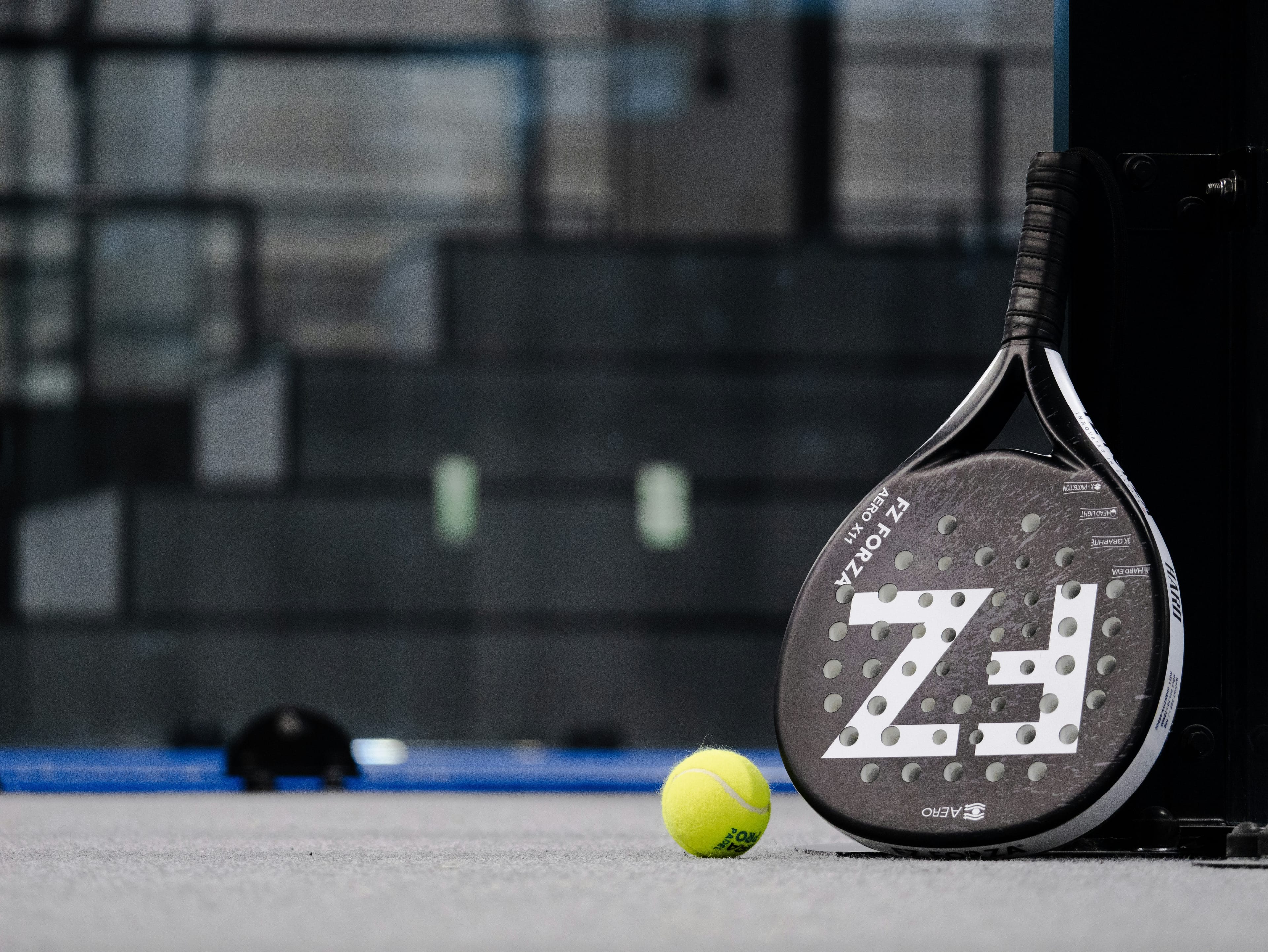
Padel Racket Cores Explained: EVA vs FOAM (2026 Guide)
Padel Racket Cores Explained: EVA vs FOAM (2026 Guide)
Soft EVA, hard EVA, Black EVA, or polyethylene foam — what each core actually changes, and how to pick the right one for your game
Walk into any pro shop and the pitch is all about the face — 3K carbon, 12K, fiberglass. But the part of the racket that decides how it actually plays is the part you never see: the core. That thick slab of rubber between the faces controls how the ball feels, how much energy comes back on every shot, and how much vibration ends up in your elbow.
Nearly every racket on the market uses one of two core materials: EVA rubber or polyethylene FOAM. This guide breaks down how each behaves, what marketing names like Black EVA really mean, and how to match a core to your level, your arm, and even your local weather. It completes our racket-education series alongside carbon face layups explained and racket shapes explained.
What's Inside a Padel Racket?
A padel racket is a sandwich. Two thin hitting faces — carbon fiber or fiberglass — are bonded to a thick rubber core, all inside a frame capped at 38mm of total profile. When the ball arrives, the face flexes, the core compresses, and then both spring back, returning energy to the ball.
The face determines how stiff first contact feels and how well the racket resists twisting. The core decides almost everything else: how deep the ball sinks in, how quickly energy comes back, how large the usable sweet spot is, and how much shock travels down the handle into your forearm.
That's why two rackets with identical faces can play completely differently. Swap a soft core for a hard one and you have, for all practical purposes, a different racket.
EVA Cores: The Modern Standard
EVA (ethylene-vinyl acetate) is a closed-cell rubber foam, and it's inside the vast majority of mid-range and premium rackets. The reason brands love it: EVA can be manufactured at precise densities, and density is the whole game. The same material tuned soft or hard produces two rackets with opposite personalities.
Soft EVA
Soft EVA compresses deeply on contact. The ball sinks into the face, sits for a fraction longer, and launches with surprisingly little effort — players call it the "pocket" effect. At moderate swing speeds it gives free depth on lobs and defensive shots, a wide effective sweet spot, and excellent vibration absorption.
The trade-off shows up at the top of your swing. On a full smash, soft rubber absorbs some of the energy you put in, capping your maximum power. That's a trade most club players should happily make.
Hard EVA
Dense, firm EVA barely compresses at slow speeds — hit gently and it feels like a board. But swing fast and it returns energy immediately, with a crisp, connected feel and pinpoint predictability. There's no trampoline lag between your intent and the ball's response, which is exactly what advanced attackers want on volleys and overheads.
The costs: you need real swing speed to activate it, off-center hits are punished, and more vibration reaches your arm. If your technique isn't there yet, hard EVA gives you the downsides without the payoff.
Black EVA, MultiEVA, HR3: Decoding the Names
Brands wrap their EVA formulations in proprietary names. Babolat's Black EVA is a dense, firm compound built for explosive rebound. Bullpadel's MultiEVA layers multiple densities in a single core. NOX badges its high-recovery EVA blends as HR3. The names differ; the question to ask doesn't: how firm is it? Most spec sheets and good retailers publish a hardness or feel rating, and that number tells you 90% of what the marketing name won't.
One more EVA virtue: durability. Closed-cell rubber holds its structure, so an EVA core keeps its rebound through seasons of regular play — usually longer than the face and frame around it.
FOAM (Polyethylene) Cores: Comfort First
FOAM on a padel spec sheet means polyethylene (PE) foam — a lighter, airier, softer material than any EVA. Two things follow directly from that softness.
First, it's lively at low swing speeds. PE foam acts like a trampoline, so gentle swings still produce depth and pace. Second, it absorbs shock better than anything else in the sport, which is why foam cores show up constantly in beginner and comfort-focused rackets like Head's Evo line and Wilson's Optix series.
Foam isn't only a budget material, either — Oxdog builds its entire performance range around foam cores, betting that comfort and easy speed matter more to most players than a firmer pro feel.
The catch is longevity. PE foam compacts under repeated impact faster than EVA does. Over months of frequent play a foam racket gradually loses its pop and can develop soft spots in the zones you hit most. At beginner price points that's an acceptable trade — you'll likely outgrow the racket before you flatten it — but it's the main reason foam stays rare in premium attack rackets.
EVA vs FOAM: Head-to-Head
| Soft EVA | Hard EVA | FOAM (PE) | |
|---|---|---|---|
| Feel | Cushioned "pocket" | Firm and direct | Softest, springy |
| Power at slow swings | Good | Poor | Excellent |
| Power at fast swings | Moderate | Excellent | Moderate |
| Control | Good | Excellent (with technique) | Fair |
| Arm comfort | Very good | Hardest on the arm | Best in the sport |
| Durability | Very good | Excellent | Fades fastest |
| Best for | Most club players | Advanced attackers | Beginners, sore arms |
Which Core Should You Choose?
By Level
Beginners: foam or soft EVA. You want easy depth, a big sweet spot, and a comfortable learning curve — not a core that demands swing speed you don't have yet.
Intermediates: soft-to-medium EVA is the sweet spot. You keep comfort and forgiveness while gaining a more precise, durable platform as your attacking game develops.
Advanced players: hard or high-density EVA if you attack — though plenty of high-level control players still choose medium densities. Match the core to your style, not your ranking.
By Arm Health
If you have tennis elbow or shoulder trouble, this decision is already made: foam or the softest EVA you can find, in a round, head-light frame. Hard EVA transmits the most impact shock of any core. We've collected specific models in our best rackets for tennis elbow guide.
By Climate
EVA is temperature-sensitive: heat softens it, cold stiffens it. If you play outdoors through a Florida or Texas summer, a hard EVA racket will play a touch softer and bouncier than it does indoors — often a pleasant surprise. Outdoor winter players get the opposite: soft EVA firms up and the whole racket feels dead, so consider going one step softer than you otherwise would. If you only play indoors at climate-controlled clubs, you can ignore this variable entirely.
Popular Rackets by Core Type
Every racket below is US-available, with specs and prices verified at Racket Central in July 2026.

Siux Beat Control 2026
About as forgiving as padel gets: fiberglass faces over a soft EVA core that Siux rates just 2.5/10 for firmness, in a round, head-light frame. Everything about it is built to absorb your mistakes while you learn — wide sweet spot, minimal vibration, easy handling.
Shape: Round | Core: Soft EVA | Level: Beginner Price: $109.99 | Shop at Racket Central

Siux Astra Ctrl 2026
The classic second racket: 3K carbon faces add precision and durability, while the soft EVA core (4.5/10 firmness) keeps the wide sweet spot and comfortable feel. Round and head-light, it suits intermediates who win points with placement rather than pace.
Shape: Round | Core: Soft EVA | Level: Intermediate Price: $179.99 | Shop at Racket Central

Babolat Technical Veron 3.0
Babolat's Black EVA core in action: firm enough for explosive rebound on smashes and víboras, controlled enough to stay stable on volleys and counters. A diamond shape with head-heavy balance and a 38mm profile, aimed squarely at advanced players who finish points overhead.
Shape: Diamond | Core: Black EVA | Level: Advanced Price: $240.00 | Shop at Racket Central

Siux Fenix Pro 2026
The racket of world top-10 player Leo Augsburger, and a textbook example of hard EVA done properly: Siux rates the core 10/10 for firmness, paired with 12K carbon faces and a head-heavy diamond frame. Explosive energy transfer for players with the swing speed to unlock it — and exactly the core you shouldn't buy before you do.
Shape: Diamond | Core: Hard EVA | Level: Advanced Price: $389.99 | Shop at Racket Central

Head Evo Speed 2025
Foam-core comfort at the friendliest price on this list. An oversized teardrop mold, soft foam core, and fiberglass face deliver clean, arm-friendly contact and easy power at 350g, with Head's Innegra fibers adding extra shock absorption. Plenty of first rackets get outgrown in months; this one earns its keep as a loaner afterward.
Weight: 350g | Shape: Teardrop (Oversize) | Core: Soft Foam | Level: Beginner Price: $79.95 | Shop at Racket Central

Wilson Optix V2 Power 2026
Wilson pairs a comfortable foam core with a fiberglass weave face and a large teardrop head, so newer players can generate pace at lower swing speeds without giving up forgiveness. Quick in hand at the net, and more polished-looking than most starter rackets.
Shape: Teardrop | Core: Foam | Level: Beginner Price: $159.00 | Shop at Racket Central
The Bottom Line
Face materials get the headlines, but the core is the personality of your racket. Soft EVA is the right answer for most club players, foam is the comfort king for beginners and sore arms, and hard EVA is a reward you earn with swing speed. Once you've picked your core, our complete buying guide and 2026 top picks will take you the rest of the way to a racket.
Frequently Asked Questions
Continue Reading
Best Padel Rackets Under $150 in the US: 2026 Picks
Best Padel Rackets Under $150 in the US: 2026 Picks
A $150 ceiling buys more padel racket than you would think: the whole entry band plus last season's mid-range on markdown. We swept all four US padel retailers, pulled every frame's own published specs, and picked seven that are in stock today — from a $79.99 entry frame to a 35%-off Bullpadel that normally costs $225.
How to Spot a Fake Padel Racket: A US Buyer's Guide
How to Spot a Fake Padel Racket: A US Buyer's Guide
Counterfeit padel rackets are real, but a low price alone proves nothing — the US also has a large grey-import trade that isn't fake at all. Here are the five checks that actually work, including the weigh-and-measure test no other guide covers, and what to do if you have already bought one.
GLDN PNT: Miami's Padel Apparel Brand, Now with Reebok
GLDN PNT: Miami's Padel Apparel Brand, Now with Reebok
Miami-born GLDN PNT is the first American padel apparel brand to land a major sportswear collaboration. What the Reebok x GLDN PNT collaboration includes, what it costs, and why a padel-native label matters for US players.