
How Much Does a Padel Racket Cost in the US? 2026 Prices
How Much Does a Padel Racket Cost in the US? 2026 Prices
Live US retailer pricing across four tiers, checked September 2026
If you have just started playing and searched for what a padel racket costs, you probably got a number in euros from a Spanish retailer. That number is not what you will pay in America.
So we checked the actual shelf. On September 23, 2026 we pulled live in-stock pricing from three major US padel retailers — Racket Central, Padel USA and Tennis Express — 361 rackets in stock between them. Every price below is what an American shopper could put in a cart that day.
The short answer: the real US price bands
The median in-stock padel racket in the US sits between $250 and $265, depending on which store you walk into. Not the cheapest one you can find, not the flagship you saw on the Premier Padel broadcast — the middle of the shelf.
| Retailer | Rackets in stock | Median price | Cheapest adult racket | Most expensive |
|---|---|---|---|---|
| Racket Central | 154 | $263 | $80 | $690 |
| Padel USA | 113 | $259 | $98 | $465 |
| Tennis Express | 94 | $250 | $90 | $600 |
Three independent retailers, three medians within $13 of each other. That consistency is the most useful thing in this article: it means the US market has a settled price structure, and you can plan against it.
Here is how the whole 361-racket pool breaks down:
| Price band | Share of in-stock rackets |
|---|---|
| Under $120 | 10% |
| $120–$199 | 22% |
| $200–$299 | 36% |
| $300 and up | 32% |
The number that surprised us: $300-plus accounted for exactly 32% of in-stock inventory at all three stores, independently. A third of the American padel shelf is premium. Meanwhile only one racket in ten is under $120 — and, as you will see, that bottom shelf is thinner than the listings suggest.
Tier 1 — entry ($60–$120)
What you get
A fiberglass hitting surface, a soft EVA core, and usually a round shape with the balance low in the frame. Forgiving, light in the hand, cheap to replace. These rackets are built so that an off-centre ball still goes somewhere reasonable, which is exactly what you want in your first three months.
The $60 racket is mostly a myth here
Search results promise sub-$70 rackets. The live inventory does not deliver. Padel USA lists a $59 Babolat Contact and three Siux Beat models at $84.99 — every one of them out of stock. Tennis Express's cheapest listing, at $63, is a junior mini racket, not an adult frame.
The cheapest adult racket actually in stock anywhere we checked was the Head Evo Speed 2025 at $79.95 from Racket Central. Realistically, $90 to $110 is the true US entry floor, and the sub-$120 band is the most picked-over shelf in the store.
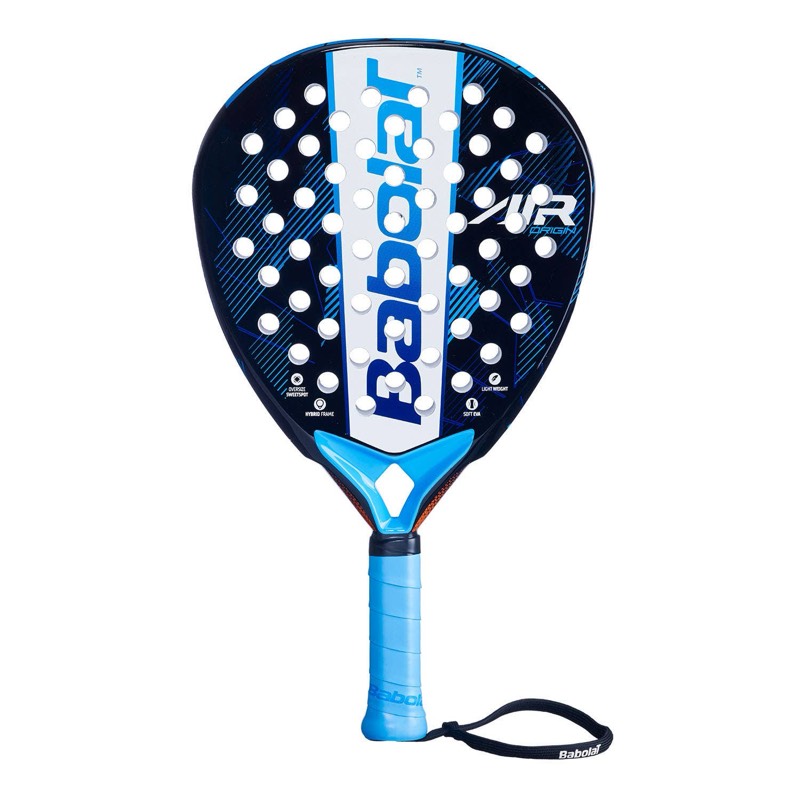
Babolat Air Origin 2026
The most widely stocked genuine entry racket in America — we found it at $98 at all three retailers, marked down from $140. It is light, aerodynamic and balanced rather than head-heavy, which is the right combination when your technique is still forming and your wrist is not yet used to absorbing overheads. You will outgrow it, and that is fine: at under $100 it has done its job if it gets you through a season.
Level: Beginner | Feel: Light, balanced | Price: $98 (was $140) | Shop at Racket Central
Tier 2 — first real racket ($120–$200)
Carbon appears, and so do real shape choices
This is where the spec sheet starts changing. Carbon shows up in the face or the frame, teardrop shapes join the round ones, and manufacturers stop treating the racket as a starter product. Twenty-two percent of US in-stock inventory sits here.
The best-value band for most American club players
If you play once or twice a week and you are not chasing a specific pro's frame, this is the band to shop. You get a racket that will not hold you back for two or three years, and you have not spent flagship money on a swing that is still developing. Our beginner racket roundup and the intermediate picks both concentrate here for exactly this reason.
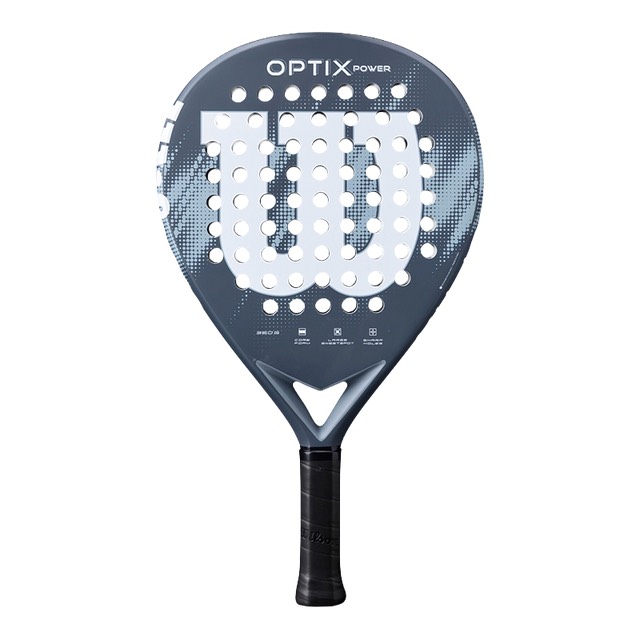
Wilson Optix V2 Power 2026
A current-season 2026 model at $159 at all three retailers, with no discount attached — which tells you the market considers it correctly priced rather than overstocked. Fiberglass face over responsive foam, balanced rather than head-heavy, and noticeably more ball output than the Lite version in the same line. A sensible second racket for someone who has stopped shanking volleys and wants more free power.
Level: Recreational to intermediate | Face: Fiberglass | Price: $159 | Shop at Racket Central
Tier 3 — enthusiast ($200–$300)
This is the biggest band on the American shelf — 36% of everything in stock. You are buying one of two things: a genuine 12K or 18K carbon frame, or last season's flagship from a major brand, now a year old and priced accordingly. If you are unsure which carbon weave you want, our 3K vs 12K vs 18K explainer covers what the numbers mean.
For most committed American players, this is the ceiling worth paying. The gains above $300 are real but narrow, and they mostly reward technique you may not have yet.
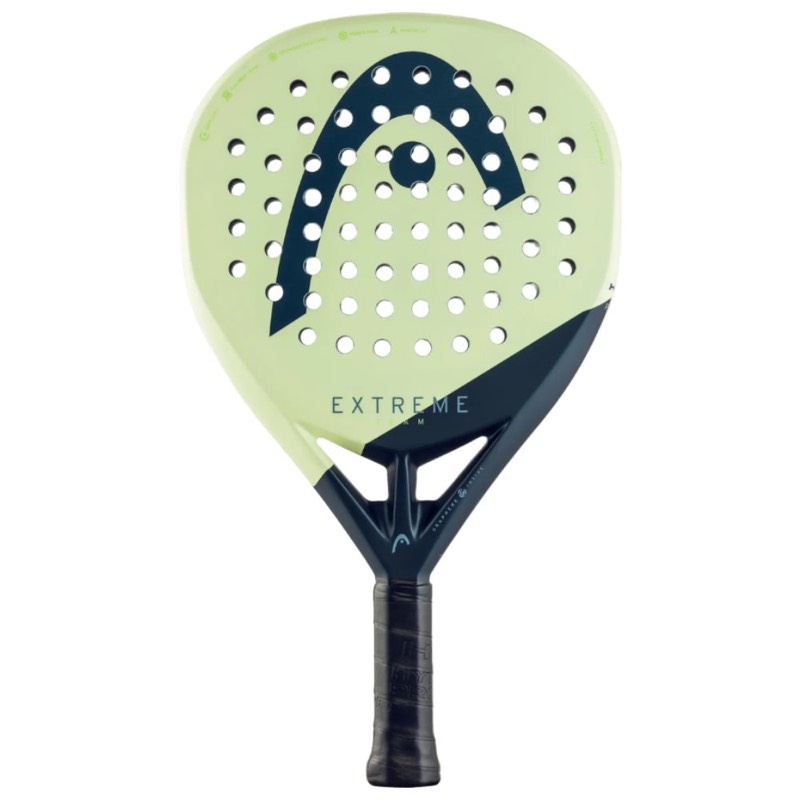
Head Extreme Team 2025
A perfect illustration of how this band works. It is a 2025 frame, still at full price ($209.95, identical at all three stores) in late 2026 — the US market simply has not moved on yet. Diamond mould and mid-high balance give you leverage on smashes and viboras, while the fiberglass face keeps it the softest and most forgiving racket in the Extreme line. Attacking shape, comfortable feel, and none of the flagship premium.
Shape: Diamond | Balance: Mid-high | Face: Fiberglass | Shop at Racket Central
Tier 4 — pro-level ($300–$450+)
What the extra money actually buys
Above $300 you are paying for a carbon face rather than fiberglass, a stiffer and more precisely tuned frame, better vibration damping, and — genuinely useful — customisation systems that let you shift weight and balance. The top of the US market runs to $690 (Racket Central's most expensive in-stock frame), though $450 is where the mainstream flagships land.
What it does not buy
Forgiveness. A head-heavy diamond frame with a stiff carbon face punishes a late swing far more than a $150 round racket does. If your overhead is inconsistent, a pro frame will make it worse, not better — and it will be harder on your elbow while doing it. Buy this tier because your technique has outgrown your equipment, not to skip a step.
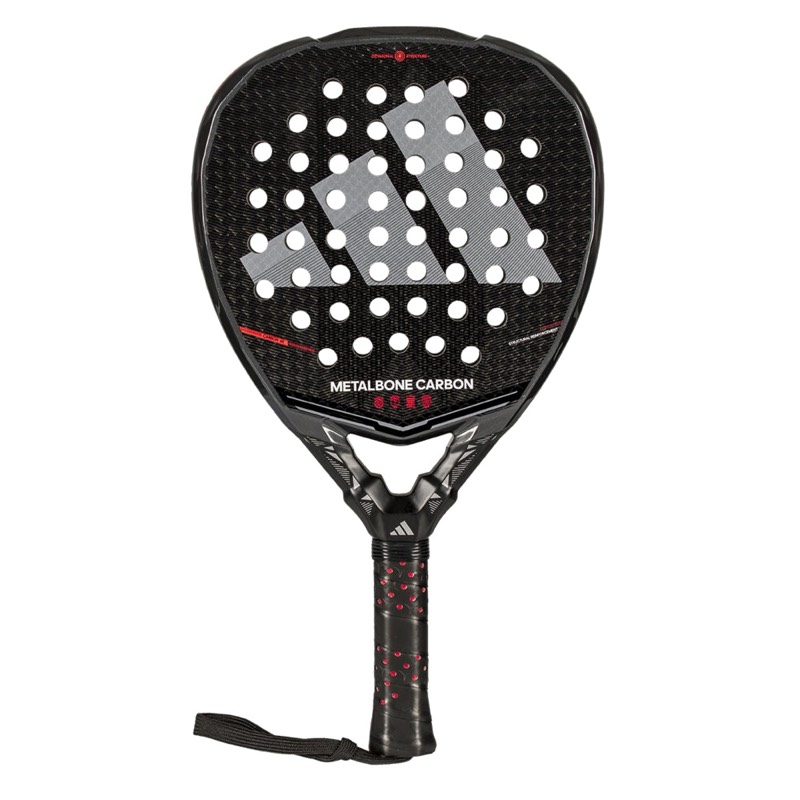
Adidas Metalbone Carbon 2026
The entry point to the flagship Metalbone family, at $305 across all three retailers. Carbon 6K face, diamond shape, head-heavy balance with a high sweet spot, and a soft-performance EVA core that takes some of the harshness out of a very stiff frame. The weight-and-balance customisation system is the part you will actually use. Note that the full Metalbone HRD+ and CTRL models run to $455 at the same stores — this is the accessible end of a premium line.
Shape: Diamond | Face: Carbon 6K | Weight: 360–375g | Balance: Head-heavy | Shop at Racket Central
Why US prices differ from European prices
The model-year lag
American stores run roughly a season behind Europe, and it shows in what is discounted. At Padel USA, every single 2025-labelled racket in stock was marked down — 5 out of 5 — against only 40% of 2026 models. The Head Extreme Team above is still listed at full price a year after release because US inventory turns over more slowly.
Practically: when a European guide tells you a racket is "last season" and should be cheap, check the American price before believing it. It may still be the current frame here.
Thin distribution means fewer discounts — and bigger gaps between stores
We matched 59 rackets carried by both Padel USA and Tennis Express. Forty-nine were priced identically — same racket, same dollar figure, to the cent. US padel pricing is largely fixed by distributors.
But the ten exceptions were not small. The Babolat Viper Juan Lebron 3.0 was $259 at one store and $370 at the other, a $111 spread on an identical racket. The Head Evo Speed 2025 was $79.95 at Racket Central and $99.95 at Padel USA. The lesson is not to hunt for bargains everywhere — it is that when prices do diverge, they diverge enormously, so check all three before buying. Our US retailer guide breaks down who carries what.
The total cost of getting on court
The racket is not the whole bill. Using live in-stock prices from the same retailers:
| Item | Realistic US range |
|---|---|
| Racket | $98–$305 |
| Padel shoes | $73–$170 (median $115) |
| Balls (3-ball tube) | $7.00–$7.50 |
| Overgrips (12-pack) | $29 |
That puts a complete first setup at roughly:
- Budget: $98 racket + $73 shoes + a tube of balls + grips ≈ $207
- Middle: $159 racket + $115 shoes + two tubes + grips ≈ $318
- Enthusiast: $305 racket + $135 shoes + two tubes + grips ≈ $484
Court fees are the separate — and usually larger — line item; we break those down by city in how much it costs to play padel in the US. If you would rather buy the whole kit at once, our padel starter kit guide lists the specific pieces.
One consolation: a racket is not an annual purchase. Played twice a week, most frames last a couple of years before the core softens enough to matter — the signs are covered in how long a padel racket lasts.
When to buy
Prices in this market move on a predictable calendar rather than at random, and the prior-season clearances are where the real money is saved — that 100% discount rate on 2025 stock is not an accident. We track the whole year, Black Friday included, in when to buy padel gear.
If you have settled on a budget but not a racket, start with how to choose a padel racket for shape, balance and core, then check the current top picks across every level.
Prices verified from live US retailer inventory on September 23, 2026. Stock and pricing change weekly.
Frequently Asked Questions
Continue Reading
Best Padel Training Aids 2026: Rebounders & Reaction Tools
Best Padel Training Aids 2026: Rebounders & Reaction Tools
Court time is the scarcest thing in American padel, so the only training aids worth owning are the ones that buy you reps you cannot otherwise get. We checked stock and pricing directly against each US retailer's own product data. Nine picks, three budget builds, and a short list of what to skip.
When to Replace Padel Shoes: Wear Signs & Real Lifespan
When to Replace Padel Shoes: Wear Signs & Real Lifespan
Padel shoes wear out on playing hours, not calendar months, and the 60-100 hour figure everyone quotes is a planning tool rather than a verdict. Here are the five wear signs that actually decide it, why the indoor-heavy US court mix changes the math, and what to buy next at verified 2026 US prices.
Can You Wear Tennis Shoes for Padel? A 2026 US Guide
Can You Wear Tennis Shoes for Padel? A 2026 US Guide
Tennis shoes will get you on a padel court, and most US clubs are fine with it. But the useful question is which tennis shoes: clay-court models are close to the real thing, hard-court models slide when you need to stop, and running shoes are an ankle injury waiting to happen.