


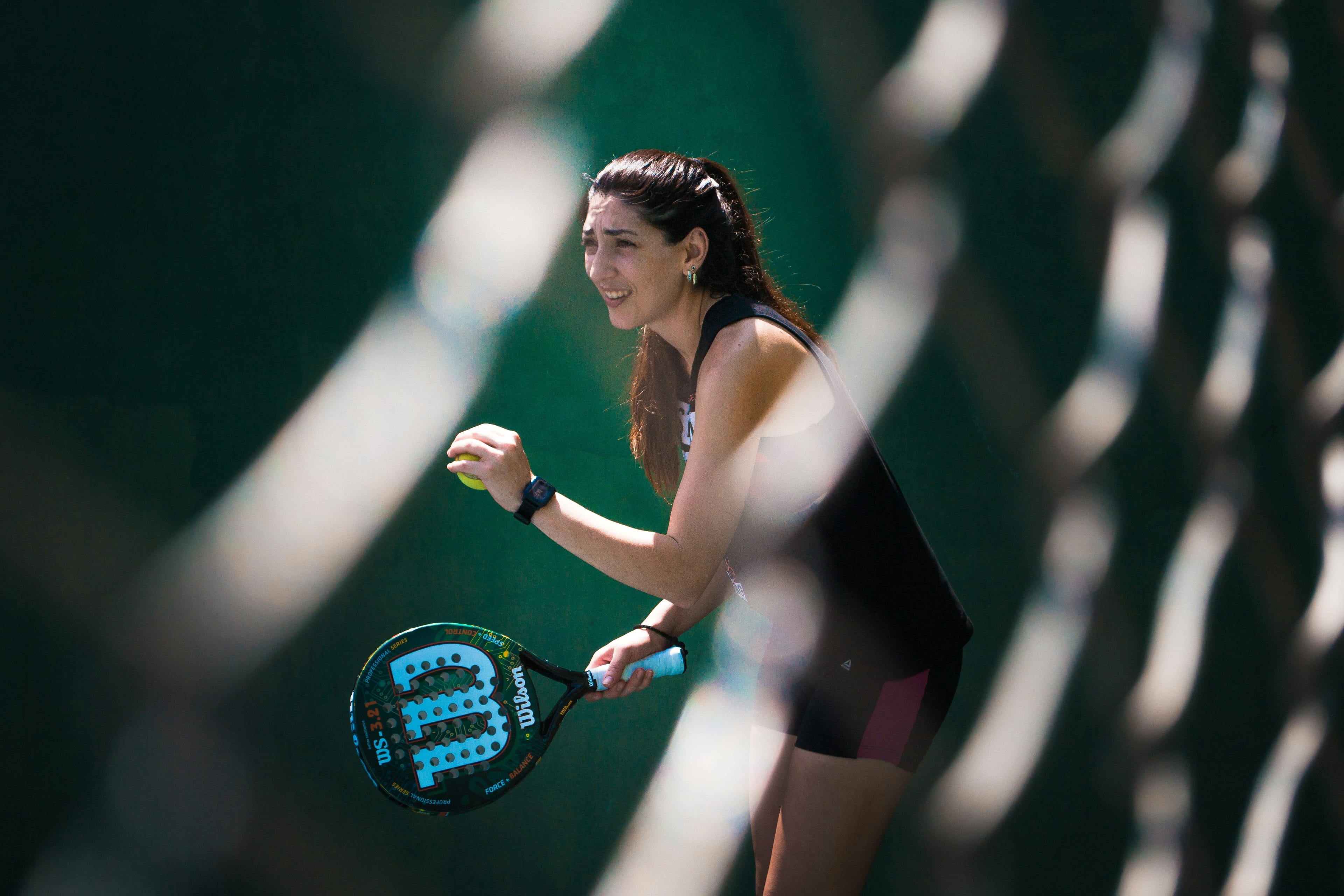
Padel Ball Pressurizers: Worth It and Where to Buy

Padel Ball Pressurizers: Worth It and Where to Buy
What the physics supports, what it actually costs, and the four units a US player can really buy
Every few weeks someone in a padel group chat asks whether those sealed ball tubes are worth buying. Most of what is written about this gives you only half the answer: yes, the physics works — and no, the device that makes the most financial sense is not the one padel retailers sell.
We read the full product catalogue of all four US padel retailers and three brand sites on 28 October 2026. Here is what is in stock, what it really costs, and the play frequency at which a pressurizer stops making sense.
What a pressurizer actually does
A pressurized ball is a rubber shell holding gas above atmospheric pressure, and rubber is not airtight — gas diffuses out through the wall in proportion to the pressure difference across it. A pressurizer is a sealed chamber you pump up to roughly the pressure inside a fresh ball, which flattens that difference and all but stops the leak.
That is the entire mechanism. It is sound, uncontroversial, and it addresses only one of the two things that kill a padel ball.
The honest case for and against
Pressure comes back, felt does not
As we found when we measured how long padel balls actually last, two clocks run on an open can at completely different rates. Pressure starts draining the moment you break the seal and keeps draining whether you play or not. Felt only wears when the ball touches something — and in padel it touches plenty, because the mesh fence presents an edge at every wire crossing.
A pressurizer stops the first clock and does nothing about the second. It cannot revive a ball you have played bald, so the word "restore" in the marketing is doing quiet work: you are restoring pressure, not the ball.
Ignore the psi number on the box
This is where nearly every article on the subject gets careless. The three devices we checked quote three different target pressures: Tourna Restore fixes its chamber at 14 psi, the Pressure Pod adjusts up to 29 psi, and PressureBall advertises letting you "pump to the exact 11 psi required for Padel."
That last claim has no source. The FIP rulebook does mandate a ball pressure — unusually, tennis's governing body does not — but it writes the figure as "between 4.6 Kg and 5.2 Kg per 2.54 square cm," which does not convert cleanly into psi, and publishes no psi equivalent anywhere. A vendor quoting a precise psi "required" for padel is supplying a number the rulebook does not.
The rules do give you a test you can run on your kitchen floor. Drop a ball from 2.54 m onto a hard surface and a legal one rebounds 135–145 cm. Hold a used ball beside a new one, release both, and watch. That tells you more than any gauge on a lid.
Doing the math for a US player
What a can actually costs here
Verified at Racket Central today: the cheapest sustained per-can price is the Head Padel Pro S+ four-can bundle at $20.99, or $5.25 a can — its own 24-can case is dearer per can at $6.25, a pricing inversion worth exploiting unless you are stocking a club. Singles run $6.50 to $6.99, and Tennis Express undercuts everyone on one line at $4.95.
The math below uses $5.25, which is deliberately unkind to the pressurizer: cheap balls make it harder to justify, so if it still pays back the conclusion is robust.
The break-even table
The model: 90-minute sessions, you supply the balls, felt gives out around four to six hours of court time (roughly three sessions), and an opened can goes meaningfully flat in about a week. Without a device a can dies at whichever limit arrives first. With one, only the felt counts.
| You play | Cans/year without | Cans/year with | Saved/year | $17.99 unit | $109.95 unit |
|---|---|---|---|---|---|
| Once a week | ~35 | ~17 | ~$95 | pays back in ~2 months | ~14 months |
| Three times a week | ~62 | ~52 | ~$53 | ~4 months | ~2 years |
| Five times a week | ~87 | ~87 | ~$0 | never | never |
Treat those as the shape of the answer rather than to the dollar — felt life depends on how much mesh your group hits.
Why the saving shrinks the more you play
That inversion is the part no retailer will print, and it falls straight out of the mechanism. Play once a week and stretching a can over three sessions means stretching it across three weeks: pressure kills it long before the felt gives out, so suspending the pressure clock roughly doubles what you get per can. Play five times a week and you open a can every four days — pressure never gets the chance to be your problem, felt is the binding constraint, and a pressurizer has nothing left to save you.
So the device pays back fastest for the player who plays least, and the heavy player it is marketed to benefits least. Rotate balls with three others and you buy a quarter of the cans and save a quarter as much — still enough to clear an $18 canister inside a year, never a $110 tube. If your club puts balls on court for open play, you buy almost none and this is not a purchase at all. It genuinely stacks up for two groups: coaches and clubs buying by the case, and players on premium balls who would rather not replace them weekly.
Where to buy one in the US
We read every product in all four US padel retailers' catalogues rather than trusting their search boxes, which miss things. Racket Central (2,327 products) carries exactly one padel pressurizer. Padel USA (345 products), Padel Padel (1,208) and Tennis Express's padel range (234) carry none. The US tennis channel is no help either: searching Tennis Express or Do It Tennis for "pressurizer" or "ball saver" returns ball hoppers, string savers and pressurized balls — the words match, the category does not.
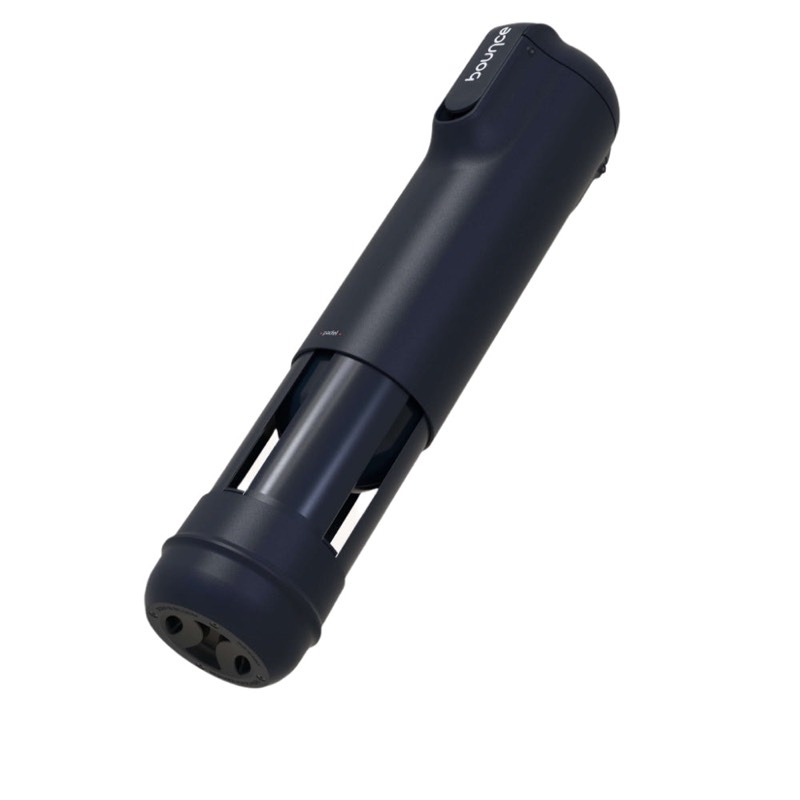
Smash Life Bounce Tube (Padel)
French-made, 40 cm tall, with a patented pump built into the lid so there is nothing separate to lose. It is the only unit here sold as a padel product — though Smash Life lists a tennis variant at the same price with identical published specs, so the differentiation is on the label, not in the documentation. The spec that should decide your purchase is the one reviews skip: hermeticity is guaranteed for at least 10 days after sealing. A between-sessions tool, not winter storage.
Shape: Sealed tube, pump built into the lid | Size: 40 × 20 cm | Weight: 700 g | Seal holds: 10+ days | Made in: France
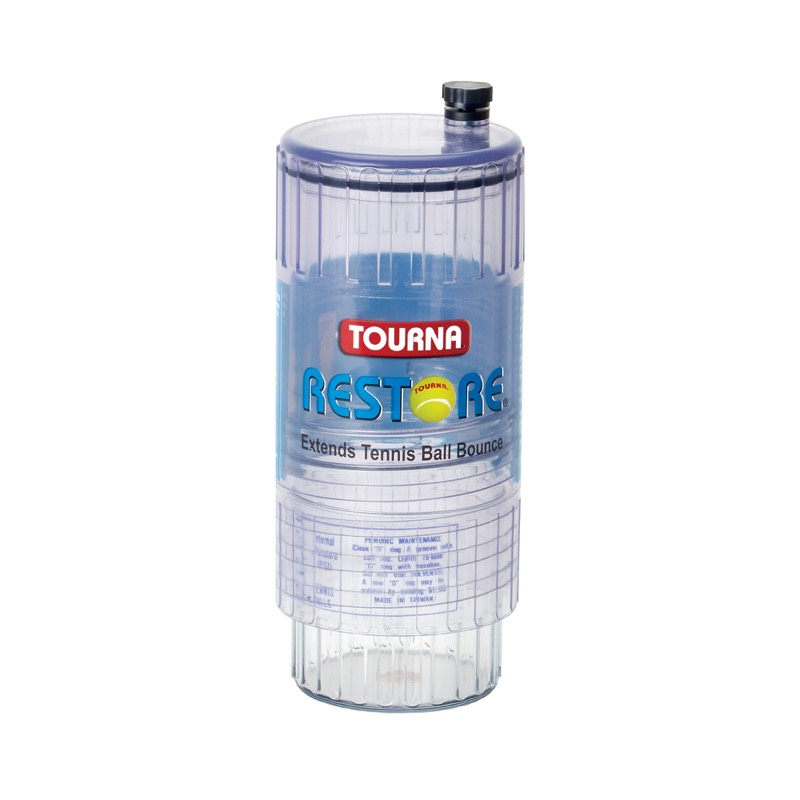
Tourna Restore
Two halves that screw together into a chamber Tourna rates at 14 psi, "which is equal to an unopened can of balls." No pump, no battery, no valve to fail. It is sold for tennis and never mentions padel, but padel balls measure marginally narrower, so they drop straight in. Read Tourna's own wording: "the balls stay at the same pressure as when you put them in there." Despite the name, this is a maintenance device — it keeps a good ball good and will not rescue a bad one. At $17.99 from a US brand shipping domestically, it is the only option here that pays for itself in a season.
Shape: Two-part canister that screws together | Chamber: Fixed at 14 psi | Sold by: Tourna, direct | Marketed for: Tennis
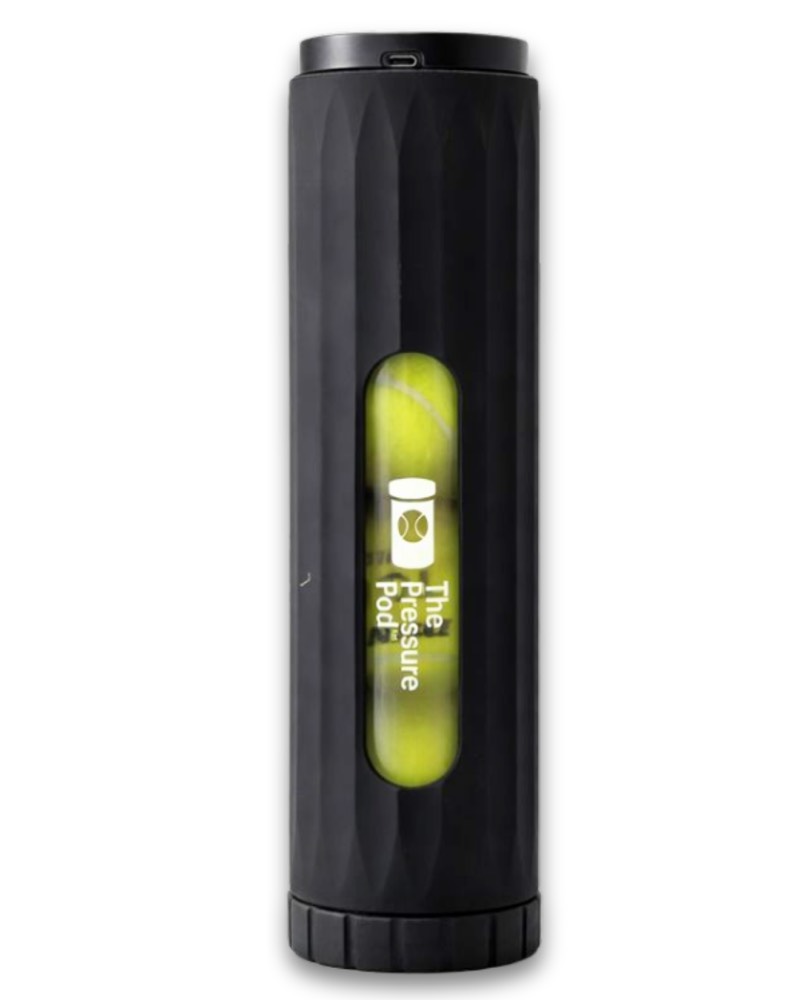
Pressure Pod MAX
The automatic category: a rechargeable chamber where you set a target and the pump holds it — up to 29 psi to bring a soft ball back, around 20–22 psi to hold a good one between sessions. Sold explicitly for padel as well as tennis, it is the only unit here that raises pressure rather than merely preserving it. Check the currency before you get excited: the storefront runs in euros out of the Netherlands, so that 104.99 is €104.99, about $117 at today's rate. The cheaper-looking alternative is dearer than the padel tube Racket Central ships from inside the country — before duty.
Shape: Automatic rechargeable pressure chamber | Pressure: Adjustable, up to 29 psi | Listed at: EUR 104.99 | Ships from: Netherlands
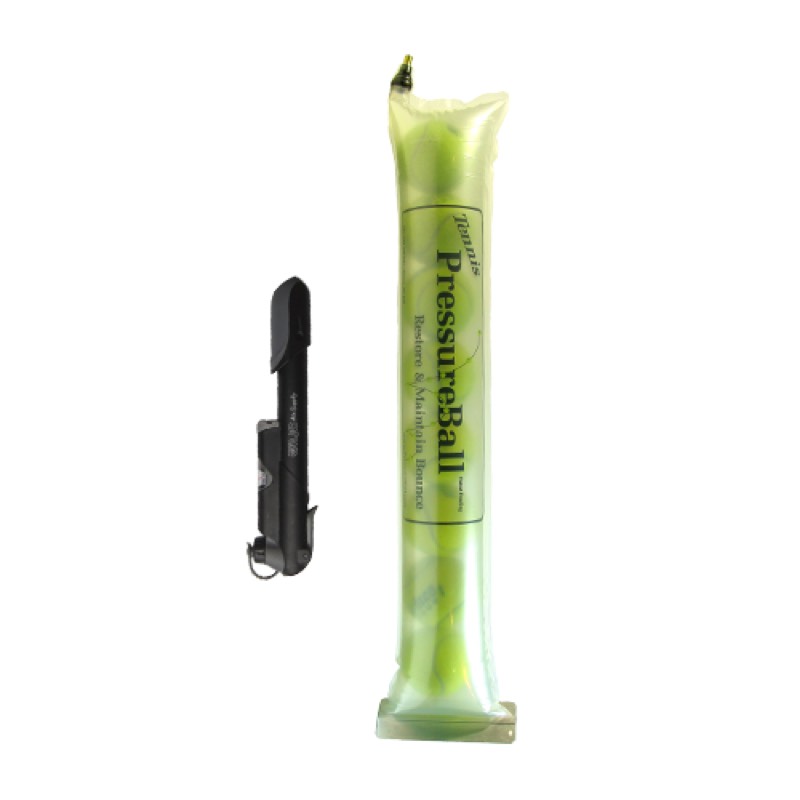
PressureBall
A heat-sealed multi-ply sleeve rather than a rigid tube, holding up to eight balls at 14 psi and inflated with a separate hand pump. Free worldwide shipping and a money-back guarantee are both confirmed on the company's own site, and it is the cheapest device here by a wide margin: tube and pump list together at NZ$54, roughly $31. Two caveats — the pump is a separate line item you must remember to add, and this is an import, so the page price is not the price at your door.
Shape: Heat-sealed multi-ply sleeve, separate hand pump | Chamber: 14 psi | Capacity: Up to 8 balls | Listed at: NZ$54 for tube and pump | Ships from: New Zealand
What you will actually find if you search for a "tube"
Most tubes in US padel stores are pick-up tubes: they collect balls off the turf and seal nothing. Racket Central lists the Babolat Padel Ball Tube at $39.99 and the Wilson Padel Pick Up Tube at $50.00 under exactly that heading, and Padel Padel has an Adidas pick-up tube at $35.00. The price band is the tell — a real pressurizer is either an $18 canister or a $100-plus device, so anything from $25 to $50 calling itself a tube is a carrier. Insist the listing names a pump or a sealed chamber.
Both imported units also carry a cost that briefs written a year ago would have missed. The US $800 de minimis exemption that let small personal orders in duty-free is gone, suspended for all countries and made indefinite by a rule effective in June 2026. A $31 sleeve from New Zealand is no longer a $31 sleeve on your doorstep — the same trap we covered in the gear you cannot buy in the US.
Storage habits that beat the device
- Open cans on the day you need them. The pressure clock starts at the seal, not the first rally. A cheap ball opened fresh beats a premium ball opened ten days ago — and this costs nothing.
- Keep them out of a hot car. Heat speeds diffusion through the rubber, so a can on a dashboard loses pressure permanently without being hit once.
- Rotate your match balls. Freshest can for games, yesterday's for warm-ups.
- Do not stand an opened can upright. Gas diffusion is indifferent to orientation. Moisture and heat are not.
The bottom line is narrower than the marketing and wider than the scepticism. At $17.99 the Tourna canister pays for itself within a season for most once- or twice-a-week players, and it is the only pressurizer here you can buy domestically under $100; the $109.95 padel tube is the better object and the harder sell. Either way, opening cans on the day you play is free and does more for your bounce than any sealed chamber. For what goes in the tube, start with our 2026 padel ball buying guide; for where else to shop, our US retailer guide and sale calendar. One also makes a good padel gift for the player who already owns three rackets.
Frequently Asked Questions
Continue Reading
Best Padel Rackets Under $250: 2026 US Buyer's Guide
Best Padel Rackets Under $250: 2026 US Buyer's Guide
We checked every padel racket in stock between $150 and $250 across three US retailers and picked eight, organized by what you actually need. Along the way we found two things no retailer page will tell you: almost nobody publishes balance as a number, and the same clearance racket can cost $125 more depending on where you buy it.
Best Padel Rackets Under $150 in the US: 2026 Picks
Best Padel Rackets Under $150 in the US: 2026 Picks
A $150 ceiling buys more padel racket than you would think: the whole entry band plus last season's mid-range on markdown. We swept all four US padel retailers, pulled every frame's own published specs, and picked seven that are in stock today — from a $79.99 entry frame to a 35%-off Bullpadel that normally costs $225.
How to Spot a Fake Padel Racket: A US Buyer's Guide
How to Spot a Fake Padel Racket: A US Buyer's Guide
Counterfeit padel rackets are real, but a low price alone proves nothing — the US also has a large grey-import trade that isn't fake at all. Here are the five checks that actually work, including the weigh-and-measure test no other guide covers, and what to do if you have already bought one.