
How Long Do Padel Balls Last? Pressure, Storage & Cost

How Long Do Padel Balls Last? Pressure, Storage & Cost
What the FIP rulebook actually specifies, the tests that tell you a ball is dead, and what your can habit costs per session in the US
A can of padel balls costs about the price of a coffee, and almost every player either bins them too early or plays three weeks past the point where the ball stopped doing what a ball is supposed to do. If you are still deciding which can to buy, our 2026 padel ball buying guide covers brands, FIP approval and altitude. This post answers one question: how much life does the can in your bag actually have left?
The Short Answer
- One competitive session — 90 minutes of hard doubles. A new can is noticeably past its best by the end. Sanctioned play changes balls on a fixed schedule for exactly this reason.
- Social padel — a can stays genuinely playable for roughly four to six hours of court time, across two or three sessions.
- A coaching basket — months. A different category entirely, covered below.
Published figures run anywhere from four hours to twelve, and that spread is not sloppiness. It is people measuring two different moments: when a ball first feels different, and when it is actually unplayable.
The deeper reason is that two things wear out at completely different rates. Pressure runs on a clock that starts when you break the seal and keeps running whether you play or not. Felt only wears when the ball touches something. A can left open in your trunk for a month is dead without a single rally; a can you played four hard hours with still has usable felt and no pressure. Most players track the felt, because it is visible, and ignore the pressure — which is the thing that actually changed.
Why Padel Balls Go Dead
Pressure loss through the rubber wall
A pressurised ball is a rubber shell holding gas well above atmospheric pressure, and rubber is not airtight — it is a slow membrane. Gas diffuses out continuously, driven by the difference between the pressure inside and the air outside. Inside a sealed can that difference is close to zero, because the can is pressurised too; that is the entire point of the can. Sealed cans do go stale eventually as the seal creeps, over a year or more, but shelf age is a minor variable next to the day you opened it.
Felt wear from the glass, the turf and the mesh
Padel is harder on felt than tennis, because the ball keeps meeting surfaces a tennis ball never touches. Court turf is mildly abrasive by design — the sand infill is what grips the ball, and what scuffs it (padel court surfaces explained covers how much the surface changes play). Glass is smooth and does almost nothing. The mesh fence is the ball-killer: every wire crossing is an edge, and a ball that takes three or four mesh rebounds comes off visibly fuzzed and slightly lopsided. Matted, bald felt slides off the strings instead of biting, holds less spin, and skids low off the turf.
The clock starts when you crack the seal
Peel the lid and the pressure difference across the rubber goes from near-zero to full, so the ball loses pressure every hour afterwards — on court or in your bag. This is why the honest answer to "how many matches does a can last" depends on how many days those matches are spread across, not only how many hours you played. Open the can on the day you intend to use it: if you play twice a week, a cheaper ball opened fresh beats a premium ball stretched over ten days.
How to Tell a Ball Is Done
The drop test is the only objective one, and it works because the governing body specs it. Per the FIP Rules of Padel, a new ball dropped onto a hard surface from 2.54 m must rebound between 135 and 145 cm — just over half the drop height. Hold a used ball and a new one at the same height and release them together; if the used one comes back visibly lower, it is finished. Players consistently underestimate how much pressure they have lost until they see the two side by side.
Two quicker checks: squeeze the ball hard between thumb and fingers, where a live ball barely gives and a dead one feels soft through the middle; and listen, because a live ball off the strings is a sharp crack and a dead one a dull thud.
The glass tell is the padel-specific symptom. Dying balls lose their rebound off the glass before they lose their bounce off the turf, so the wall shot you have read all season starts dropping short and it feels like you are mis-timing. You are not. Check the balls.
Padel Balls vs Tennis Balls on Lifespan
It gets repeated everywhere that padel balls are far lower pressure and much smaller. Put the two rulebooks side by side and the gap is narrower than the internet suggests:
| Spec | Padel (FIP) | Tennis, Type 2 medium (ITF) |
|---|---|---|
| Weight | 56.0–59.4 g | 56.0–59.4 g |
| Diameter | 6.35–6.77 cm | 6.54–6.86 cm |
| Rebound from a 254 cm drop | 135–145 cm | 135–147 cm |
Identical weight, about 2 mm narrower at both ends of the range, and a rebound ceiling 2 cm lower. Real differences, but not dramatic ones.
What actually differs is how the two bodies write the spec. FIP requires a specific internal pressure — "between 4.6 Kg and 5.2 Kg per 2.54 square cm," verbatim. The ITF does not specify internal pressure for pressurised balls at all; it specifies deformation under load instead, and explicitly permits pressureless Type 2 balls. So a padel ball has a pressure floor to fall below and a tennis ball, in regulation terms, does not. That is most of why padel players replace balls more often, even though the two are built much the same way.
Storage: What Actually Helps
Pressuriser tubes: do they work?
A pressuriser is a sealed tube with a pump that puts the gas back between sessions. The physics is sound — you cannot restore felt, but you can restore pressure. US availability is the problem: across the three retailers we track, exactly one padel-specific unit is in stock.
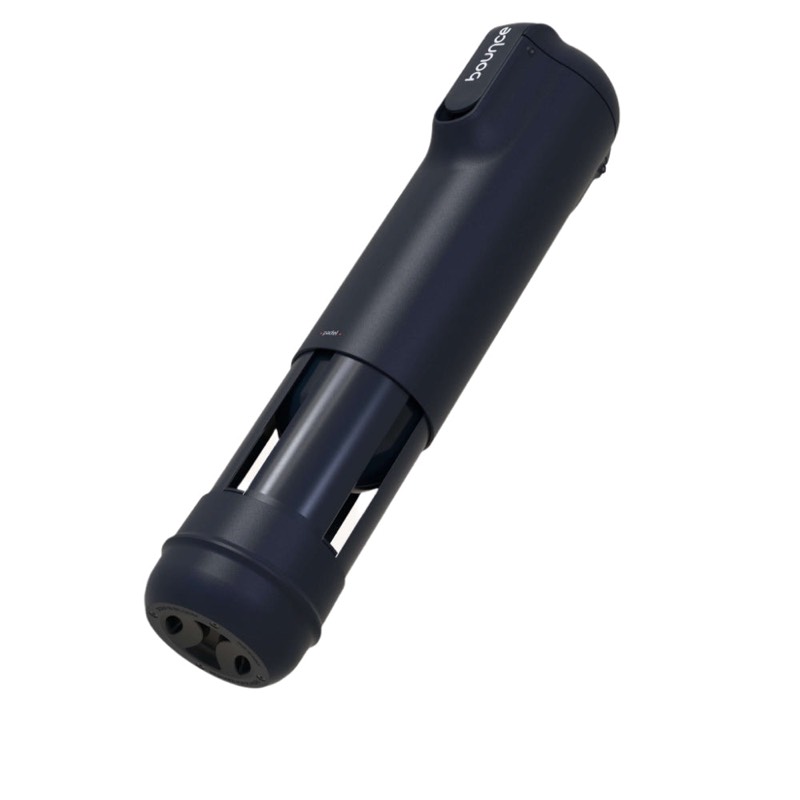
Smash Life Bounce Tube (Padel)
French-made, 40 cm tall, with the pump built into the lid. Smash Life claim it makes balls last at least three times longer. The spec most reviews skip is the one that should decide your purchase: hermeticity is guaranteed for at least 10 days after sealing. This is a between-sessions tool, not a store-it-for-the-winter tool.
Payback depends entirely on who buys the balls. Open a can every session twice a week and you are spending roughly $650 a year at case prices, so a genuine 3× improvement pays the tube back in about three months. Rotate with three others and supply a can every fourth session and you are at about $160 a year, which stretches payback to roughly a year. If your club hands you balls for open play, you buy almost none and it never pays back. Most US recreational players sit in those last two groups, which makes this a coach's purchase rather than a default one.
Shape: Sealed pressuriser tube, pump in lid | Height: 40 cm | Weight: 700 g | Seal holds: 10+ days | Made in: France
What you will actually find in US stores
Most tubes on US shelves are pick-up tubes, not pressurisers — they collect balls off the turf and seal nothing. Racket Central lists the Bullpadel Pick Up Tube at $25.00 and the Babolat Padel Ball Tube at $39.99 in that category. Padel USA stocks no pressuriser, and neither does Tennis Express, whose "ball saver" results return hoppers and string savers. If a listing does not say pressuriser and name a pump, it is a carrier.
Heat, car trunks and cold garages
Heat raises pressure in the short run, which is part of why balls fly long on a hot afternoon (playing padel in the heat has the rest), but it also speeds diffusion through the rubber, so heat costs you pressure permanently. A can left on a dashboard in Arizona, Texas or Florida in July is the fastest way to kill balls that have never been hit.
Cold is mostly reversible. Gas pressure scales with absolute temperature, so going from 75°F to 40°F drops a ball's absolute internal pressure by about 6.5%. Because only the pressure above atmospheric does the bouncing, the part you feel falls by roughly two to three times that — which is why balls play like bricks in the cold and recover indoors (playing padel in cold weather covers the rest).
Does storing an opened can on its side matter?
Mostly no, and it is worth saying plainly — gas diffusion does not care about orientation, and an opened can has no seal left to compromise. What matters over months is moisture, which mats the felt and makes the ball heavy, and heat. A dry shelf indoors beats a perfectly upright can in a hot garage.
Cost Per Session
US prices verified 6 October 2026. Buying by the single can is the expensive way to do it:
| Buy | Price | Per can |
|---|---|---|
| Head Padel Pro S+, single can — Racket Central | $6.99 | $6.99 |
| Head Padel Pro S+, 4-can bundle — Racket Central | $20.99 | $5.25 |
| Head Padel Pro S+, 24-can case — Racket Central | $149.95 | $6.25 |
| Babolat Court Padel, single can — Racket Central | $6.50 | $6.50 |
| Head Padel Pro+, box of 24 — Padel USA | $164.95 | $6.87 |
| Wilson Premier, box of 24 — Padel USA | $168.00 | $7.00 |
Note the oddity worth exploiting: Racket Central's four-can bundle at $5.25 a can undercuts its own 24-can case at $6.25. Unless you are stocking a club, the small bundle is the better buy.
Now run it per player. One $6.25 can split across a doubles four is $1.56 each for a competitive session. Stretch the same can across three social sessions and you are at about 52 cents a head. Against a US court fee that typically runs $40–$80 an hour — our full cost breakdown has the ranges by city — balls are a rounding error, which is the real argument for opening a fresh can more often, not less.
What Clubs Do
Clubs that supply balls for open play rotate them hard, so the can on your court is often one or two sessions old — a club that lets balls go dead collects complaints quickly. If your own can feels sluggish next to the club's, that is the comparison you are unconsciously making.
Coaching baskets are a different category. Drill balls get hit hundreds of times a session, so clubs buy for durability over liveliness and many use pressureless balls, which hold their feel for months. Pressureless balls cannot satisfy FIP's internal-pressure requirement, so they are not legal for sanctioned play — but for feeding a hundred backhands, consistency beats a sharp bounce. Do not judge your own ball habit against a coach's basket.
Balls are the fastest-cycling item in a padel bag and the cheapest to get right. The slower, costlier clocks are the racket and the shoes — see how long a padel racket lasts and when to replace padel shoes, or our US retailer guide for where to buy any of it.
Frequently Asked Questions
Continue Reading
Best Padel Gifts 2026: US Gift Ideas for Every Budget
Best Padel Gifts 2026: US Gift Ideas for Every Budget
Every padel gift guide ranking on Google prices in pounds or euros, which is no help if you are shopping from Austin or Brooklyn. This is the US version: organised by budget from under $25 up past $200, with every price in USD from a store that ships domestically. Starting with the one gift you should not buy.
Best Oxdog Padel Rackets 2026: The Complete US Guide
Best Oxdog Padel Rackets 2026: The Complete US Guide
Oxdog has quietly become one of the few European padel brands you can actually buy in the US, but only from a single store. We verified every weight, foam grade and price in the 2026 lineup against the manufacturer's own spec sheet, and found one notable gap in the range.
Best Asics Padel Shoes 2026: US Prices & Real Stock
Best Asics Padel Shoes 2026: US Prices & Real Stock
Asics padel shoes finally reached US retail in September 2026 - but only at one of the three US padel stores, and not from Asics itself. We paged all three catalogs to confirm what is actually buyable, then broke down the GEL-Resolution X, SonicSmash FF and GEL-Challenger 15 with real prices, size runs and the markdown pattern worth knowing before you order.