


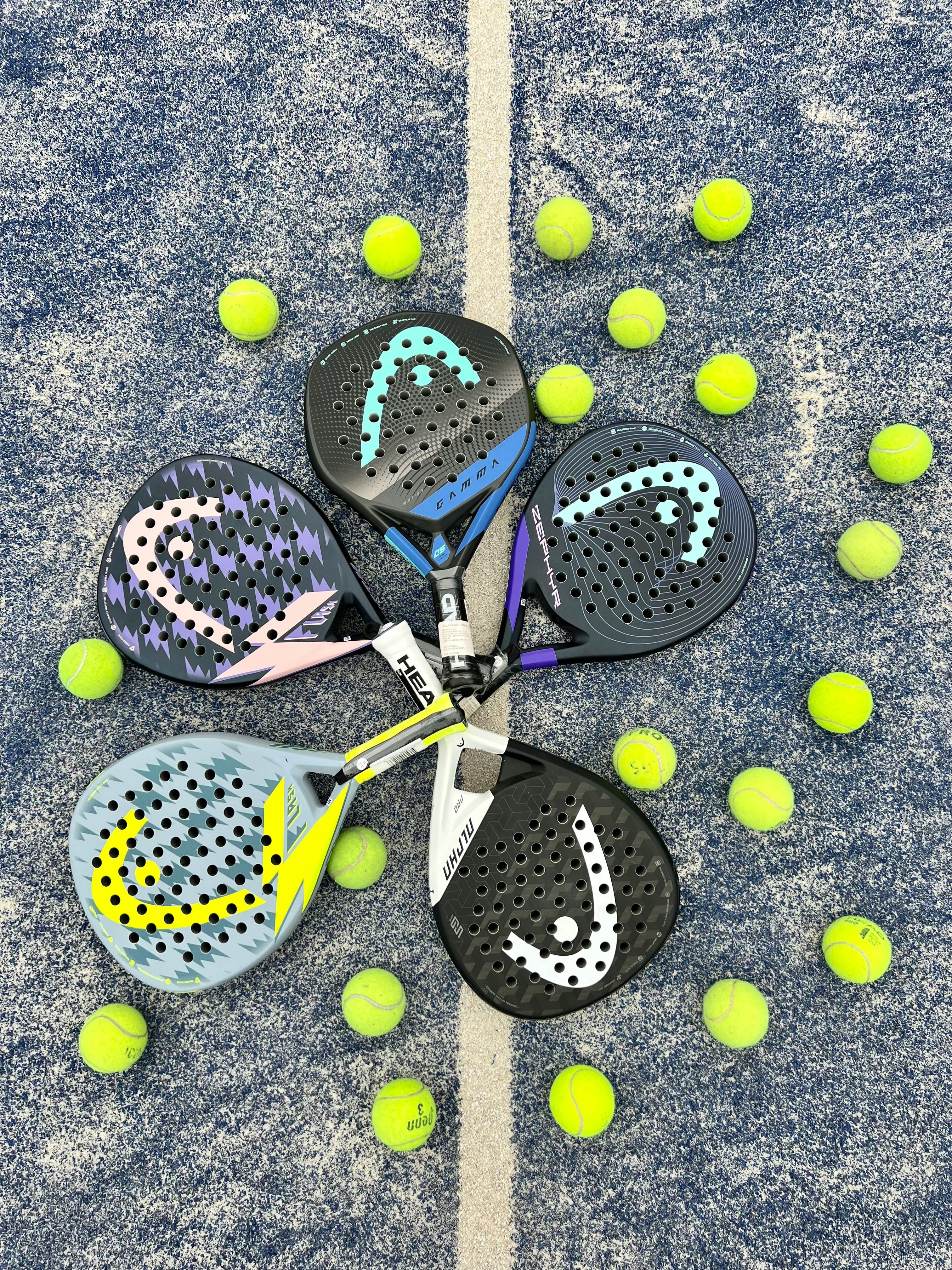
Importing a Padel Racket to the US: Duties & Real Cost

Importing a Padel Racket to the US: Duties & Real Cost
What the de minimis repeal, a 10% EU rate and $29 of fees do to a European bargain
For years the answer to "the US doesn't stock the racket I want" was simple: order it from Spain. That advice is now wrong in its old form — the $800 duty-free shelter it depended on is gone — but it has not flipped all the way to "never import." It has turned into arithmetic.
We priced it out on 29 October 2026 using one retailer that runs both a Spanish and a US storefront, so the same frames could be compared without guessing at exchange rates. The short version: importing a racket still wins, but only when the US price is roughly a quarter higher than the European one. Below that line, duty and fees eat the discount and you pay more for a slower delivery and a harder return.
What changed, and what changed again this year
The $800 de minimis exemption is gone. It ended for all countries on 29 August 2025, and a CBP final rule effective 24 June 2026 (91 FR 37789) made the suspension indefinite for everything arriving outside the international postal network. A statutory repeal follows on 1 July 2027. One racket in one box is now a customs entry like any other shipment. CBP's own factsheet also killed the flat-rate postal workaround: every shipment has had to use the ad valorem method since 28 February 2026.
But the tariff rates everyone quotes have changed too. Most guides still describe "reciprocal" tariffs of 15–40%. Those were imposed under IEEPA, and the Supreme Court struck them down in February 2026; the temporary surcharge that replaced them lapsed in July. What applies to European goods now comes from a USTR Section 301 action (91 FR 47318), effective for goods entered on or after 24 July 2026. If you read a padel buying guide written before this summer, its numbers are stale.
What a padel racket actually gets charged
There is no padel line in the Harmonized Tariff Schedule. Tennis and badminton rackets have their own subheadings; racquetball and squash are named under 9506.59.80, the residual "other rackets" basket at a 4% general rate. Padel has no home of its own, so that basket is where it most plausibly lands — and your broker is the one who signs for that call.
Then the EU provisions do something unusual. Headings 9903.05.38 and 9903.05.39 split European goods by their underlying rate, and note 52(k) to the subchapter spells out the result:
"For headings 9903.05.39 and 9903.05.76, articles for which the applicable column 1 duty rate is less than 10 percent, the sum of the column 1 duty rate and the additional ad valorem rate of duty is 10 percent ad valorem."
So for an EU-origin racket the total is 10%, all in — not 4%, and not 4% plus a surcharge. Goods already dutied at 10% or more take no addition at all. That is a knowable number, which is more than most import guides can offer. It is also specific to European origin, which brings us to the thing the product page won't tell you.
The fact the listing hides: origin, not shop location
Duty follows the country where the racket was made, not the country of the shop that sold it. Buying from Barcelona does not make a frame European. A China-origin racket sits under heading 9903.05.31, which adds 12.5% on top of the 4% — and pre-existing China measures can stack further.
We pulled the full listing for the Adidas Metalbone HRD+ 2026 at padelmarket.com. It publishes brand, model, player, year, shape, balance, weight range, core, face material, surface, sweet spot and playing level — and no country of origin anywhere. The one fact that decides your duty rate is the one spec nobody prints. Ask before ordering, and treat a seller who won't answer as a reason to buy domestically.
The real landed cost
Four line items, not two: item price + shipping + duty + fees. The fees are small individually and they are the ones buyers forget. Under the FY2027 customs fee schedule (91 FR 48398, in force since 1 October 2026): an informal entry costs $2.77 when it is automated and not prepared by CBP staff, plus $1.38 per waybill for express-carrier shipments. Cross $2,500 and the shipment becomes a formal entry, where the processing fee is 0.3464% with a $34.58 minimum — so a big consolidated order trips a different, more expensive regime.
On top sits your carrier's own duty-advancement fee for fronting the duty on your behalf — typically a flat minimum or a percentage of the duty advanced, whichever is greater. We could not verify a single current figure that held across carriers, so check your carrier's published schedule rather than a number from a blog, ours included.
Worked example
The Adidas Metalbone HRD+ 2026, Ale Galán's frame, quoted to a Miami address on 29 October 2026:
| From Spain | From the US | |
|---|---|---|
| Racket | $247.99 | $455.00 |
| Shipping | $24.95 (DHL Express, 3–6 working days) | — |
| Duty at 10% | $24.80 | — |
| Informal entry + waybill fees | $4.15 | — |
| Total | $301.89 + carrier fee | $455.00 |
Importing wins by about $150, and comfortably survives the carrier fee. Note what made that true: a 45% gap in the sticker price, not a clever shipping trick.
Where the gap closes
Run the same maths across every frame both storefronts carry and the break-even appears quickly. Landed cost is the European price plus 10%, plus about $29 of shipping and fixed fees for a single racket:
| Frame | Spain | Landed | US | Verdict |
|---|---|---|---|---|
| Adidas Metalbone HRD+ 2026 | $247.99 | $301.89 | $455.00 | Import saves ~$153 |
| Bullpadel Hack 04 Tour Final 2025 | $257.99 | $312.89 | $359.00 | Import saves ~$46 |
| Siux Trilogy Pro 5 2025 | $167.99 | $213.89 | $240.00 | Import saves ~$26 |
| Bullpadel Elite W Tour Final 2025 | $219.99 | $271.09 | $279.00 | Line ball — ~$8 |
| Siux Fenix Pro 5 2025 | $167.99 | $213.89 | $209.00 | US cheaper |
| Bullpadel Ionic Control 2026 | $148.99 | $192.99 | $189.00 | US cheaper |
| Bullpadel Ionic Control 2025 | $106.99 | $146.79 | $135.00 | US cheaper |
The pattern: the US price has to be roughly 20–30% above the European one before importing breaks even on a mid-priced frame — and nearer 37% on a $107 one, because that fixed $29 is 27% of the purchase by itself. The carrier's fee pushes every threshold higher again. This is why the bargain end of the European catalogue is a trap: the cheaper the racket, the bigger the discount has to be to justify shipping it. Consolidating helps less than you would think: shipping is priced by weight, not per parcel. Three of that racket cost $69.95 to ship and six cost $129.95, so only the $4.15 of fixed fees gets spread.
DDP or DDU: who pays at the door
This is where orders go wrong. Both big Spanish stores ship DDU — you pay on arrival, not at checkout. Padel Market's policy says so plainly for US orders: customs may apply duties, taxes or administrative charges based on the order value, "que deberán ser pagados por el cliente al recibir el paquete" — to be paid by the customer on receiving the parcel.
Padel Nuestro goes further, and this clause is worth reading twice before you order:
"Cualquier coste adicional debido al trámite aduanero correrá a cargo del cliente… En caso de que el pedido sea rechazado en destino, Padel Nuestro intentará recuperar el envío, repercutiendo los gastos de envío, devolución, aduanas y cualquier otro que se pueda generar, al cliente."
Any additional customs cost is the customer's. And if you refuse the parcel at the door because the bill surprised you, they will bill you for the outbound shipping, the return shipping and the customs costs. Refusing delivery is the single most expensive way to react to a duty invoice.
One more trap: the Spanish storefront detects a US visitor and quotes in dollars — we recorded it converting at 1.11343. That makes the price look directly comparable with a US store when it is not, because duty and fees have not been applied yet.
Shoes are a worse calculation than rackets
If you are importing footwear, do not reuse the racket number. Classification splits by upper material, sole material and price per pair, and the rates under subheading 6404.11 alone run from 7.5% to 48% — some lines charge 90¢ a pair plus 37.5%. Anything already at or above 10% takes no EU addition, so a 20% shoe line stays at 20%, twice what a racket pays. Add that shoes are a consumable and that a warranty claim against a seller with no US presence is an international shipment at your expense, and imported footwear rarely survives the maths. See padel gear you can't buy in the US for the brands genuinely missing here, and padel racket warranties for the coverage you give up.
When ordering from Europe still makes sense
Three cases, and they are narrower than the forums suggest.
Genuinely unavailable gear. Some brands simply have no US channel. Oxdog is the clearest case — Racket Central carries 13 of its rackets and it is the only US stockist, so anything outside that selection, including Oxdog's only round frame, means importing or going without.
Next season, months early. On 29 October the Spanish storefront listed 2027 Bullpadel stock — Vertex 05, Neuron 02, XPLO 02 and Elite W 02 — while the US storefront's newest Bullpadel frames were 2026. If you want next year's flagship now, Europe is the only route. If you just want a good price, wait: the lag shows up in markdown timing, not shelf vintage.
Not weighting supplies. Padel-branded lead tape has no US channel, but the identical product sits on US shelves under tennis and pickleball labels for less than the European shipping would cost — Gamma and Tourna reels run under $10. Buy domestic; see our racket customisation guide.
The cheaper answer is usually domestic
Four US stores cover most of this market: Racket Central, Padel USA, Tennis Express and padelpadel.us. Two things worth knowing before you shop them.
Current-season stock from the big brands is MAP-priced, so the same frame costs the same cent at all four — choose on stock, shipping and returns, not price. Clearance is the opposite: once a retailer clears a season, spreads open up, and we have seen the same frame $125 apart. So compare a second store on anything discounted, and only on anything discounted. Our US racket price guide and where to buy breakdown go deeper.
Also check whether your European store already has a US arm. Padel Market now fulfils US orders from a warehouse in Rockwall, Texas, with 476 products listed — which is what made this comparison possible. Same brand, no duty, no customs entry, no advancement fee.
Before you click buy
- Get the country of origin in writing. EU-made is 10% all in; China-made is 4% plus 12.5%, and possibly more.
- Price the whole thing: item + shipping + duty + $4.15 in entry fees + your carrier's advancement fee.
- Apply the rule: if the US price isn't at least ~25% higher, buy domestically.
- Check whether the shop charges DDP at checkout or DDU at the door. Both big Spanish stores are DDU.
- Never refuse a parcel over a duty bill — you'll pay shipping both ways plus the customs costs anyway.
- Keep the order under $2,500 to stay in informal-entry territory.
- Check the US stores first, and check a second US store if the frame is discounted.
- Read the return policy as an international shipment at your expense, because that is what it is. Watch for grey-market and counterfeit frames at prices that look too good.
Prices and rates here were verified on 29 October 2026. Duty rates, carrier fees and the de minimis rules have all moved more than once this year — check the primary sources linked above before you commit.
Frequently Asked Questions
Continue Reading

Padel Ball Pressurizers: Worth It and Where to Buy
Padel Ball Pressurizers: Worth It and Where to Buy
A pressurizer slows the pressure leak that kills padel balls, but it cannot restore felt — and it saves the least for the heavy players it is marketed to. We swept all four US padel retailers and three brand sites to find what is genuinely in stock, including a $17.99 domestic option no padel store carries.
Best Padel Rackets Under $250: 2026 US Buyer's Guide
Best Padel Rackets Under $250: 2026 US Buyer's Guide
We checked every padel racket in stock between $150 and $250 across three US retailers and picked eight, organized by what you actually need. Along the way we found two things no retailer page will tell you: almost nobody publishes balance as a number, and the same clearance racket can cost $125 more depending on where you buy it.
Best Padel Rackets Under $150 in the US: 2026 Picks
Best Padel Rackets Under $150 in the US: 2026 Picks
A $150 ceiling buys more padel racket than you would think: the whole entry band plus last season's mid-range on markdown. We swept all four US padel retailers, pulled every frame's own published specs, and picked seven that are in stock today — from a $79.99 entry frame to a 35%-off Bullpadel that normally costs $225.