


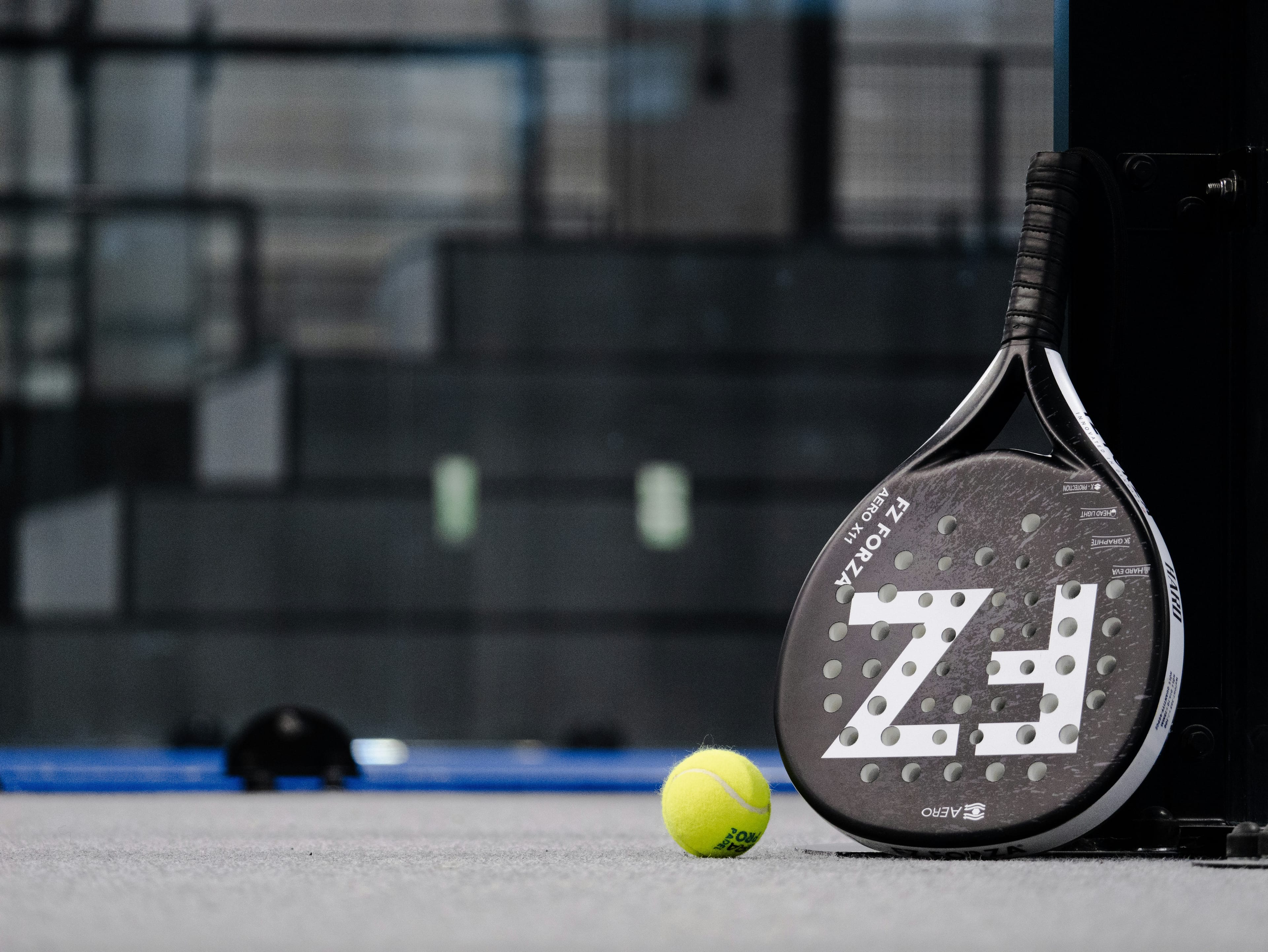
Padel Racket Lead Tape: How to Add Weight & Balance

Padel Racket Lead Tape: How to Add Weight & Balance
What a few grams actually does to balance — and the six products US buyers can really get
A padel racket is a finished product with an unfinished number. Brands pick one balance point for everyone who will ever buy that model — and the International Padel Federation rulebook quietly gives you permission to change it. Rule 8 of the racket article allows "objects or devices adhered to" the frame when they are "specifically used to limit or prevent deterioration, vibration and to distribute the weight," provided they "must be reasonable in size and positioning."
Weight distribution is named in the rules as a legitimate reason to stick something to your racket. A few grams of tape is the cheapest meaningful change you can make to how a frame plays, and it is reversible — which is more than you can say for buying a different one.
Why you'd add weight to a racket you just bought
The total weight is usually fine. The distribution isn't. Your control racket feels dead on smashes; your power racket is late to the ball at the net; or you came from tennis, you are used to a heavier head, and 365 g feels like a toy on the overhead. All three are tape problems.
The opposite case is arm pain — wanting mass low in the handle to damp shock without buying a softer frame. If that is you, read our guide to rackets for tennis elbow first: adding weight to the head of a racket that already hurts your arm makes it worse.
What adding weight actually changes
Balance is a distance in millimetres measured up from the butt cap, and a bigger number means more mass toward the head — our racket balance guide covers why brands report it so inconsistently. What nobody publishes is how far a few grams actually moves that number.
So here it is, for a typical 365 g racket balanced at 265 mm:
| Weight added | At the tip (~430 mm) | At 3 and 9 (~330 mm) | In the handle (~50 mm) |
|---|---|---|---|
| 3 g | 266.4 mm (+1.4) | 265.5 mm (+0.5) | 263.3 mm (−1.8) |
| 6 g | 267.7 mm (+2.7) | 266.1 mm (+1.1) | 261.5 mm (−3.5) |
| 12 g | 270.3 mm (+5.3) | 267.1 mm (+2.1) | 258.2 mm (−6.8) |
Two things fall out of that immediately. The shifts are small — 6 g at the tip moves the balance point under 3 mm. And the handle is the stronger lever, because it sits further from the balance point than the tip does: the same 6 g moves the number twice as far when it goes low.
Head weight = power, less manoeuvrability
Mass high on the frame increases the effort to swing it, which is why it adds punch on smashes and takes away speed at the net. STIGA, which sells a padel-specific weight tape, describes the trade in its own copy: "Tape at the top means more power and speed, while adding tape below the balance point will give you more control. Adding tape at the centre/balance point will give you a heavier racket, but with the same balance." That last option is the one people forget — you can add mass without touching balance at all.
3 and 9 o'clock = stability and a bigger sweet spot
Weight at the widest point of the hoop barely moves the balance point, as the table shows, but it resists the frame twisting when you hit off-centre. Tennis customization guides recommend it most often for players happy with the swing who mishit a lot. It is the lowest-risk first experiment.
Handle weight = more control, faster hands
Weight in the handle lowers the balance point, speeds the head up and damps vibration into your arm. The catch is access: tape stuck to the outside of a grip will not stay, so handle weight normally means pulling the butt cap and refitting it with a staple gun. That is the one step to leave to a shop — or to sidestep with a purpose-built handle weight.
What you need
Balancer tape vs generic lead tape
They are the same product with different marketing. "Balancer" tape is pre-cut into fixed 3 g strips; generic lead tape comes as a roll you cut to length. Pre-cut is easier and costs more per gram.
The one real difference is the metal. Most tape is lead, and US listings carry California's Prop 65 wording — Gamma's page warns the tape "contains lead a chemical known to the state of California to cause cancer and birth defects," and recommends you "use gloves and wash hands after handling." Tungsten has none of that for slightly more money. If you are doing this on a kitchen table, buy tungsten.
A 1g-resolution scale, and a balance board you can make yourself
A postal or kitchen scale reading in 1 g steps is enough. For balance you need no tool at all: lay a pencil on the table, rest the racket across it, slide until it sits level, then measure from the butt cap to the pencil. Record that number before you touch anything.
The putty-first method
Do not start with tape. Tape is hard to reposition once it is down, and its adhesive is the part most likely to take paint with it.
Find the balance with temporary putty, then commit in tape
Weigh a blob of poster putty, stick it where you think the weight should go, and play a set. Move it, play another. Coaching videos and tennis customization guides both describe this method for a good reason: it costs nothing to be wrong. Only once a position has survived real points do you weigh out that many grams of tape and make it permanent.
Step by step
Clean the frame
Wipe the area with isopropyl alcohol and let it dry. Adhesive on dust lifts, and tape that lifts mid-rally is a hazard.
Mirror every strip
Whatever goes on one face goes on the other, in the same place. An unmirrored strip makes the racket twist in your hand.
Start with 3–6g, then test
Six grams split across both faces is a change you will feel. Add one increment, play, then decide whether you want more.
Keep a log so you can undo it
Date, position, grams, and the balance point before and after. Without it, "put it back how it was" is guesswork.
How much is too much
There is no legal ceiling. The FIP rulebook caps length at 45.5 cm, width at 26 cm and thickness at 38 mm, and specifies hole sizes — but sets no maximum weight. The only gram figure in the document is the ball, at 56.0 to 59.4 g. STIGA explicitly lists its weight tape as "Approved For Official Competitions."
The real limit is your shoulder. US padel rackets run roughly 345–375 g, so 12 g on a 365 g frame puts you above almost everything on the shelf — and you are adding it at the end of a lever, which your arm feels far more than the scale suggests. If you add head weight, consider counterweighting in the handle to hold the balance point while the frame gets more stable.
One thing people miss: a frame protector already weighs several grams and sits at the top of the hoop. If you run one, you have been playing a head-weighted racket all along. Weigh it before deciding you need more.
What this does to your warranty
It is a problem, and the brands are specific. StarVie excludes "aesthetic or structural damage resulting from the improper installation or removal of accessories" and voids coverage for "any intervention not carried out by STARVIE's official technical service." Babolat excludes damage "caused by negligence, abuse, faulty stringing, maintenance, handling, or normal wear and tear."
The FIP permits weighting; your manufacturer does not have to honour a claim on a frame you modified. Our guide to padel racket warranties in the US covers the rest. The practical reading: weight an out-of-warranty racket, or accept the trade. And when you remove tape, warm it first — StarVie's advice for protectors is to "carefully remove" them "by applying heat," and adhesive on paint behaves the same way.
Where US buyers can get balancer tape
Here is the finding that matters, and it is not what the search results suggest. No padel-branded weight tape is sold in the US. STIGA's Opti Balancer 6-pack (€19.90, 3 g per tape) ships within the EU and UK only, and Decathlon's Kuikma kit has no US retail channel at all. Those are the two products you will see ranking, and neither is buyable here — the same pattern we mapped in padel gear you can't buy in the US.
What you can buy is the identical product under a tennis or pickleball label, usually cheaper. We swept all four US stores on 14 October 2026; prices and stock were current that day.
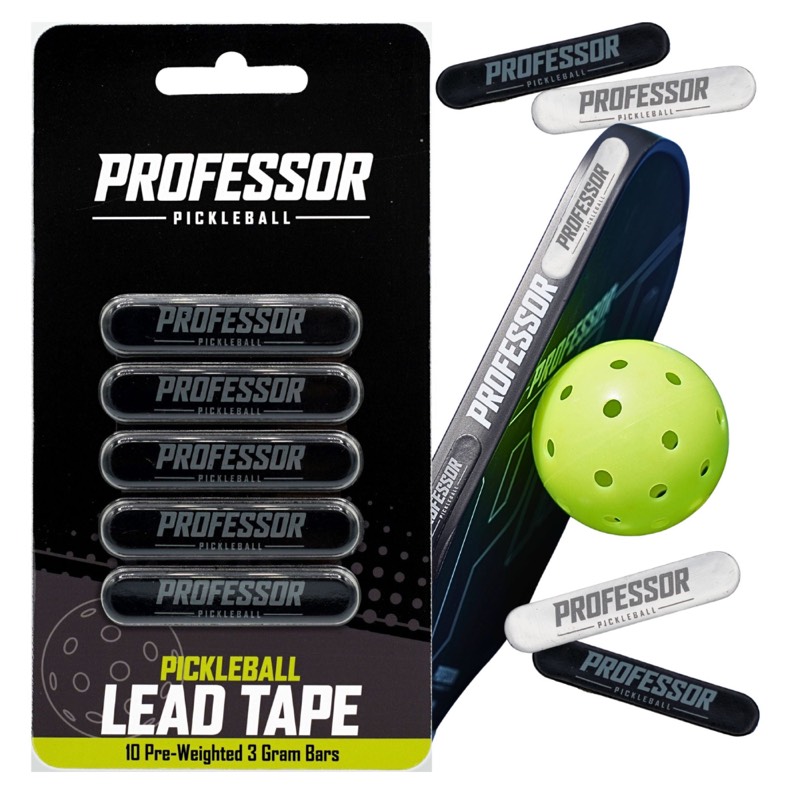
Professor Pickleball Lead Tapes, 3g Bars
The simplest thing Racket Central stocks that does the job. Pre-weighted bars at 3 g each, so you work in whole strips and skip the scale — one per face is the 6 g row above. The brand describes removal as leaving no residue, the claim that matters most on a painted frame. Marketed for pickleball; the tape does not know the difference.
Shape: Pre-cut 3 g bars | Metal: Lead
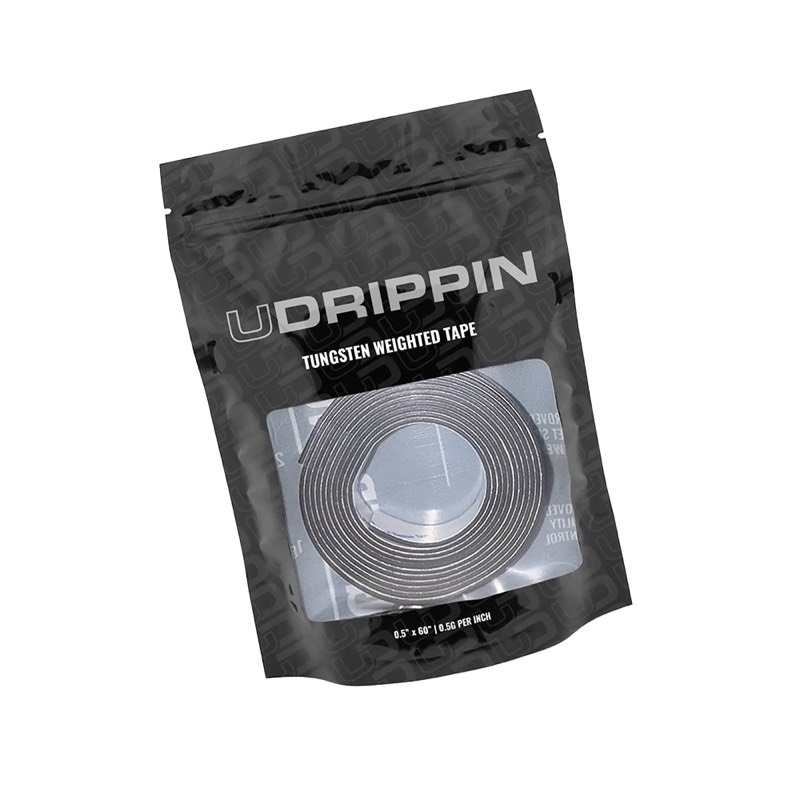
UDRIPPIN Tungsten Tape
A 60-inch roll of half-inch tungsten — the lead-free pick if you would rather not have Prop 65 wording in your racket bag. Cuttable, so you can hit an exact figure instead of multiples of three. The listing gives dimensions but no grams per inch, so weigh your cuts rather than assuming they match lead tape of the same size.
Shape: Cuttable roll, 0.5 in × 60 in | Metal: Tungsten
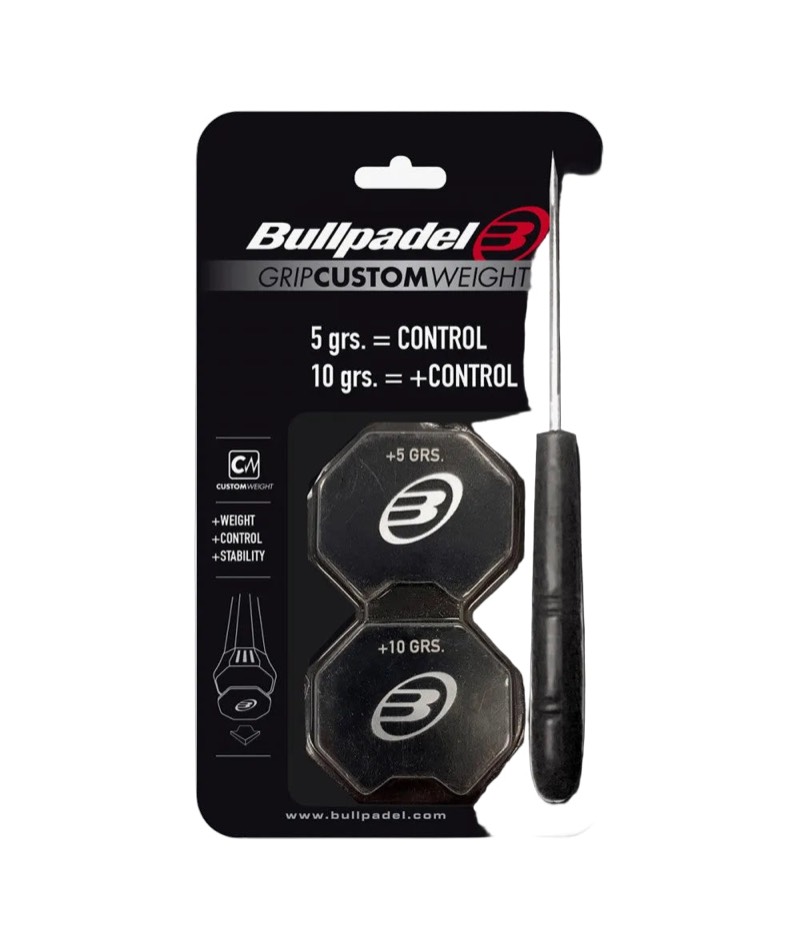
Bullpadel Custom Weight
The only padel-branded weighting product we found in US stock, at padelpadel.us. It is a handle weight, not tape — Bullpadel's own page calls it "customizable weights for the handle easy to place," sold as a 2-unit pack, and that is the entire specification the maker publishes. European retailers list the pieces as 5 g and 10 g, but Bullpadel prints no figures, so treat those as unconfirmed. It fits only certain Bullpadel models and retailers disagree about which — check yours first. If it fits, it is the clean way to add handle weight without a staple gun.
Shape: 2-piece handle weight | Metal: Not stated
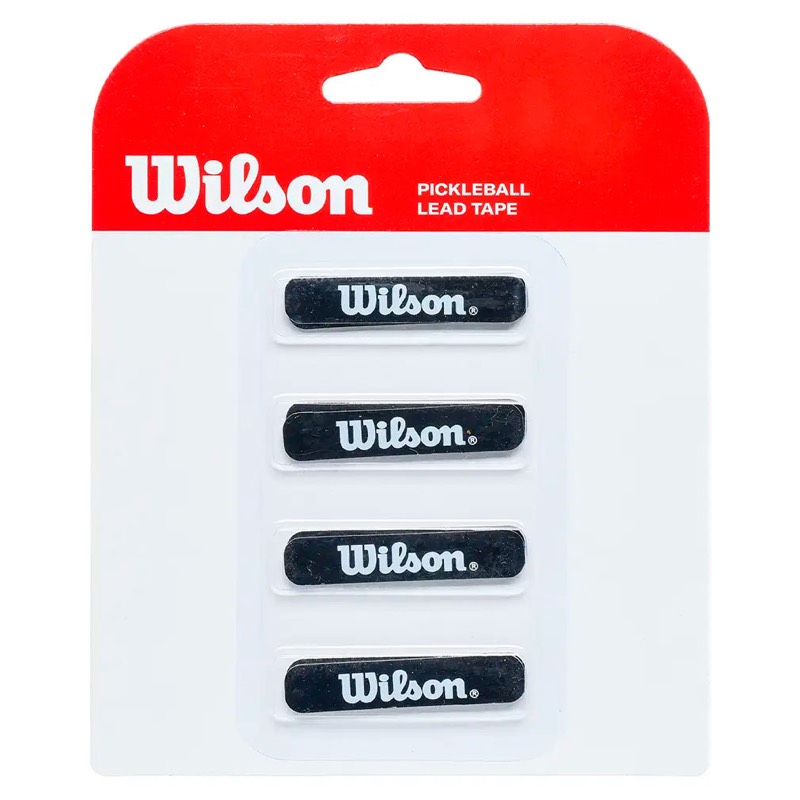
Wilson Pickleball Lead Tape
Eight strips at 3 g each for nine dollars — 24 g of pre-cut tape, enough for three or four rackets, at the lowest cost per gram here. Wilson's listing suggests "the top edges for more head weight and hitting power, or the bottom edges for stability and handle weight," matching the table above. Black, so it disappears on most frames.
Shape: 8 pre-cut strips, 3 g each | Metal: Lead
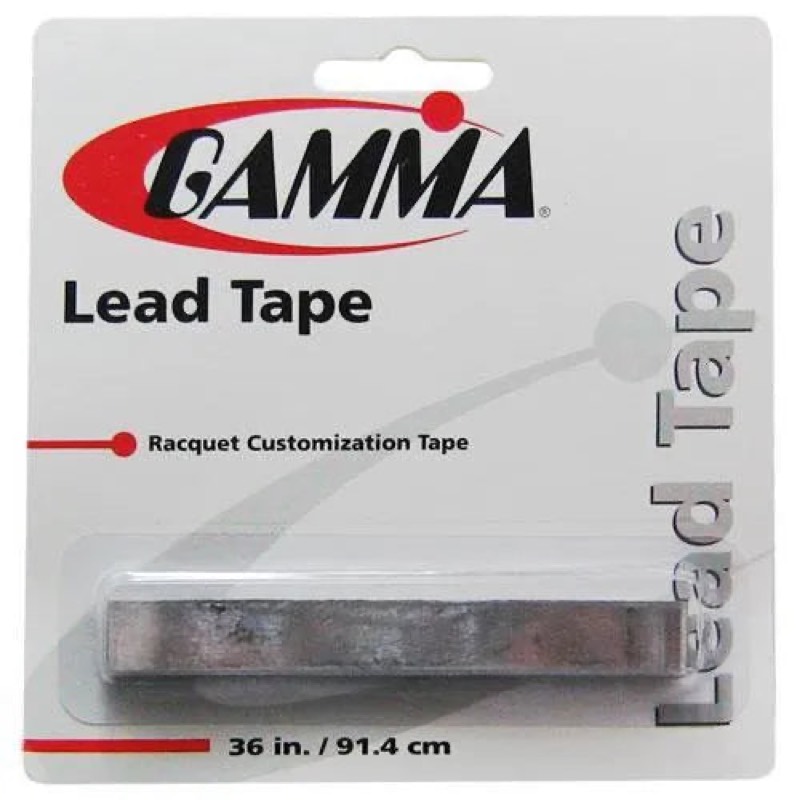
Gamma Lead Tape
A 36-inch strip of half-inch lead tape with the most useful spec on any of these pages: "2 inches of this lead tape weighs 1 gram." That makes the maths trivial — 12 inches is 6 g, a third of the pack. Best if you want to experiment and do not mind cutting. Tennis Express also lists a 36-yard bulk roll at $139.99, which is a stringer's purchase, not a player's.
Shape: Cuttable strip, 36 in × 0.5 in (2 in = 1 g) | Metal: Lead
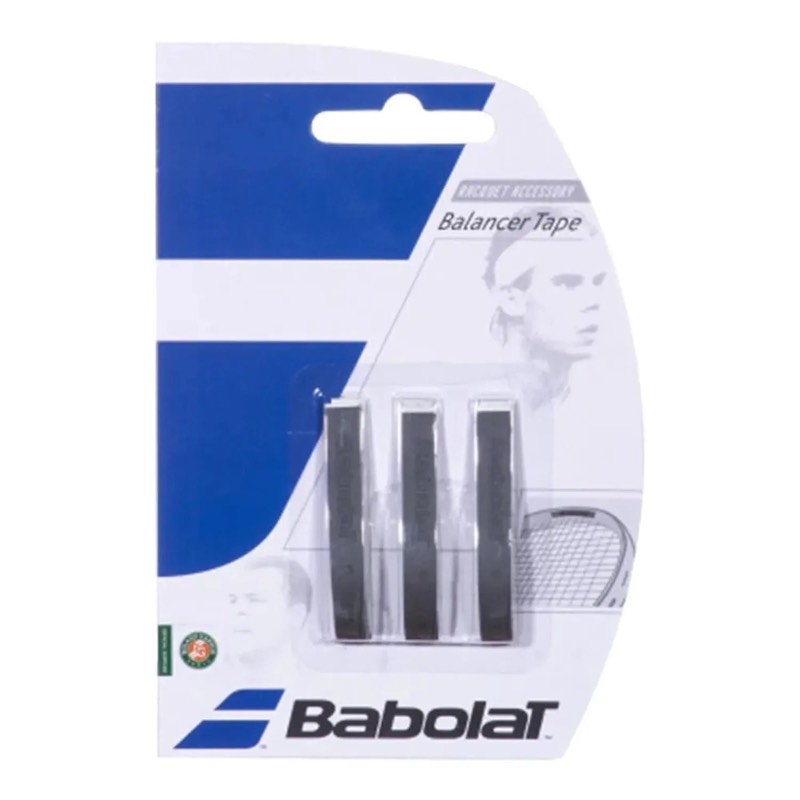
Babolat Balancer Tennis Tape
The closest thing in the US to the European "balancer" tape the search results push, from Babolat — and it is tungsten, not lead. Three strips, 4 inches by a quarter inch, 3 g each, made to wrap around the grip rather than stick to the hoop. That makes it the tape answer to handle weight: it goes under an overgrip instead of behind the butt cap. $13.99 here against about €9.95 in Europe.
Shape: 3 grip-wrap strips, 4 in × 0.25 in, 3 g each | Metal: Tungsten
Two near-misses
Padel USA carries no weight tape at all; its closest item is the HEAD Padel Pro Spin Strips at $20, a spin product adding about 1 g per face — legal under the FIP rule that "both sides of the racket must be flat but may be smooth or rough," but not a balance tool. And Racket Central's Slyce SLYDRS clamp-on weights ($29.95) are built to grip a pickleball edge guard, so treat them as untested on a padel bumper.
For the rest of a US padel bag, see our 2026 retailer guide. And if you are weighting a frame because it feels wrong rather than because you want it different, check how to choose a padel racket and how long a racket lasts first — tape fixes distribution, not a dead core.
Frequently Asked Questions
Continue Reading
GLDN PNT: Miami's Padel Apparel Brand, Now with Reebok
GLDN PNT: Miami's Padel Apparel Brand, Now with Reebok
Miami-born GLDN PNT is the first American padel apparel brand to land a major sportswear collaboration. What the Reebok x GLDN PNT collaboration includes, what it costs, and why a padel-native label matters for US players.
Padel Racket Warranty in the US: What's Actually Covered
Padel Racket Warranty in the US: What's Actually Covered
Searching for a padel racket warranty from the US turns up European policy pages written under Dutch and Spanish law. We read the published terms of all four US padel stores and the brands' own warranty pages to find what really covers a cracked frame. The answer: a factory defect, claimed through the shop you bought from, usually inside thirty days.
Padel Shoe Size Conversion: A US Buyer's 2026 Guide
Padel Shoe Size Conversion: A US Buyer's 2026 Guide
A men's “US 10” padel shoe is built for a foot anywhere between 27.3 cm and 28.5 cm, depending on the brand. We pulled the current size charts from Bullpadel, Babolat, Asics, Joma, Wilson and Head and mapped each brand to the US store that will swap the box if it doesn't fit.