
Best Padel Ankle Brace & Knee Supports 2026: US Picks
Best Padel Ankle Brace & Knee Supports 2026: US Picks
Braces, sleeves and straps for the two joints padel punishes most — in stock from US retailers, plus the shoe-fit problem nobody mentions
Our guide to padel elbow braces opened with a statistic: the elbow is the single most frequently injured body part in padel. That is true, and it is also half the picture. Group injuries by region instead of by joint and the lower limb comes out on top.
A cross-sectional study of 364 amateur players in southern Chile, published in 2025 in BMC Sports Science, Medicine and Rehabilitation, found that 196 of them — 53.8% — had picked up a padel injury in the previous six months. The lower limb accounted for 46.7% of those injuries against 42.4% for the upper limb, and the single most commonly injured anatomical region was not the elbow. It was the ankle and foot, at 18.5%, with the knee at 13.6%.
So players go shopping for a brace and hit the same wall the elbow guide described: almost every "best padel ankle support" page that ranks is a UK or EU storefront quoting pounds and euros. This is the US version — what each category actually does, six supports you can buy from American retailers today at USD prices, and the sizing problem nobody warns you about.
This is a gear guide, not medical advice. If an ankle has given way more than once, or a knee swells after every session, see a physician or physical therapist before you see a checkout page.
Padel Loads These Joints in a Specific Way
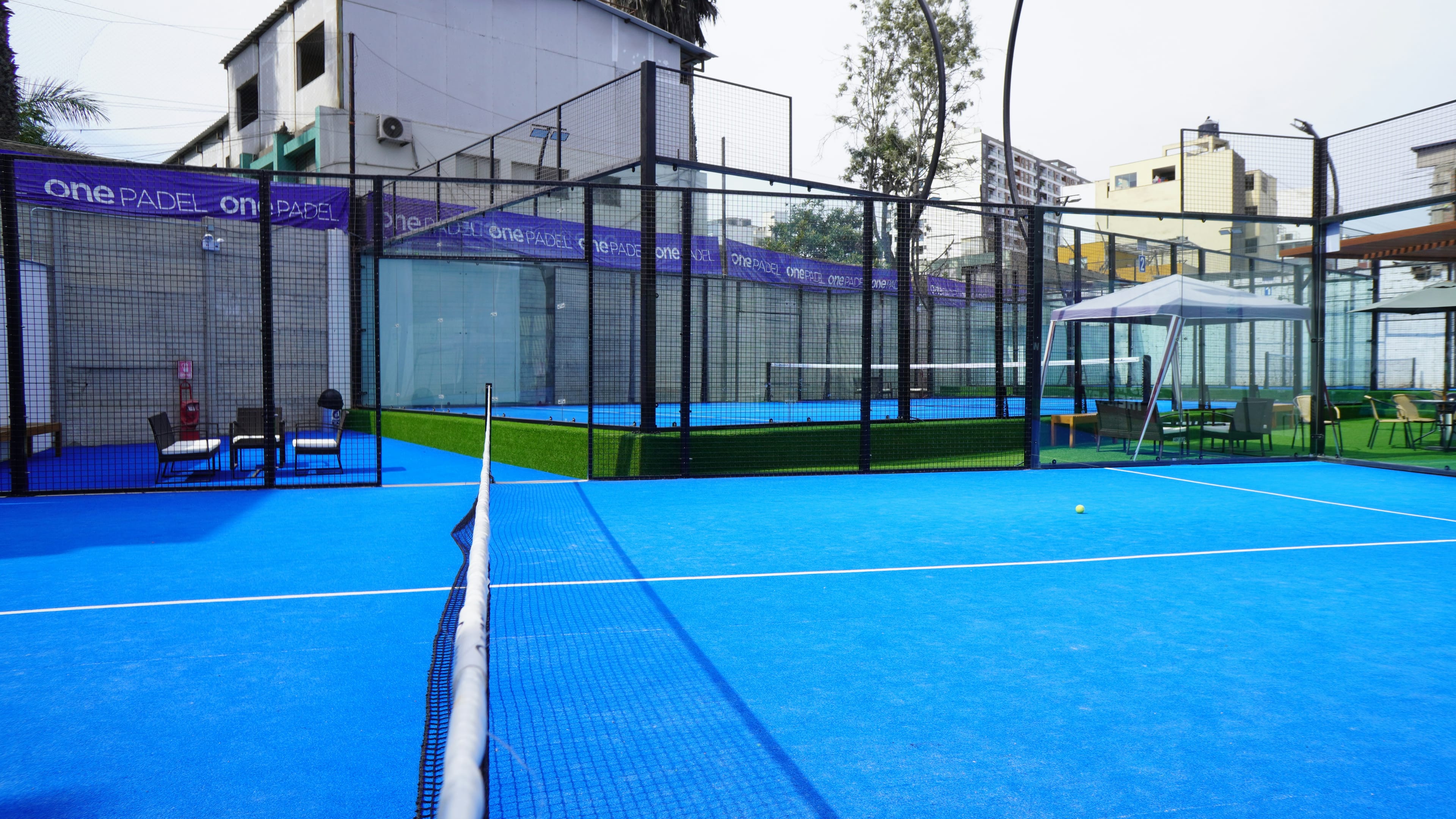
The damage is not done by running. It is done by changing direction on a short court with a wall behind you.
A 2024 review in the Journal of Ultrasound mapping padel pathology back to biomechanics is unusually precise about it. For the knee, it attributes patellar tendinopathy to "valgus/rotatory stresses on the knee, eccentric load in the landing phase of the jumps" — the smash, and the landing after it. For the ankle, it describes the Achilles acting "as an elastic spring curbing the ankle dorsiflexion approaching the ground," and calls that mechanism "paramount to avoid ankle sprains with violent dorsiflexion and loss of balance." It also names the thing that makes padel padel: "multiple rapid directional changes due to the irregular ball bouncing off the perimetral walls."
That last detail separates padel from tennis. You commit to a position, the ball comes off the glass somewhere you did not predict, and you reverse out of a planted foot. That is the rollover mechanism in one sentence. The same review cites a survey of 800 players in which most musculoskeletal injuries sat in the lower limb (49 of 85), most of those at the knee (16 of 49). Our guide to common padel injuries and how to prevent them covers the rest of the body.
Brace, Sleeve or Strap — Decide This First
These are not three strengths of the same thing. They do different jobs.
Rigid and semi-rigid braces
Hardware — resin or steel stays, plastic guards, adjustable straps — that mechanically limits how far a joint travels. This is what you want after a real sprain or with chronic instability, and it is the only category that genuinely restricts range of motion. It is also the bulkiest, which matters more than you would expect once a shoe is involved.
Compression sleeves
Elastic fabric that applies pressure. A sleeve does not stabilise a joint, whatever the product photo implies. It does warmth, swelling control and proprioception well, and for a mild ache or a knee that stiffens in a cold indoor club that is often enough. Look for a published mmHg figure; 20–30 mmHg is the medical graduated range.
Straps
A narrow band worn across a tendon rather than over the joint, redistributing load at one point. Cheap, effective for the one problem they target, and the most misused of the three — a patellar strap does nothing for a sprained ankle or a worn meniscus. Buy one when the pain sits in the tendon just below the kneecap.
Best Padel Ankle Supports
Zamst A2-DX
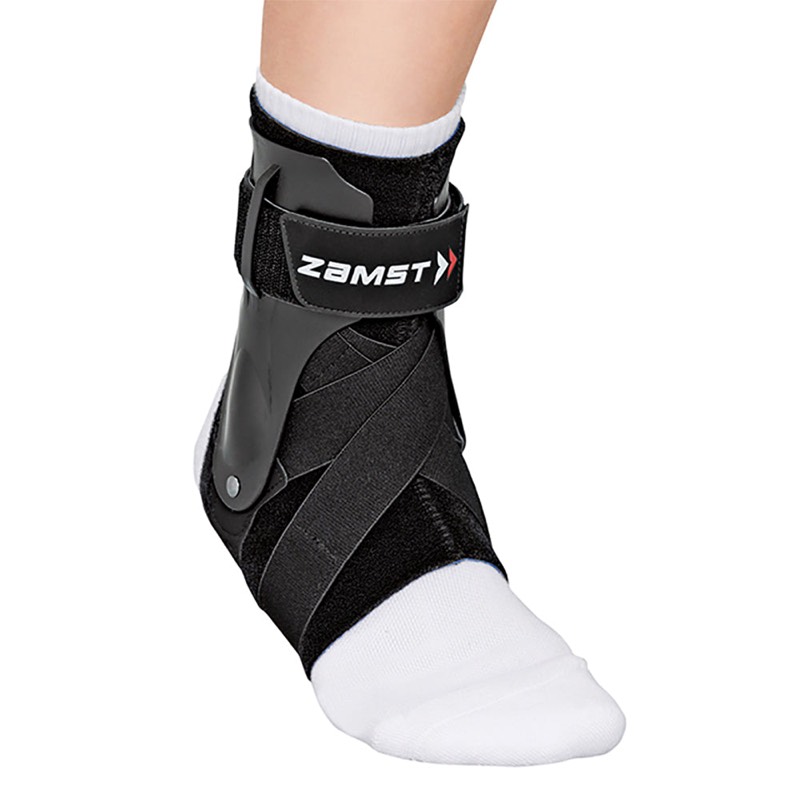
If you have rolled an ankle on court and want the protection of taping without learning to tape, this is the pick. Zamst is a Japanese bracing brand with a proper US storefront, and the A2-DX is its strongest ankle brace: moulded guards against excessive inward and outward movement, plus a dual X-strap stabiliser giving three-way support — anterior, lateral and medial. That X-strap does the same job as a figure-8 taping pattern, which is why it suits players coming back from a sprain. Left- and right-specific, and it applies from the rear so you can adjust mid-match. It is also the bulkiest thing here, so read the shoe-fit section before ordering.
Type: Semi-rigid brace with guards | Support: Strongest in range | Fit: Left/right specific, S–XL | Price: $75.00
Floky Support Anklet
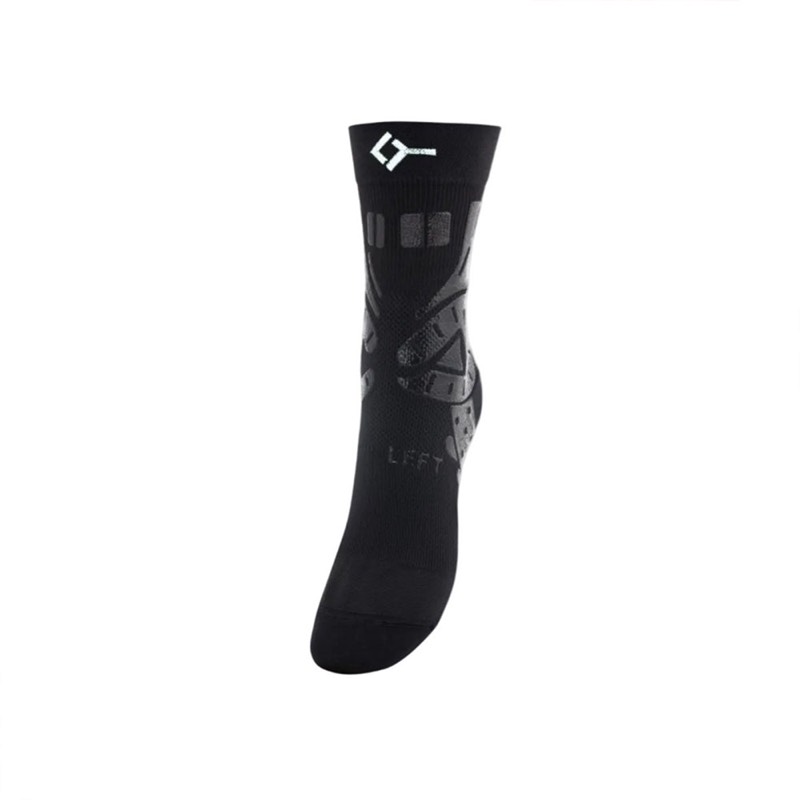
Until recently the honest answer to "is there a padel-specific ankle brace sold in America?" was no. That has changed. Racket Central now stocks the recovery line from Floky, the padel-native brand worn by Agustín Tapia and Fernando Belasteguín, and the Support Anklet is in stock across all six variants. It is built as a sock rather than a brace — silicone bands laid into the knit to stabilise the ankle, tendons and subtalar joint, which Floky calls a taping effect. Because it replaces your sock instead of layering over it, it adds essentially no volume inside the shoe. It will not restrain a joint the way the A2-DX does; treat it as everyday insurance, not post-injury hardware.
Type: Biomechanical compression anklet | Support: Light, taping-style | Fit: Left/right specific, XS-S to L-XL | Price: $54.90
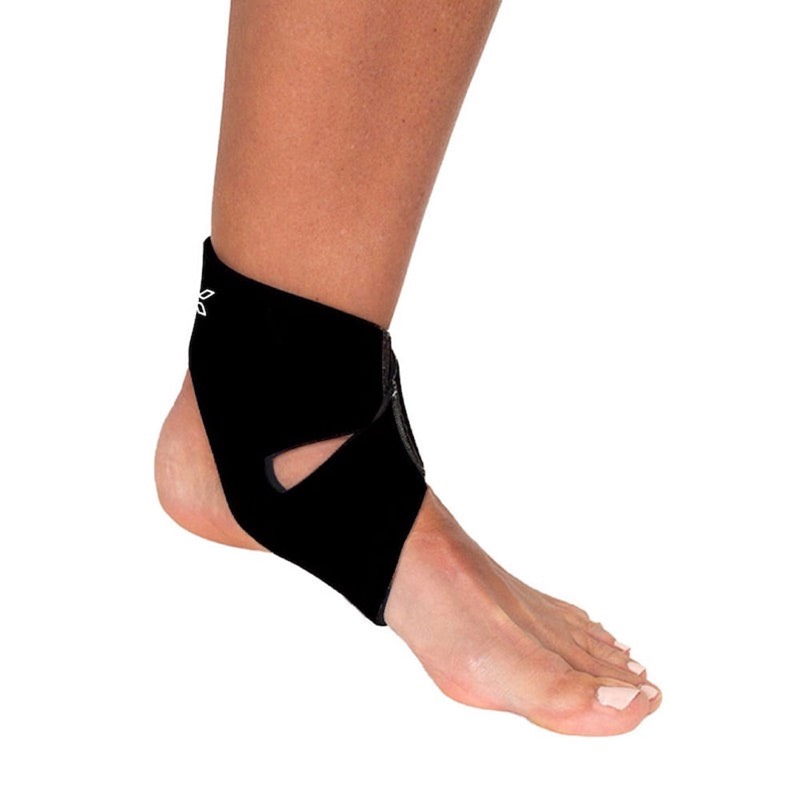
Body Helix X-Fit Ankle Compression Sleeve
Body Helix publishes real numbers, which is rare here: 3 mm thick, 20–30 mmHg medical-grade compression, closed-cell core, latex-free. The X-Fit applies that compression in an X or figure-8 pattern and is designed, in the company's words, for people who want ankle support "with as little material in their shoe as possible." It grips skin rather than relying on straps, so it does not migrate into the arch over three sets. If you want uniform coverage instead of a targeted X, the Full Ankle version is $51.00 at the same retailer; for a budget option, Tennis Express has the Pro-Tec 3D Flat Ankle Support at $19.95 with the same 20–30 mmHg rating.
Type: Compression sleeve, X pattern | Compression: 20–30 mmHg | Thickness: 3 mm | Price: $50.00
Best Padel Knee Supports
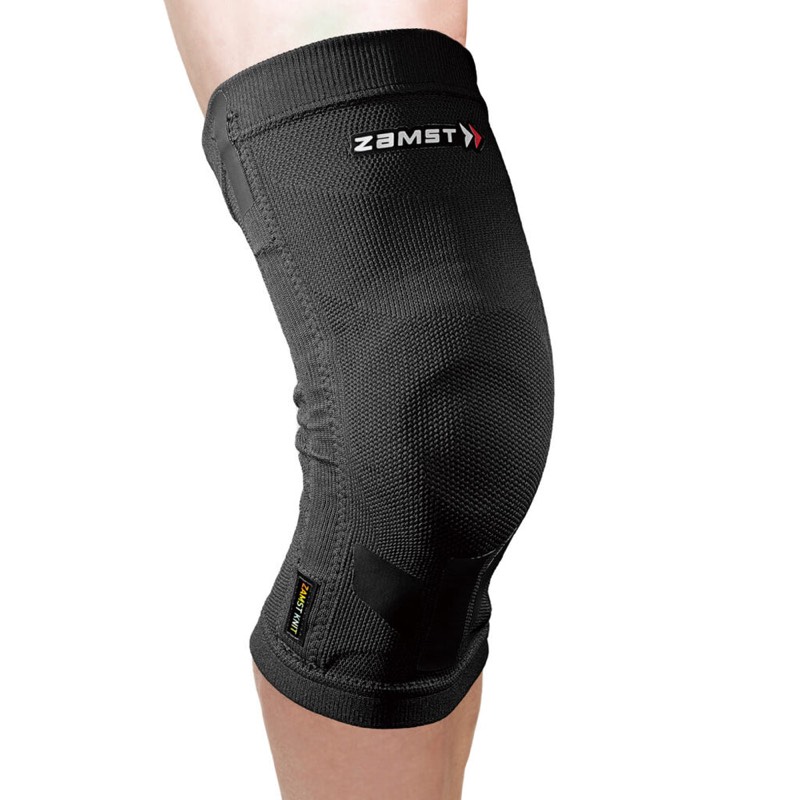
Zamst ZK-MOTION
The problem with most knee braces in padel is that the thing protecting you also stops you dropping into a low volley. The ZK-Motion is Zamst's answer: a knitted base layer with functional resin stays that allow smooth flexion and extension while resisting excessive lateral and medial movement, plus a 3D circular pad around the patella for compression where the load is. It reads as moderate support rather than maximum — the right target for a recreational player managing a grumbly knee, not rehabilitating a ligament tear. Sizes run S through 3XL. If you want more restraint, Zamst's ZK-7 is $56.99.
Type: Knitted brace with resin stays | Support: Moderate, mobility-first | Sizes: S–3XL | Price: $90.00
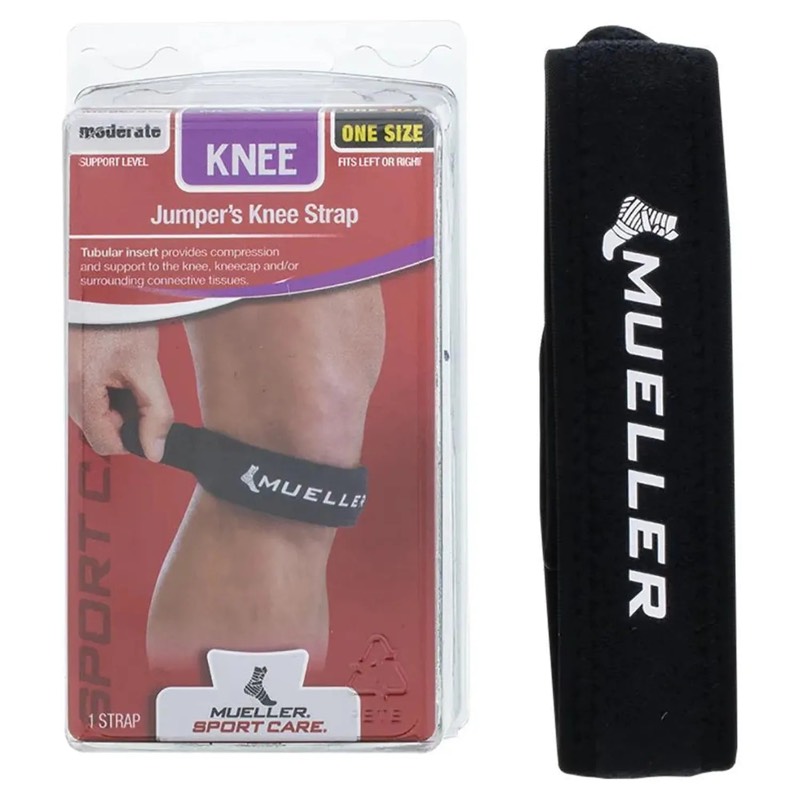
Mueller Jumper's Knee Strap
The cheapest useful thing in this guide, and the right answer to one specific complaint: pain in the tendon just below the kneecap after a session heavy on smashes. Mueller builds it around a silicone buttress applying targeted pressure to the patellar tendon to improve tracking and elevation, with a double-layer liner and anti-snag binding. One size, adjusting from 12 to 20 inches, fits either leg. Note that Tennis Express is still the only US racket-sport retailer carrying straps at all — Racket Central stocks none. Pro-Tec's Knee Patellar Tendon Strap is the $19.95 alternative, in sized versions if one-size fit bothers you.
Type: Patellar tendon strap | Fit: One size, 12–20 in, either leg | Material: Latex-free | Price: $17.99
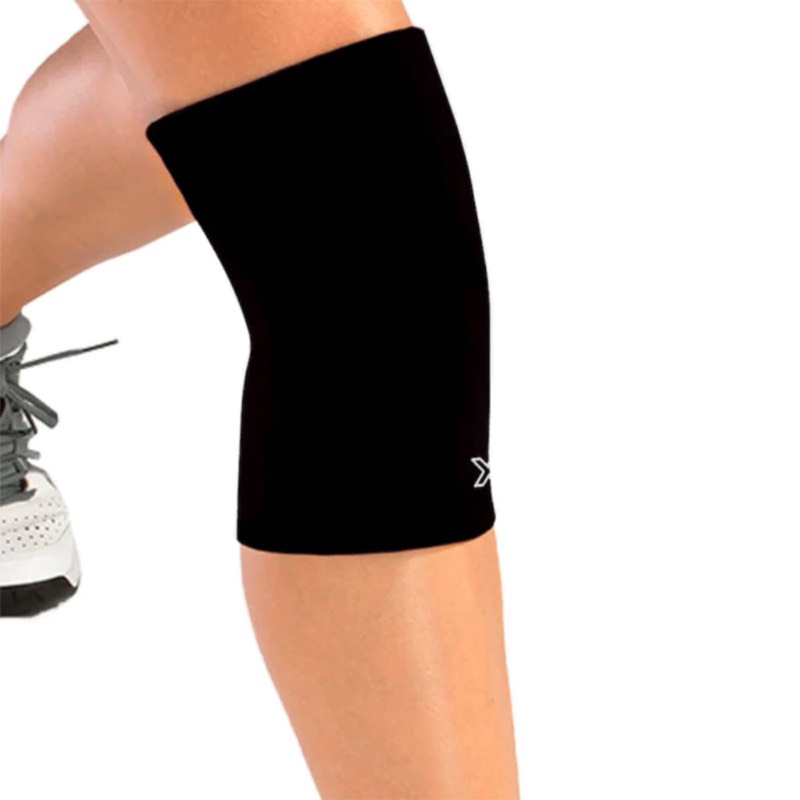
Body Helix Full Knee Helix
The default for a knee that aches rather than one that gives way. Same construction as the ankle sleeve above — 3 mm, 20–30 mmHg, no buckles or straps to dig in behind the joint — in a full-length cut that controls pain and swelling without costing range of motion. Body Helix aims it at minor ligament sprains, swelling, arthritis and minor meniscus irritation. Two variants sit alongside it at $41.00 each: the Knee Helix targets the patellar tendon and removes material from behind the knee, and the Patella Helix is a slip-on band for kneecap tracking — a strap's job without the strap. Racket Central also carries the Floky Support Knee Brace at $54.90.
Type: Full-length compression sleeve | Compression: 20–30 mmHg | Thickness: 3 mm | Price: $57.00
Will It Fit Inside Your Padel Shoe?
This is the failure mode nobody writes about, and the reason returns happen.
A semi-rigid ankle brace like the A2-DX occupies real volume around the midfoot and under the laces. Put one inside a padel shoe that already fits properly and one of three things happens: the laces no longer close, the brace compresses into a pressure point over the navicular, or your foot sits higher and your heel starts lifting. Players who brace full-time often go up a half size, and some keep a second pair for braced play.
So buy the brace first and the shoes second, not the other way round. If you are already committed to shoes that fit, bias toward the lowest-profile option that solves the problem — the Floky anklet replaces a sock rather than adding to one, and the X-Fit is 3 mm in an open-heel cut. Zamst's Filmista Ankle at $42.50 is another ultra-thin option built to sit against skin, though right-foot sizes are patchy in stock.
Knees are simpler. Nothing you wear on a knee touches your footwear, so bulk is only a comfort question.
A Brace Will Not Save a Dead Shoe
Worth saying plainly, because it is where brace money gets wasted: a shoe with an intact heel counter and a real lateral cage does more for ankle stability than a $20 sleeve worn over a pair whose outsole has gone slick.
Padel's lateral loading destroys the edges of a shoe long before the midsole feels dead underfoot, and a collapsed upper stops resisting the exact rollover motion you bought the brace to prevent. If your shoes are past it, replacing them is the higher-leverage purchase — our guides to choosing padel shoes, matching them to your court surface and knowing when to replace them cover what to look for.
The same applies to the ten minutes either side of a match. A brace manages load; it does not prepare tissue for it. A proper warmup and a cooldown do more across a season than anything on this page — and if joint load is why you are here, a lighter racket changes how much force reaches you at all, which our arm-friendly picks go into. For who stocks what across the US, see our 2026 retailer guide.
Prices and stock verified October 2026.
Frequently Asked Questions
Continue Reading
Padel Racket Balance Explained: Low, Medium & High
Padel Racket Balance Explained: Low, Medium & High
Balance decides how a padel racket feels more than any other spec, and it is the one brands report least consistently. Here is what the millimetre figure means, why shape does not determine it, and how to measure and shift your own racket's balance.
Padel Gear You Can't Buy in the US (and What to Buy)
Padel Gear You Can't Buy in the US (and What to Buy)
US padel gear guides are mostly written for European buyers, so they recommend shoes and frame protectors you simply can't buy here. We pulled the live product feeds of four US storefronts to see what is genuinely missing in 2026 — and found the gap has closed in two places nobody has written about yet.
Padel Clothing Brands 2026: What US Retailers Stock
Padel Clothing Brands 2026: What US Retailers Stock
We went through every padel garment in stock at the three US retailers that genuinely carry apparel — about 500 items — and priced them in dollars. Tennis kit covers most of it, Bullpadel and Drop Shot are the brands worth importing, and Nox, StarVie and Joma clothing simply is not sold here.