
Common Padel Injuries & How to Prevent Them (2026 Guide)

Common Padel Injuries & How to Prevent Them (2026 Guide)
The five injuries behind most lost court time — and the boring, cheap habits that prevent them
Padel has a reputation as the forgiving racket sport: underhand serves, a smaller court, and doubles play that splits the running four ways. That reputation is only half-earned. Studies of regular players put injury prevalence anywhere from 40% to 95%, and a recent scoping review found roughly 3 injuries per 1,000 hours of practice — rising to about 8 per 1,000 hours in matches. Most padel injuries aren't dramatic. They're overuse problems that build for weeks, or awkward movements that catch you cold in the first fifteen minutes.
The encouraging part: padel's injury profile is remarkably predictable, and predictable injuries are largely preventable. This guide covers the five injuries that cause most lost court time, why each one happens, and the prevention habits that actually work.
Educational content, not medical advice — if you're dealing with persistent pain, see a doctor or physical therapist.
Why Padel Injuries Happen
Three things make padel's injury profile distinct from other racket sports.
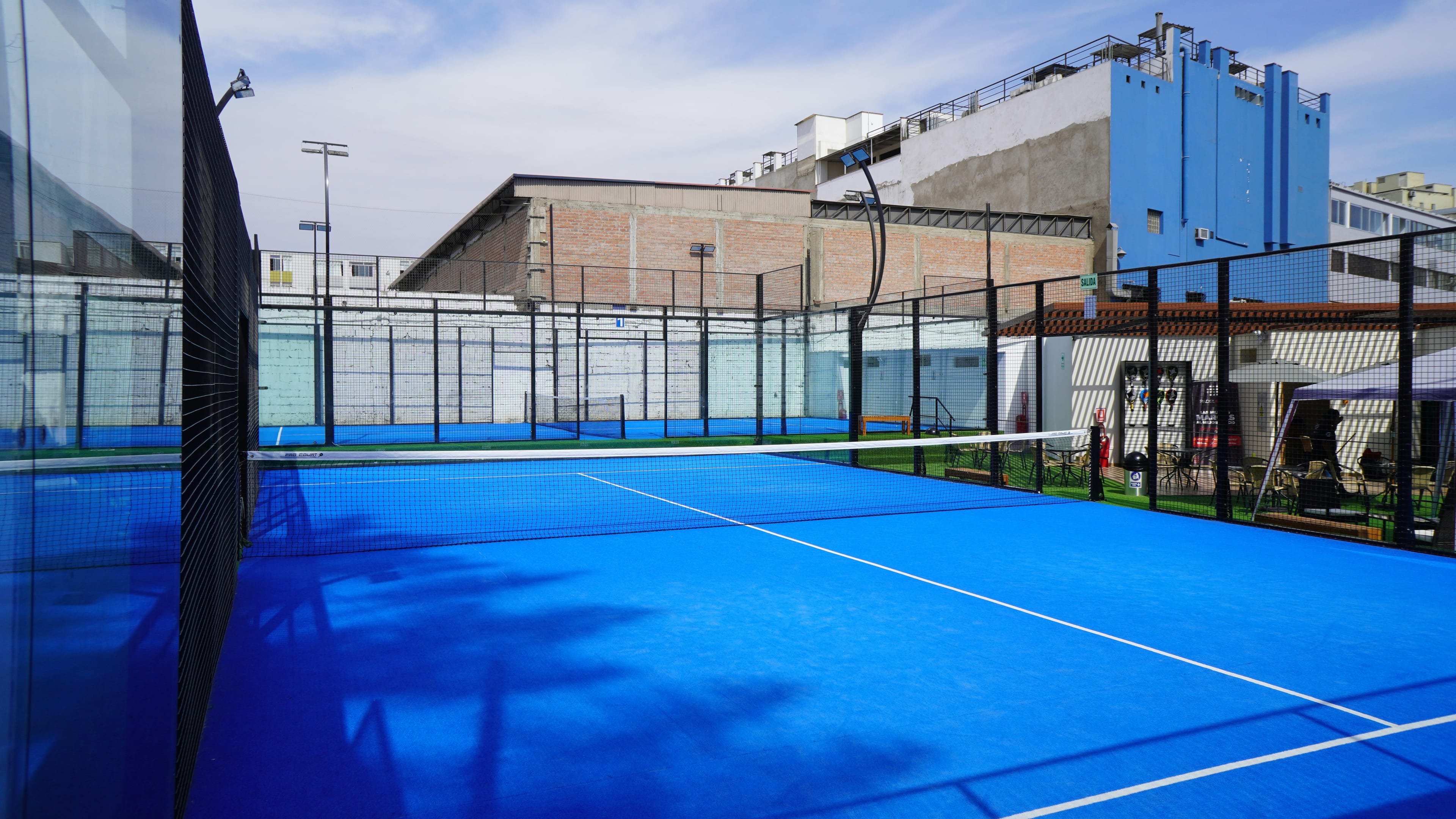
Constant changes of direction. The court is small — 20 by 10 meters shared between four players — so points are won with quick lateral shuffles, lunges, and hard stops rather than long sprints. Deceleration is where ankles and knees take their load, and padel is almost entirely deceleration.
Repetitive overhead motion. Bandejas, víboras, and smashes are the heart of the sport, and every one loads the shoulder and elbow. A busy recreational player can hit more overheads in a week of padel than in a month of tennis — the doubles format keeps rallies alive, so you simply hit more balls.
The walls and the surface. Playing balls off the glass means backpedaling — biomechanically one of the most awkward movements in sport — and the artificial turf sits on concrete, so there's plenty of grip for twisting and not much give for landing.
Technique multiplies all three. Many American players arrive from tennis or pickleball with wristy, arm-heavy swings that padel punishes over time. If you're newer to the sport, fixing the habits in our common beginner mistakes guide is injury prevention as much as it is coaching.
The 5 Most Common Padel Injuries
Tennis Elbow (Lateral Epicondylitis)
The number one padel injury by a wide margin. Across published studies, the elbow is the most injured body part in padel — accounting for roughly 30% of all injuries — with overuse of the wrist extensor tendons (the classic "tennis elbow" tendon group) leading the list.
The mechanism is repetitive strain: gripping the racket too tightly, hitting late off the back glass with a stiff wrist, and absorbing vibration from a racket that's too hard or too head-heavy. Pain shows up on the outside of the elbow — first after playing, then during, then when you pick up a coffee cup.
Early-stage tennis elbow responds well to load management and forearm strengthening (slow, eccentric wrist extensions are the best-studied exercise). Equipment matters more than most players think — more on that in the prevention section.
Ankle Sprains
The most common lower-body injury in padel, and the most common sudden-onset injury overall. The usual script: a hard lateral push toward the ball, a landing on the outside edge of the foot, or a backpedal to the glass that ends with the ankle rolling under you.
Two risk factors dominate. The first is footwear — running shoes have essentially zero lateral support, because they're built to go forward. The second is a previous sprain that never got properly rehabbed: once you've rolled an ankle, your re-injury risk stays elevated until you rebuild strength and balance on that side.
Knee Injuries (Patellar Tendonitis & Meniscus)
Padel knees fail in two ways. The slow way is patellar tendonitis — "jumper's knee" — from the accumulated load of lunges, split steps, and jump smashes. It announces itself as a dull ache just below the kneecap that warms up during play and complains afterward.
The fast way is a meniscus strain: a twist on a planted foot, usually when the turf grips your shoe while your body rotates through a shot. Swelling, clicking, or a knee that locks or gives way are signs to stop playing and get assessed — not to push through.
Shoulder Overuse Injuries
The overhead volume that makes padel fun is also what wears shoulders down. Rotator cuff tendinopathy and impingement build up over hundreds of bandejas and smashes, especially with amateur mechanics — reaching back instead of turning the shoulders, or trying to kill every overhead instead of treating the bandeja as the control shot it's designed to be.
Shoulder pain at the top of the swing, or an arm that feels "dead" after overhead-heavy sessions, is the early warning. The fix is usually rotator cuff and scapular strengthening plus a technique lesson — this is the injury where coaching pays for itself fastest.
Lower Back Pain (Lumbago)
Padel's ready position is a half-squat, its groundstrokes rotate through the trunk, and its smashes arch the lower back — all afternoon. Most padel back pain is muscular: strains and spasms from repeated rotation and extension, made worse by the fact that many recreational players go straight from eight desk hours to the court.
It's rarely serious, but it's stubborn. Core strength (particularly anti-rotation work), hip mobility, and a real warmup do more for padel backs than any belt or brace.
Prevention: What Actually Works
None of this is exotic. The habits below are boring, cheap, and collectively cover almost every injury above.
Warm Up Properly
The single highest-return habit. Cold calves, ankles, and shoulders are behind a disproportionate share of first-fifteen-minutes injuries. Ten minutes of dynamic movement — not static stretching — is enough. We've published a complete 10-minute padel warmup routine; do that, or something like it, before every session, including the casual ones.
Wear Real Padel Shoes
If you take one equipment decision seriously, make it this one. Padel-specific shoes have the lateral support and outsole pattern (herringbone or hybrid) that artificial turf demands; running shoes have neither, and they're the common thread in an outsized share of ankle sprains. Our padel shoes buying guide covers what to look for and which models are actually available in the US.
Racket Choice & Arm Health
If your elbow has ever complained, your racket is a suspect. Hard EVA cores and head-heavy balance transmit more vibration to the forearm on every hit; softer EVA and foam cores absorb it. We've broken down the physics in our EVA vs foam core guide, and if you're already managing elbow pain, there's a dedicated roundup of arm-friendly rackets for tennis elbow.
Grip size matters too: a grip that's too thin makes you squeeze harder, and over-gripping is a tennis elbow accelerant. Most players do better after adding an overgrip or two.
Strength & Mobility Off the Court
Two short sessions a week covering calves, glutes, rotator cuff, and core will outperform any recovery gadget you can buy. Strong tissue tolerates load — that's the whole game with overuse injuries. Our off-court training guide has a padel-specific program that doesn't require a gym membership.
Recovery & Load Management
The least glamorous habit and the most ignored. Nearly every overuse injury on this list is, at root, a load-management failure: too much padel, too fast, with too little recovery. The classic case is the returning player who doubles their weekly volume after a layoff, or the new addict stacking four sessions into a weekend — padel makes this easy, because it's social and doesn't feel exhausting until later.
Practical rules: keep at least a day between intense sessions, treat persistent morning stiffness in a tendon as a signal to skip a day, and ramp volume gradually — add one session per week to your routine, not three.
When to See a Doctor
Most padel aches resolve with a few days of rest. See a professional when they don't:
- Pain that persists more than two weeks despite resting from play
- A pop or snap followed by immediate swelling — ankle, knee, or the back of the calf (possible ligament or Achilles injury)
- A joint that locks, gives way, or feels unstable
- Swelling that doesn't subside within a few days
- Night pain, or numbness and tingling down the arm or leg
For recurring overuse issues — the elbow that flares every few months, the shoulder that never quite settles — a sports physical therapist is a better first call than another week of rest. Rest calms symptoms; only rebuilding strength changes the pattern.
Padel is a sport people play into their seventies, and nothing on this list should scare anyone off — the vast majority of padel injuries are mild overuse problems that respond to exactly the habits above. Warm up, wear the right shoes, respect your elbow, and spread your sessions out. Prevention is boring. Watching your Tuesday night group play without you is more boring.
Frequently Asked Questions
Continue Reading
Padel Nutrition and Hydration: What to Eat and Drink
Padel Nutrition and Hydration: What to Eat and Drink
Padel is longer rallies with half the rest of tennis — and often three hours of social play, not one. Here's how to eat and drink around it: pre-match meals, how much to drink per hour, when you need electrolytes, grazing through an Americano, and what to do about the post-match beer.
The Mental Game of Padel: Focus, Pressure & Partners
The Mental Game of Padel: Focus, Pressure & Partners
In padel you can't have a bad attitude privately — your partner is ten feet away and your mood is one of their playing conditions. Here's what to say after an error, how to handle the golden point and being targeted, and how to stay switched on for a full session.
How to Find a Padel Partner in the US: A 2026 Guide
How to Find a Padel Partner in the US: A 2026 Guide
Padel takes four people, and that is the real reason most Americans quit after one session. This guide covers the five routes that actually work — open play, booking-app matching, WhatsApp groups, clinics and leagues — using booking-platform data from all 361 active US clubs in our directory.