
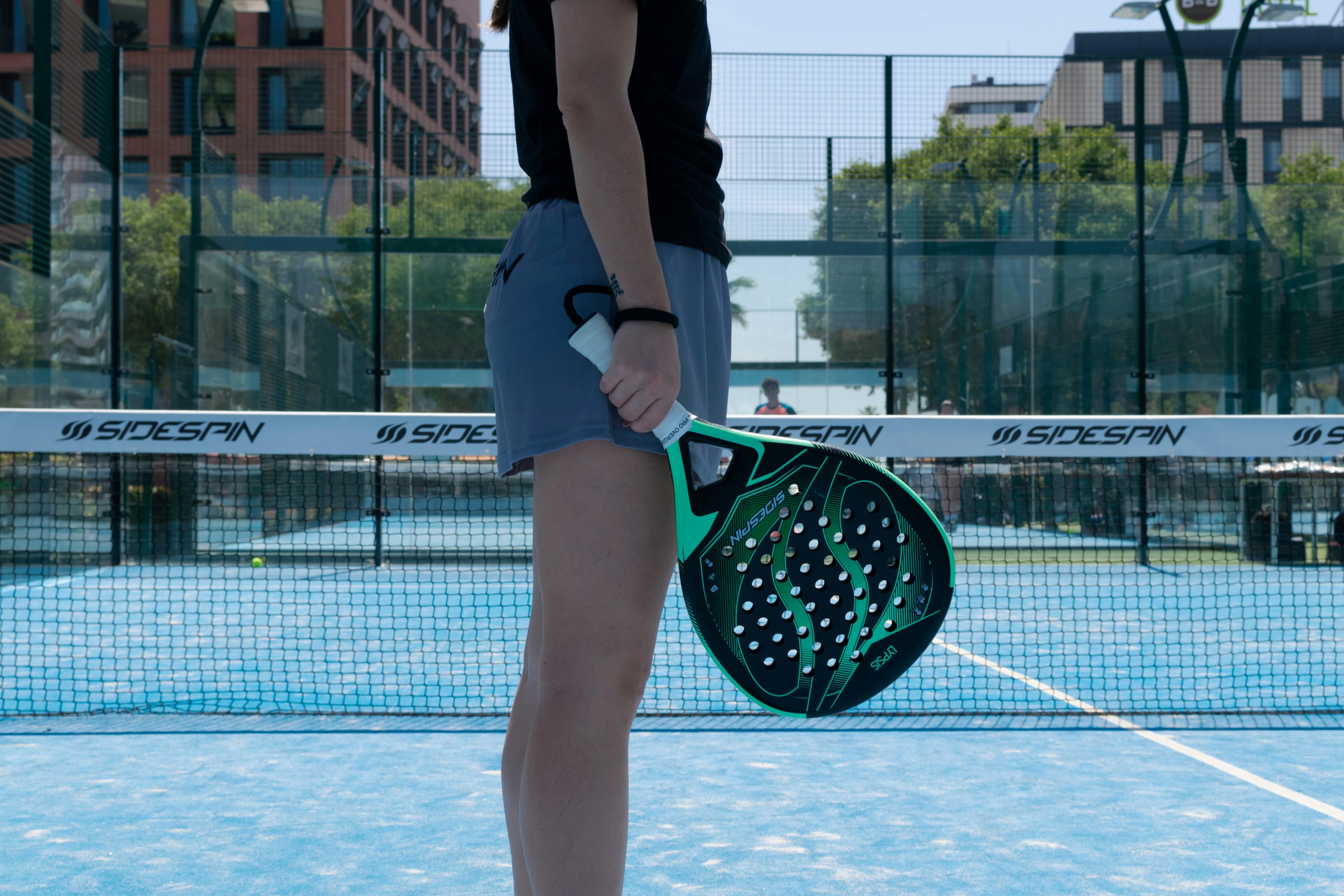
Padel Cooldown & Recovery: The 10-Minute Post-Match Routine

Padel Cooldown & Recovery: The 10-Minute Post-Match Routine
The stretches, the timing and the refuel window for the shoulder, calf and lower back that padel actually loads — the bookend to your warmup.
The match ends, you tap paddles at the net, and ninety seconds later you're in the car with a cold drink and a sweaty shirt. That ninety seconds is where padel recovery goes wrong for most weekend players.
We've covered the ten minutes before a match. This is the bookend. It isn't about feeling virtuous — it's about the tissues padel loads hardest, and the fact that the sport's signature problems are tendinopathies: injuries that build quietly over months rather than announcing themselves in a single point.
Why Padel Bodies Need a Cooldown Specifically
Most recovery content is recycled tennis advice. It isn't wrong, it's just aimed at the wrong tissues. Padel concentrates load in three places a generic stretch list barely touches.
The Shoulder Load From Repeated Overheads
Tennis gives you one overhead per point — the serve. Padel gives you an underarm serve and then six or eight overheads in a single rally: bandeja, lob, vibora, lob, smash. Research on padel injury patterns puts the shoulder at roughly 10% of injury sites, with the bandeja and smash specifically implicated in most upper-body complaints.
What needs attention afterwards isn't the deltoid you can feel. It's the rotator cuff and scapular stabilizers that spent an hour decelerating your arm — eccentric work, over and over, usually with your body slightly out of position because the lob was better than you'd like to admit.
Your Lower Back and the Bandeja Rotation
The bandeja isn't really an overhead. It's a sideways, slicing shot hit while you're moving backwards with your torso rotated and your trunk bent to the side. Repeat that forty times in ninety minutes and your lower back and obliques have done a lot of loaded rotation under time pressure. Most players feel it the next morning as one-sided stiffness rather than pain — and that asymmetry is the tell.
Calves, Achilles and the Sand-Infill Turf
Here's the number that surprises people: the lower leg and Achilles tendon is the single most common injury location in padel, at roughly 17% — ahead of the elbow. Tendinopathies account for about a third of all padel injuries.
Sand-infill turf grips well, which is mostly good, but it means your calf absorbs the stop rather than letting you slide out of it the way clay would. Add the short push-offs toward the net and the backpedal to the glass, and the calf-Achilles unit works harder per hour than in almost any other racquet sport.
The 10-Minute Post-Match Routine
Do this before you leave the club. The car park is fine. Ten minutes, four blocks.
Minutes 0–2: Walk It Down, Keep Moving
Don't sit. Your heart rate needs a gradual landing and your legs are the pump that gets it there. Walk a lap of the club, keep your shoulders loose, breathe through your nose. This is also where you put the racket down and let your forearm unclench for the first time in an hour.
Minutes 2–6: The Five Stretches That Matter
Now static stretching is appropriate — the exact opposite of what you want before you play. Hold each one, breathe, don't bounce.
- Cross-body shoulder stretch — 30 seconds per side. The posterior cuff tightens under repeated overhead work.
- Forearm extensor stretch — 30 seconds per side, arm straight, palm down, gently pull the fingers back. The elbow is the second most common injury site in padel. If your forearm talks to you after every session, your racket is part of the equation — our guide to soft rackets for tennis elbow covers what actually reduces the load.
- Half-kneeling hip flexor stretch — 40 seconds per side. The deep lunges into the corner shorten the front of the hip all match.
- Standing calf stretch, straight leg then bent knee — 30 seconds each, both legs. The bent-knee version reaches the soleus, the one the sand-infill turf keeps busy.
- Open-book thoracic rotation — 8 slow reps per side, lying down. This is the bandeja stretch. Give the non-dominant side the same reps.
Minutes 6–8: Foam Roll or Ball Work
Calves, glutes and lats, roughly a minute per area. If you can only fit one, roll the calves. A lacrosse ball takes up less room in your bag than a spare grip and does most of what a roller does for the shoulder and glute.
Minutes 8–10: Rehydrate and Refuel
Drink to thirst plus a bit more, and if the session was long or hot, include some sodium — plain water alone after a sweaty ninety minutes leaves you behind. Our nutrition and hydration guide goes deeper, and playing padel in the heat has the summer specifics.
The useful food window is roughly the first hour: some carbohydrate, some protein. A sandwich and a banana does the job. You don't need a shaker bottle.
Same-Day vs Next-Day Recovery
Same day, bring the system down: out of damp kit, a real meal, and sleep prioritized over anything else on this list. Sleep is the recovery intervention with the best evidence behind it and the one people skip first.
Next day, soreness usually peaks between 24 and 48 hours. Counterintuitively, movement beats rest — a walk, an easy bike, some light mobility. Total rest tends to make day two stiffer. For the longer game, off-court training builds the capacity instead of just managing the aftermath.
After Back-to-Back Matches or an Americano
Americano and King of the Court formats change the math. You don't have ten minutes between rounds — you have three, and you're going to play again.
Compress it: walk between rounds rather than sitting, drink at every changeover instead of once at the end, and skip the static stretching until you're done for the day — long holds mid-event slightly blunt power output. Save the five stretches for the end, and do them even though you'll want to go straight to the bar.
When Soreness Is Actually an Injury
Ordinary post-padel soreness is diffuse, muscular, shows up the next morning and fades over about 48 hours. It feels better once you're moving.
Treat these differently: sharp pinpoint pain you can cover with one finger; pain at rest or that wakes you at night; swelling; a shoulder or elbow that gets worse as you play rather than better after the warmup; any pins and needles. Those aren't cooldown problems — they're worth a conversation with a physiotherapist or sports doctor, the earlier the better, since tendinopathies respond far better to an early loading program than to six months of playing through them. Our guide to common padel injuries and how to prevent them covers the patterns, but it's context, not a diagnosis.
The ten minutes after the match are less fun than the ten minutes before, and they matter more. Build the habit at your home club and it stops being a decision — find where you're playing next and make the car park part of the routine.
Frequently Asked Questions
Continue Reading
Left Side vs Right Side in Padel: Which Side to Play
Left Side vs Right Side in Padel: Which Side to Play
The right side builds the point; the left side finishes it. Here is what each role actually demands on court, why left-handers almost always belong on the right, and a five-step framework for settling sides with a new partner — plus what the pro data does and does not support.
Padel Nutrition and Hydration: What to Eat and Drink
Padel Nutrition and Hydration: What to Eat and Drink
Padel is longer rallies with half the rest of tennis — and often three hours of social play, not one. Here's how to eat and drink around it: pre-match meals, how much to drink per hour, when you need electrolytes, grazing through an Americano, and what to do about the post-match beer.
The Mental Game of Padel: Focus, Pressure & Partners
The Mental Game of Padel: Focus, Pressure & Partners
In padel you can't have a bad attitude privately — your partner is ten feet away and your mood is one of their playing conditions. Here's what to say after an error, how to handle the golden point and being targeted, and how to stay switched on for a full session.