
Best Diamond Padel Rackets 2026: Power & Attack Picks
Best Diamond Padel Rackets 2026: Power & Attack Picks
Five US-available diamond frames, verified specs and prices - plus an honest case for why most players should buy a teardrop instead
A diamond padel racket is defined by one thing: the balance point sits in the upper third of the head. Every claim you have ever read about the shape follows from that single geometric decision — more leverage on overheads, a smaller and higher sweet spot, a heavier feel through the swing, and more load on your arm when you miss the middle.
This guide answers a shape question, not a power question. If you have already decided you want the hardest-hitting frame regardless of mold, our best padel rackets for power players roundup is the better page. If you are still choosing between molds, start with the padel racket shapes explainer.
Every frame below was checked against live US inventory at Racket Central and Padel USA on September 17, 2026, with specs pulled from the retailers' own product data rather than from search snippets.
What Makes a Racket "Diamond" Shaped
A diamond mold is a rounded triangle: the widest part of the face sits near the top of the head, with the mass concentrated up there rather than spread toward the handle.
The number that matters is the balance point — how far the center of mass sits from the butt of the grip. Round frames typically land around 24 to 25 cm, teardrops around 25 to 26 cm, and diamonds push past 26 cm. Two consequences follow, and both are physics rather than marketing.
Swing weight rises. Mass held further from your hand takes more effort to accelerate and carries more momentum into the ball. Two rackets that both weigh 370 g on a scale feel entirely different if one puts its grams at the top and the other at the throat. That momentum is why diamonds finish points — and why they are slow to reposition when a ball comes back faster than you expected.
The sweet spot moves up and shrinks. It sits high on the face, right where you contact a smash or a vibora. Catch it there and nothing in padel hits harder. Catch it two inches low, where a block volley or a reset actually lands, and the frame twists in your hand, the ball drops short, and the shock travels up your forearm.
Who Diamond Rackets Are For — and Who Should Skip Them
This is the section the affiliate listicles leave out, so let us be blunt: most club players who buy a diamond would win more points with a teardrop. The shape rewards one narrow skill — finishing above shoulder height — and charges you for it on every other shot.
Buy a diamond if you tick all of these:
- Your winners come from overheads. Smashes, viboras and x3s, not passing shots or lobs.
- Your contact is already clean and repeatable.
- You are a solid intermediate-to-advanced player with the shoulder and forearm conditioning to swing a head-heavy frame for ninety minutes.
Skip it — and read our teardrop or round racket guides instead — if any of these are true:
- You are in your first two years of padel. The shrunken sweet spot punishes precisely the mis-hits you are still working out of your game.
- Your strength is defence: resetting off the glass, lobbing, absorbing pace. A head-heavy frame is slower into position and harder to control on a soft block.
- You have any history of elbow, wrist or shoulder trouble.
- You want one racket that does everything reasonably well. That is a teardrop, and it is not a compromise to be ashamed of.
How We Picked
Three rules, and they are the reason this list looks different from the EU-written pages that dominate this search:
- It has to be buyable in the US. Every frame here was in stock at a US retailer, priced in USD, on September 17, 2026.
- Specs come from the retailer's product data, not from a snippet. Shape classifications are the manufacturer's own, not a guess from a product photo.
- We excluded frames that only exist on European shelves. This matters more than you would think. Most roundups for this term feature the "Bullpadel Vertex 05 Juan Tello" — in the US that frame is sold simply as the Vertex 05 2026. Same racket, Tello's official model, without the signature naming. US catalogues also run about a season behind European ones, so a 2025 model on a US shelf is not stale stock; it is the current option in this market.
The Best Diamond Padel Rackets in 2026
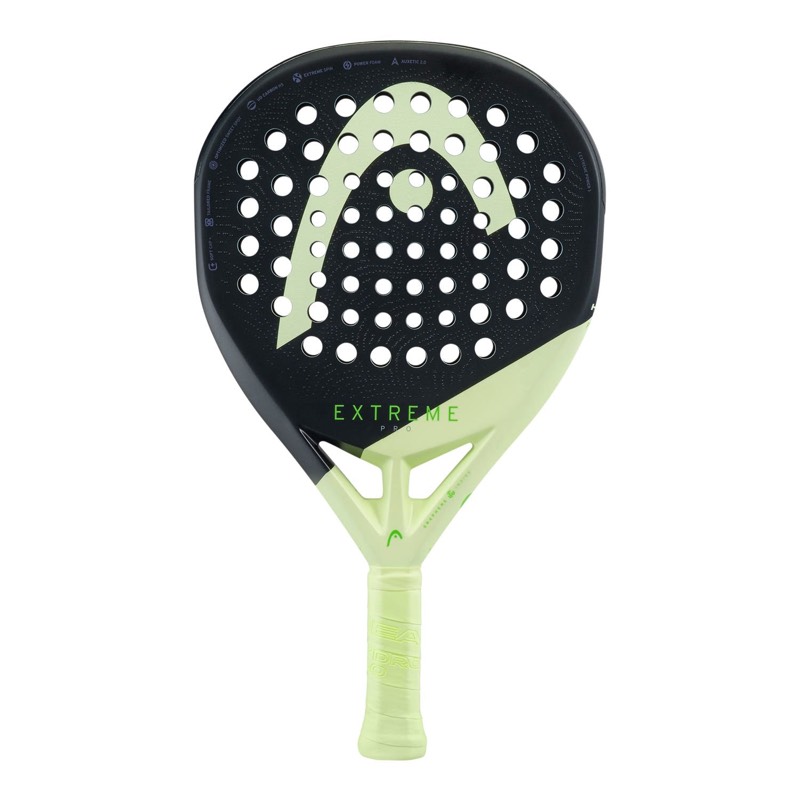
Head Extreme Pro 2026
Most diamonds stack two kinds of harshness: an aggressive, head-heavy mold and the stiffest possible layup — high-count carbon over dense EVA. The result hits enormous and feels like a brick on anything less than perfect contact.
Head splits the difference, and that is why this is our overall pick. The geometry is uncompromised — full diamond, high balance, 370 g — but the Hybrid Woven face mixes fiberglass in with the carbon, and the Power FOAM core is softer and more reactive than the EVA blocks its rivals use. You get the leverage on overheads without the frame punishing every reset you play off the back glass.
It is still a professional-level frame that assumes clean contact. But of the diamonds here, it asks the least of your arm for what it gives back.
Weight: 370 g | Shape: Diamond | Balance: High (head-heavy) | Face: Hybrid Woven carbon + fiberglass | Core: Power FOAM | Level: Professional
Price: $299.95 | Shop at Racket Central
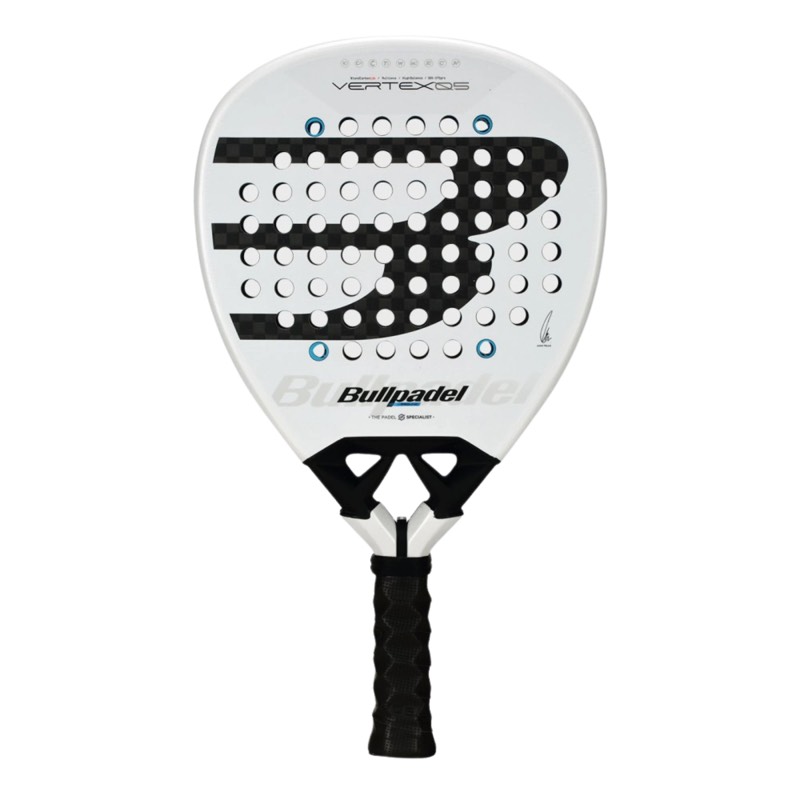
Bullpadel Vertex 05 2026
The Vertex is the frame the Extreme Pro politely declines to be: a diamond with no softening anywhere in the recipe. A 12K carbon face over a MultiEva core gives a firm, fast, unforgiving response, and the 2026 mold reworks the heart into a more triangular shape to cut drag through the swing.
This is Juan Tello's official racket, which tells you the intended customer. The sweet spot is high and tight, and off-center balls go nowhere useful. In exchange, when you catch it, the ball leaves with a crispness the softer frames here cannot match.
One note on the Custom Weight System: use it to move weight down, not up. The stock setup is already as head-heavy as most arms want.
Weight: Not published by Bullpadel (Proline diamonds typically 365–375 g) | Shape: Diamond | Balance: High | Face: 12K carbon | Core: MultiEva | Level: Advanced / Pro
Price: $315.20 | Shop at Padel USA
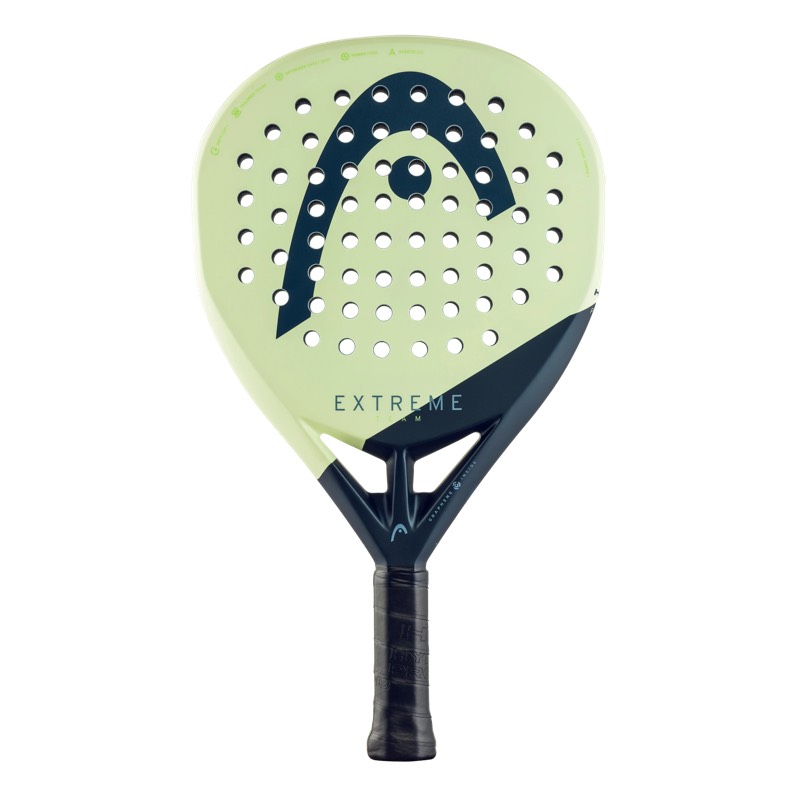
Head Extreme Team
If you want the diamond shape but you are honest about your contact consistency, this is the frame to buy — and the one we would put in most readers' hands.
Three things make it the softest diamond here. The hitting surface is fiberglass rather than carbon, so it flexes more and transmits less shock. The balance is mid-high rather than full head-heavy, so it swings noticeably quicker. And the drilling pattern is designed to widen the sweet spot — the single most useful thing you can do to a shape whose defining weakness is a small one. Head itself calls it the most forgiving model in the Extreme series.
This is the 2025 model, which as noted above is normal for the US market rather than a sign of old stock.
Weight: ~360 g | Shape: Diamond | Balance: Mid-high | Face: Fiberglass | Core: Power Foam with Auxetic 2.0 | Level: Advanced
Price: $209.95 | Shop at Padel USA
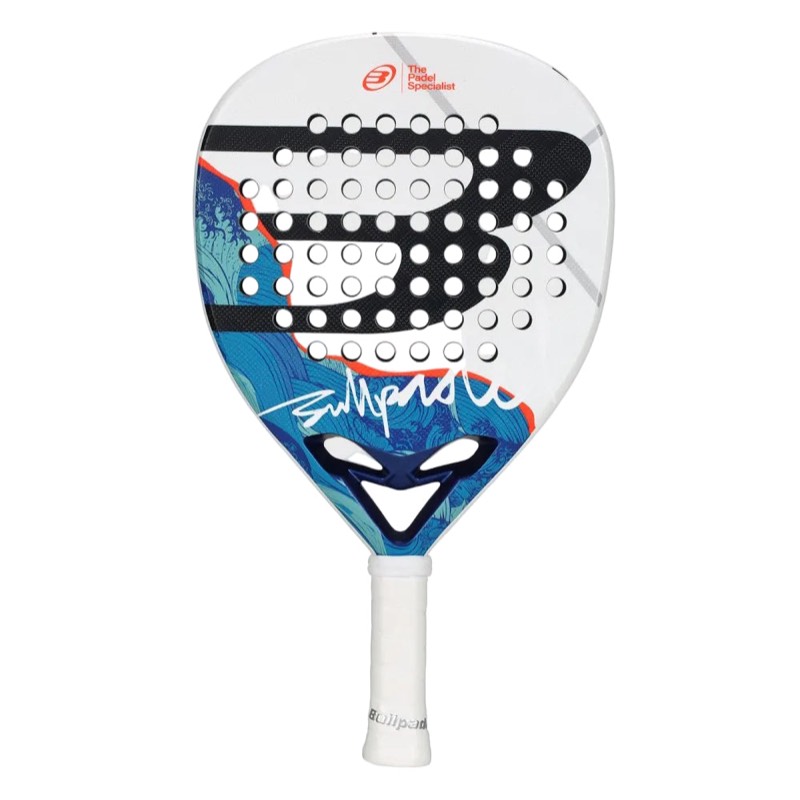
Bullpadel Ionic Power 26
Diamond frames cluster above $300 because the shape is associated with pro-tier construction. The Ionic Power is the sensible exception, and at $157.49 it is the cheapest way to find out whether you actually like the shape before committing to a Vertex.
The compromise is in the layup, not the mold. Bullpadel's Glaphite construction blends fiberglass with carbon rather than using carbon alone, which costs some of the explosive rebound of a 12K face but returns a more comfortable impact. The geometry is the real thing — full diamond, high head-heavy balance — so it teaches you the shape honestly.
Treat it as a trial frame. If you love it, the upgrade path is obvious. If you find yourself shanking resets, you have learned something valuable for $157 instead of $400.
Weight: Not published by Bullpadel | Shape: Diamond | Balance: High / head-heavy | Construction: Glaphite (fiberglass + carbon) | Tech: XForce System | Level: Advanced
Price: $157.49 | Shop at Racket Central
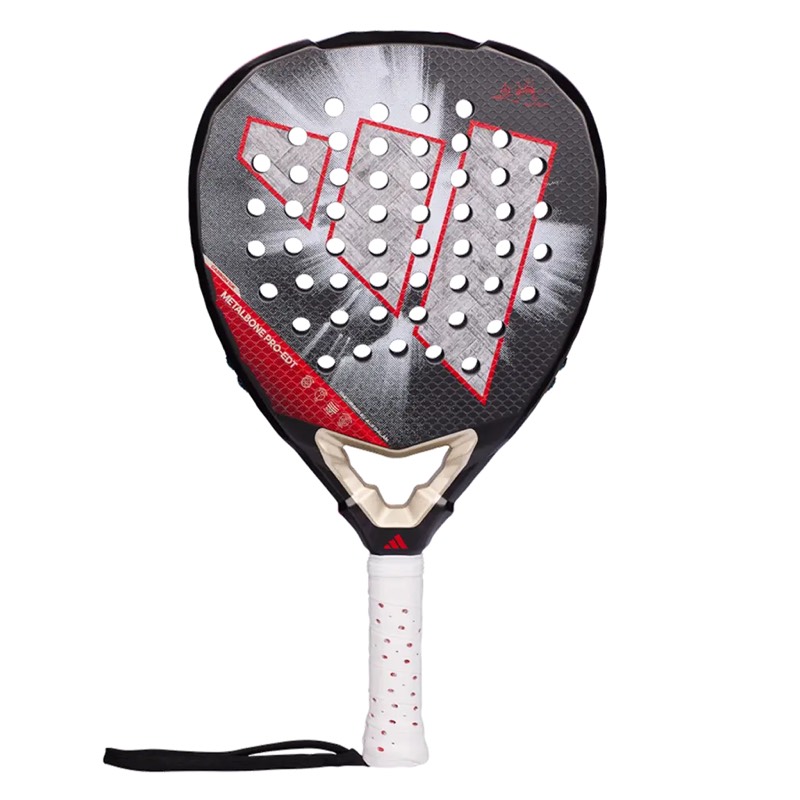
Adidas Metalbone PRO EDT 26
The Metalbone is the diamond most people picture when they picture the shape, and the limited PRO EDT is Ale Galán's own specification of it.
What separates it from the standard Metalbone is adjustability. The Custom Weight System accepts up to 11.2 g of removable plates at the sides and top, so you can genuinely re-tune the balance without altering the frame structure. Combined with the 455 mm length and the Curve Sweet Spot Top geometry, it lets an advanced player dial in exactly how much inertia they want at the top of the head — the one real answer to the "diamonds are too head-heavy" complaint.
The Soft Performance EVA core is less brutal than the layup suggests, but this is still a $391 frame for tournament players, not a first diamond.
Weight: Base weight plus up to 11.2 g adjustable | Shape: Diamond | Balance: High / head-heavy | Length: 455 mm | Core: Soft Performance EVA | Level: Professional
Price: $391.00 | Shop at Racket Central
Diamond vs Teardrop vs Round: Quick Comparison
| Round | Teardrop | Diamond | |
|---|---|---|---|
| Balance point | ~24–25 cm (low) | ~25–26 cm (medium) | 26 cm+ (high) |
| Sweet spot | Centered, largest | Slightly high, medium | High on the face, smallest |
| Best at | Control, defence, resets | Everything, reasonably | Finishing overhead |
| Weakest at | Putting balls away | Nothing in particular | Blocks, resets, mis-hits |
| Swing feel | Quickest | Balanced | Heaviest |
| Suits | Beginners, control players | Most players, most levels | Advanced finishers |
| Arm load | Lowest | Moderate | Highest |
The honest summary: round forgives, diamond punishes, teardrop negotiates. Our how to choose a padel racket guide walks through the rest of the decision.
Diamond Rackets and Arm Health
Diamond frames carry a real elbow and shoulder risk, and the mechanism is worth understanding rather than just repeating the warning.
Two things are happening. The higher swing weight means more work to accelerate the racket and more momentum to absorb at contact, so every ball asks a little more of the forearm and shoulder. More damaging is off-center contact: when you strike away from a sweet spot that is already small and sitting high, the racket wants to rotate about the grip axis, and your forearm resists that twist involuntarily, hundreds of times per session. That repeated load is the classic pathway to lateral epicondylitis — tennis elbow.
To reduce the risk:
- Choose a softer core and a face with fiberglass in it. A FOAM core absorbs more shock than dense EVA, and fiberglass flexes where high-count carbon does not. The Extreme Pro and Extreme Team above are both built this way.
- Do not add counterweight to the head. If your frame has an adjustable weight system, use it to bring balance down.
- Stay at the lighter end of the weight range, and use a thicker overgrip to damp vibration.
- Warm the shoulder and forearm properly before hitting overheads.
If you already have symptoms, do not try to manage them with a diamond. Our best padel rackets for tennis elbow guide covers frames built specifically to reduce arm load — and for most people with a sore elbow, changing shape helps more than changing technique.
Once the racket is sorted, find somewhere to use it: browse padel clubs across the US and check court availability near you.
Frequently Asked Questions
Continue Reading
Can You Wear Tennis Shoes for Padel? A 2026 US Guide
Can You Wear Tennis Shoes for Padel? A 2026 US Guide
Tennis shoes will get you on a padel court, and most US clubs are fine with it. But the useful question is which tennis shoes: clay-court models are close to the real thing, hard-court models slide when you need to stop, and running shoes are an ankle injury waiting to happen.
Best Round Padel Rackets 2026: Control & Forgiveness
Best Round Padel Rackets 2026: Control & Forgiveness
Round is the most forgiving shape in padel and the least rewarding on a smash. We checked live US stock at Racket Central and Padel USA, verified every shape against the manufacturer’s own spec sheet, and pulled the published power and control scores for all 41 round frames in the catalog. Here are five worth buying.
When to Buy Padel Gear: Black Friday 2026 Calendar
When to Buy Padel Gear: Black Friday 2026 Calendar
Black Friday 2026 lands on November 27, but it is only one of three moments worth waiting for. We scanned live listings across four US and European storefronts to map when padel rackets, shoes and balls actually get discounted.