
Padel Court Ceiling Height: Tiers, Rules & US Clubs

Padel Court Ceiling Height: Tiers, Rules & US Clubs
What the FIP rulebook actually requires — and the nine US clubs with 40 ft or more above the court
Almost no indoor padel club publishes the one number that most changes how the game plays: how much air there is above the court.
Padel is the only major racket sport whose core defensive shot travels almost straight up. Take the lob away and you are playing a flatter, less tactical game. We track a recorded clear height for 108 US clubs across 29 states — roughly a quarter of the 392 active clubs in our database — and the spread is wider than most players expect: 20 ft at the bottom, 85 ft at the top, median exactly 30 ft.
Why Ceiling Height Decides How Padel Plays Indoors
The lob — globo — is how padel players escape trouble. When your opponents own the net and you are pinned at the back glass, lifting the ball over their heads buys time and pushes them back. Above beginner level it is the backbone of defence, and a big part of why indoor and outdoor padel feel like different sports.
A well-struck defensive lob peaks around 25 to 30 ft above the court. That single fact explains the entire US distribution below. Under roughly 25 ft the shot is unavailable: you learn to hit lower and flatter, and rallies become power exchanges rather than tactical chess. Above about 35 ft, nothing you can hit reaches the roof. In between, at 28 to 32 ft, most lobs clear but the desperate ones brush the ceiling — players who learn there develop a flatter lob, then rediscover the full shot when they travel.
Our guide to hitting offensive and defensive lobs covers the technique; this post is about whether the building lets you use it.
What the Rulebook Actually Requires
Worth getting from the source, because much of what circulates online is wrong. The International Padel Federation Rules of Padel sets the standard in one sentence:
Minimum height must be 6 meters throughout the court. With no elements (i.e. spotlights) which obstruct this area.
That is 6 m — about 19.7 ft. It is a floor, not a target, and two details matter more than the number. First, the rulebook immediately adds a stronger recommendation for new construction:
As for the new facilities it is suggested that the minimum free height should be of 8 meters throughout the court, with no elements of obstruction in this area.
8 m is about 26.2 ft — and that reframes the US picture. Against the bare minimum, essentially every American club passes. Against what the FIP actually recommends for anything newly built, 15 of the 108 US clubs we have measured fall short.
Second, the requirement is for clear height "throughout the court," with nothing obstructing it. What matters is the distance to the lowest thing overhead — a truss, a duct, a light fixture — not the roof deck. A warehouse with a 40 ft roof and lights at 26 ft is a 26 ft court. This is why asking about "ceiling height" can get you a more optimistic answer than the one you will experience.
The Ceiling Height Tiers
Across the 109 clubs with a recorded measurement, the distribution falls into clean bands.
Under 25 ft — lob-limited
10 clubs. Our lowest recorded clear height is 20 ft, almost exactly the FIP minimum. These are nearly always retrofits — courts dropped into a building whose roof was fixed long before padel was considered, including a couple of shopping-mall conversions. Real padel, often good value, but the high defensive lob is off the menu.
25–29 ft — just enough
32 clubs. Standard lobs work; the highest ones are a gamble. Mostly urban clubs where square footage, not height, was the binding constraint.
30–34 ft — the US club standard
47 clubs, the largest band and the de facto American norm. Our median club sits at exactly 30 ft, the mean at 31 ft. Purpose-built US facilities converge here because it is where the sport plays properly without paying for structure nobody needs. If you never think about the ceiling at your home club, it is probably this one.
35 ft and up — unrestricted
20 clubs, 9 of them at 40 ft or higher. The roof stops being a tactical consideration.
The US Clubs With the Most Room Overhead
One caveat: this ranks the clubs where we have a verified measurement. Only 108 of 392 US clubs have a recorded ceiling height, so this is not a definitive national ranking — the 284 without a figure are not implied to be lower, most simply have not published one. Court counts are padel only, excluding pickleball, checked against each club's own site where published.
| # | Club | Where | Clear height | Padel courts |
|---|---|---|---|---|
| 1 | Bay Padel (Treasure Island) | San Francisco, CA | 85 ft* | 6 |
| 2 | Club Pickle & Padel | Highland Park, IL | 66 ft | 4 |
| 3 | Brisas at CityView | Long Island City, NY | 50 ft | 5 |
| 4 | SPORTIME Randall's Island | New York, NY | up to 42 ft | 3 |
| 5 | Padel Haus Atlanta | Atlanta, GA | 40 ft | 6 |
| 6 | Foundry Padel | Portland, OR | 40 ft | 4 |
| 7 | Urban Padel | Doral, FL | 35 ft | 12 |
* Our record for Bay Padel Treasure Island is 85 ft. The club bills itself as the indoor club with the highest ceilings in the world, and the San Francisco Standard reported the hangar as having a "nearly 80-foot ceiling, so high that even pros cannot hit it with their lobs." Treat it as roughly 80 ft or more — either way, comfortably the tallest padel roof in the country.
Bay Padel (Treasure Island)
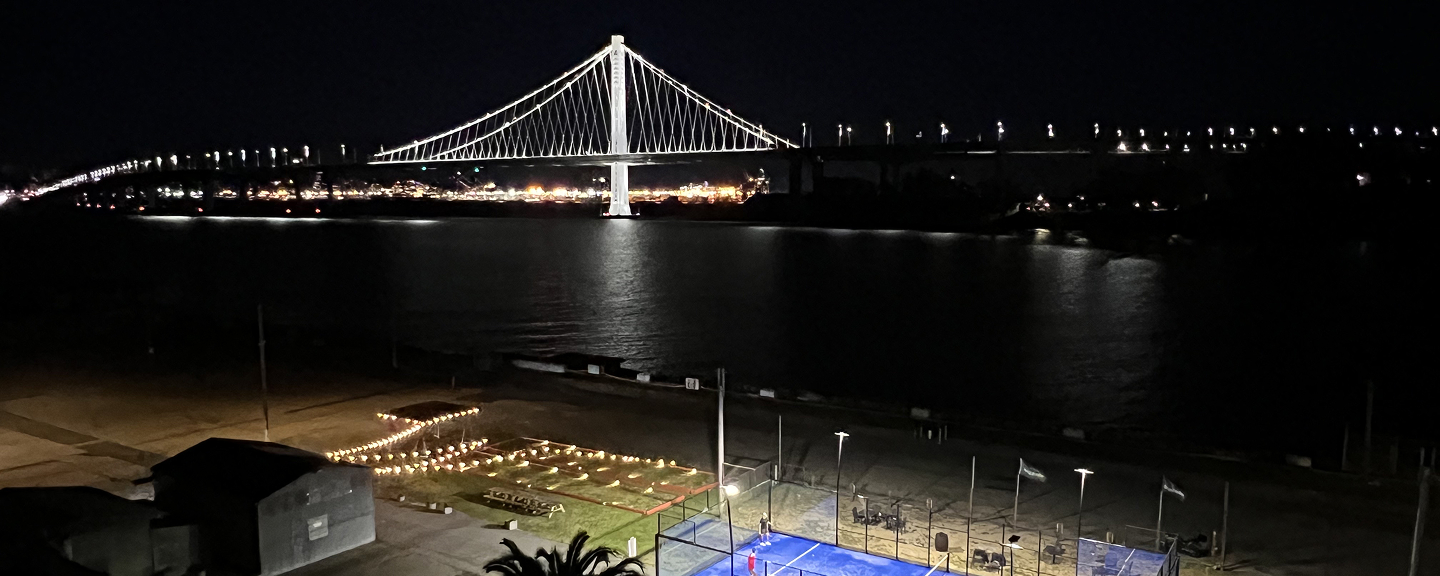
Bay Padel plays inside Hangar 3 on Treasure Island — a former Navy airplane hangar that spent 1990 to 2010 as a sound stage for The Matrix, Indiana Jones and the Last Crusade and Flubber. It is the only padel venue in California, and likely anywhere, where the roof is far enough away to stop being part of the sport. The founders have said the lob is exactly what sent them hunting industrial buildings: padel needs tall and column-free, a rare combination outside heavy industry. Six padel courts sit alongside seven pickleball courts, a gym and co-working space.
Courts: 6 | Type: Indoor | Ceiling: 85ft | Rating: 4.9★
Club Pickle & Padel
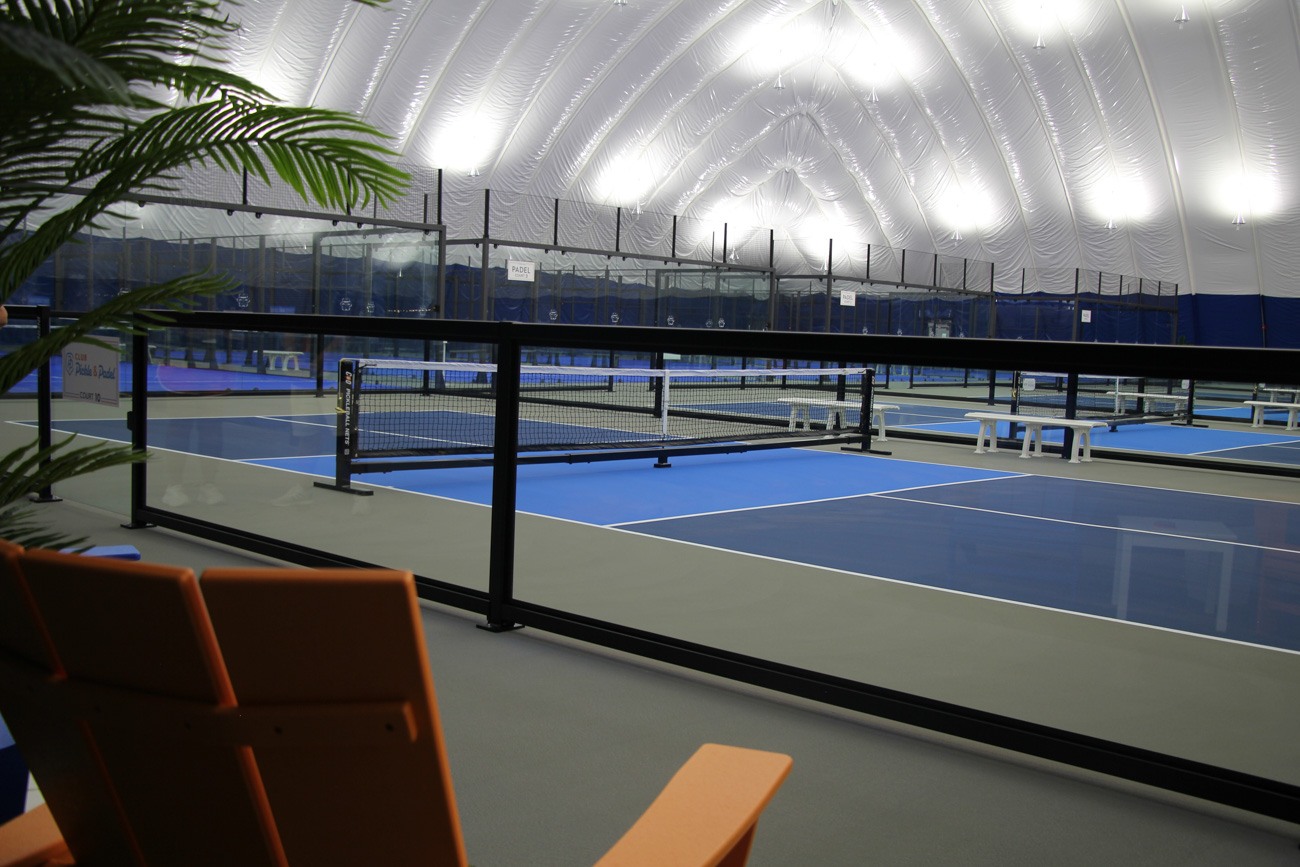
This North Shore club takes the opposite route to the same outcome: rather than inheriting a tall building, it built one. Four glass-walled padel courts sit under what the club calls "a towering 66-foot-high quilted dome," and it markets the consequence directly — "even lob shots won't come close to hitting our expansive ceiling." Domes are the cheapest way to buy serious height, which is why two of our top three are not conventional buildings. The courts share the site with ten dedicated pickleball courts in the northern Illinois suburbs.
Courts: 4 | Type: Indoor | Ceiling: 66ft | Rating: 4.2★
Brisas at CityView
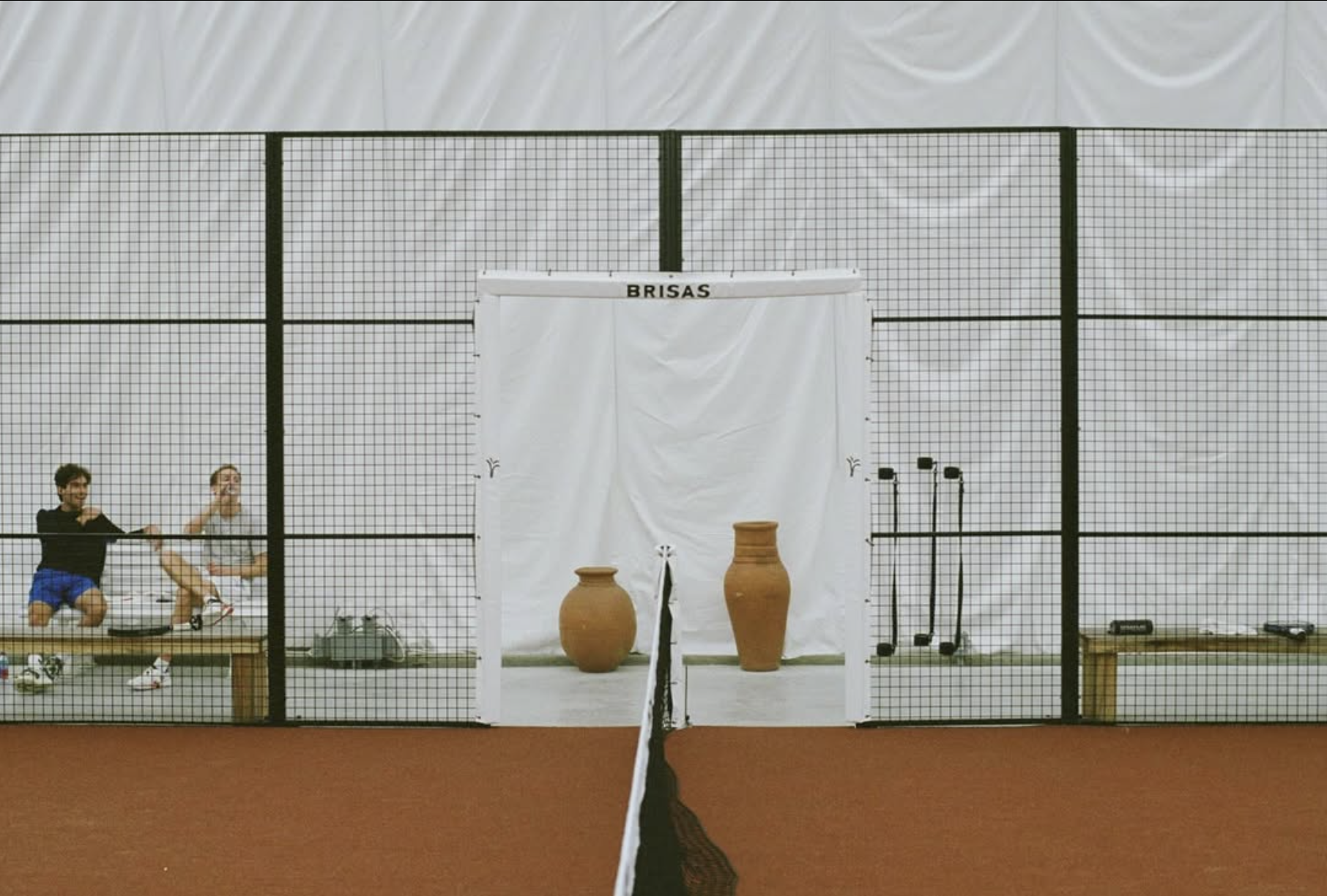
Brisas is the padel operation inside CityView Racquet Club, and it is the rare club that treats ceiling height as a headline feature rather than a footnote. Its own description promises "5 panoramic terra-cotta padel courts in a 50ft-high temperature-controlled bubble for all-year play and unrestricted lobs" — plus more than 13 ft between courts, nearly as unusual as the height. For New York players used to squeezing lobs under warehouse trusses, the difference is immediate.
Address: 43-34 32nd Pl, Long Island City, NY 11101 | Phone: 1-718-389-6252
Courts: 5 | Type: Indoor | Ceiling: 50ft | Rating: 3.9★
Rounding out the 40 ft-plus group: SPORTIME Randall's Island, whose MejorSet courts are advertised with "unobstructed ceiling heights of up to 42ft" — note unobstructed, the spec that actually matters — plus Padel Haus Atlanta in the Westside Paper building in Georgia, Foundry Padel in Portland, Oregon, and PELOTA Padel Club and Rax NJ.
How Clubs Handle a Ball That Hits the Ceiling
This is the most confidently misreported rule in padel.
The word "ceiling" appears exactly once in the entire Rules of Padel, and it is not in the list of ways to lose a point. It is in Rule 14, among the correct returns:
As a result of the direction and force with which the ball is hit, it bounces in the opponent's court and then goes out of court, hits the ceiling, the lights or any other object not related to the court.
So if your shot bounces in your opponents' court first and then hits the ceiling, you have already won the point. Rule 13, "Point Lost," runs to eighteen clauses and none mentions the ceiling.
Plenty of sources state flatly that FIP rules award the point to your opponents when you hit the roof. That rule is not in the rulebook. The nearest clause is 13.1.g, covering a ball that without bouncing first hits "the walls of the opponents court, the metallic fence or any element not related to or located on the ground of the opponents court" — and most clubs reasonably read a roof strike as "any element not related to the court."
The practical upshot: because the rulebook is silent on a pre-bounce ceiling strike, it is a house rule, and houses differ. Some replay the point as a let, others award it to the opposition. Above 35 ft it never comes up. Below 25 ft it comes up in your first set, so ask at the desk before you start keeping score.
Why the Tallest Clubs Are Almost Never Purpose-Built
Sort our data by height and a pattern emerges: the tallest padel ceilings in America were not designed for padel.
- Adaptive industrial reuse takes the top spots — an aircraft hangar in San Francisco, a paper-plant conversion in Atlanta, an industrial shell in Portland. Buildings that are already tall and column-free are cheaper than building tall and column-free.
- Domes and bubbles are the deliberate shortcut, delivering 50 to 66 ft at the apex for a fraction of what rigid steel would cost.
- Purpose-built facilities cluster tightly at 28 to 32 ft. When a developer pays for every foot of steel, 30 ft is the efficient answer — enough for the sport, nothing wasted, and it shows up in the cost of building a padel court.
- Retrofits into racket clubs, gyms and malls sit at the bottom: the roof was fixed before padel was on the table.
The regional numbers follow. Florida has more measured clubs than any state (30) but the lowest average of any major market at 29.5 ft, and no Florida club in our data exceeds 35 ft — its boom was built largely on purpose-built structures. New York has the widest spread, 22 ft to 50 ft, because its clubs are wedged into whatever buildings were available. Arizona is the most uniform: five clubs, all between 30 and 32 ft.
What to Ask Before You Book an Indoor Court
Clubs rarely publish this number, so you usually have to ask. Four questions get a real answer:
- "What is the clear height to the lowest obstruction?" Not "how tall is the building." Lights, ducts and trusses are what your lob actually hits.
- "What is your house rule if the ball hits the ceiling?" Let, or loss of point. Settle it before the first serve, not during a tie-break.
- "Is it the same over every court?" In converted industrial buildings it often is not — courts under a sloped roof or beside a mezzanine can differ by several feet.
- "Are the courts covered or fully indoor?" A canopy over an otherwise open court behaves differently again. Our guides to padel court surfaces and court dimensions cover the rest of how a venue plays.
If you like to defend, treat 30 ft and above as safe and under 25 ft as a genuinely different game. And if your club knows its number and it is not in our database yet, we would like to add it.
Frequently Asked Questions
Continue Reading
Padel at US Resorts & Hotels: All 19 Venues (2026)
Padel at US Resorts & Hotels: All 19 Venues (2026)
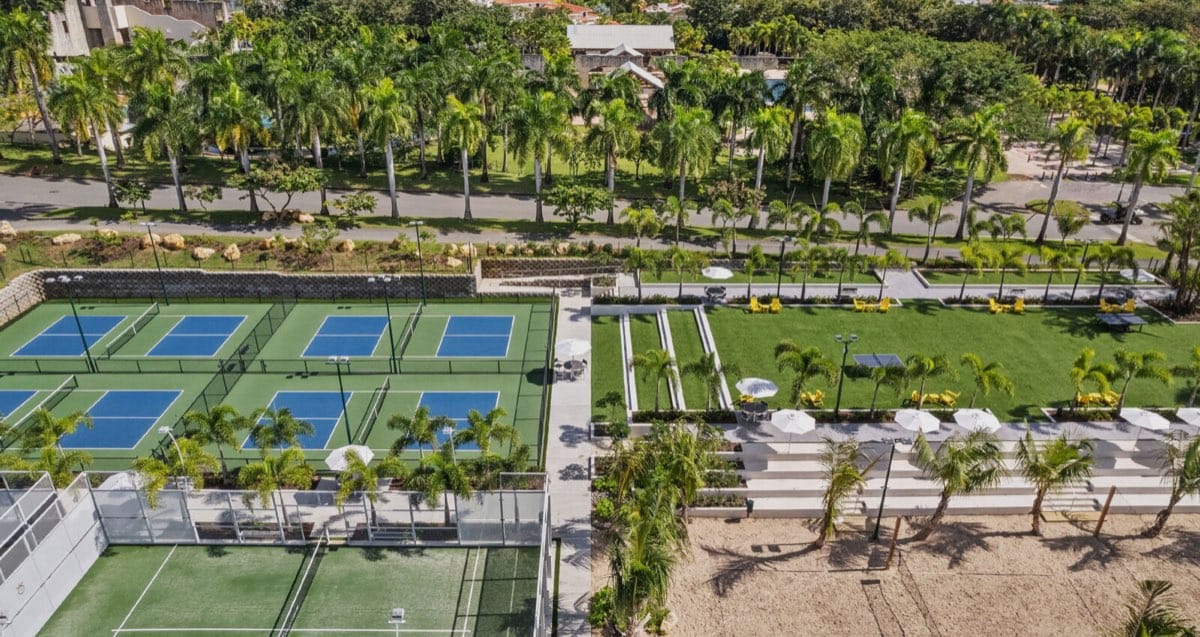
We pulled every resort, hotel and inn in the US with a padel court on site: 19 venues, 33 courts, and not one of them indoors. Here is what each property actually has, what it costs, and exactly which ones will let you book without a room or a membership.
Playtomic vs Playbypoint: How to Book US Padel Courts
Playtomic vs Playbypoint: How to Book US Padel Courts
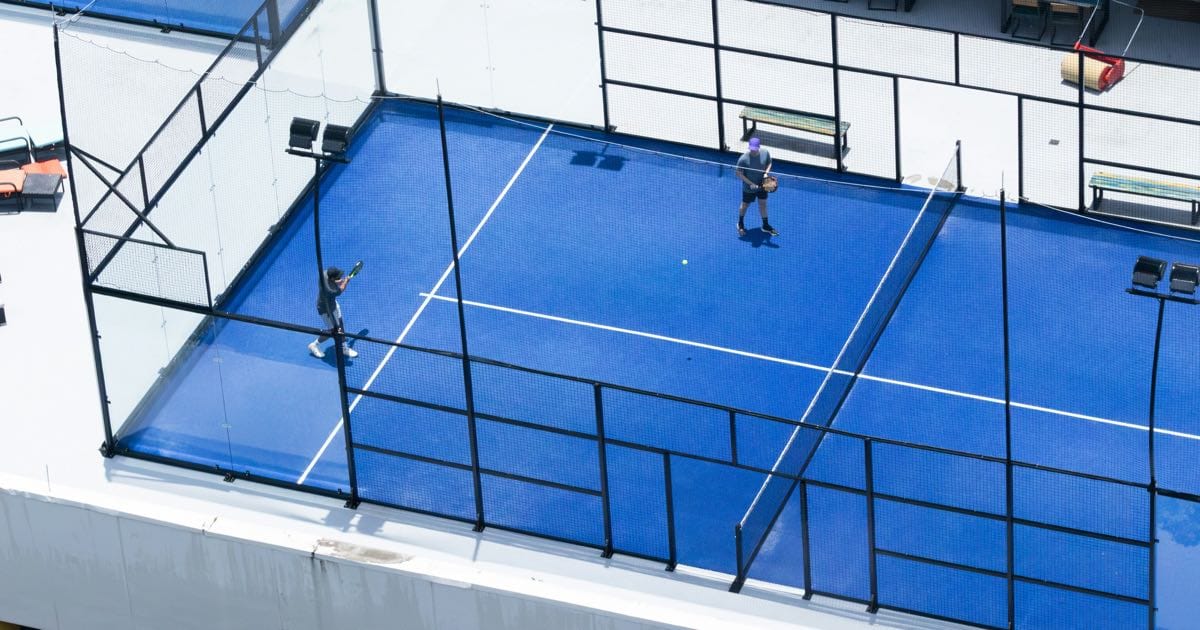
Three apps take almost all US padel bookings, and they split the country by region rather than nationally. We recorded the booking platform on all 392 active US padel clubs to show which app you actually need in your metro — and the 45% of clubs no app can book at all.

Padel Courts in North Carolina: Where to Play in 2026
Padel Courts in North Carolina: Where to Play in 2026
North Carolina has six padel clubs across four cities, with 17 courts open today and 18 more announced. Charlotte holds 14 of them across three venues, all open to non-members, while Raleigh's only courts sit behind a country club membership. Here is every club, what it costs, and which announced projects are further off than the listings suggest.