
Best Padel Rackets by Court Side 2026: Left vs Right

Best Padel Rackets by Court Side 2026: Left vs Right
The drive side and the revés side ask for different frames — and "left side" is not the same thing as "left-handed"
Your side of the court is a spec sheet nobody reads
We have racket guides sorted by level, by style, and by shape. None of them answer the question partnered players actually ask each other in the parking lot: which side do you play?
That question changes the answer. The two halves of a padel court demand different shots, at different heights, under different time pressure — and a frame that makes one job easy makes the other job harder.
One correction before anything else, because most of the internet gets this wrong: "left side" and "left-handed" are not the same thing. Guides that treat them as interchangeable hand left-handers the exact opposite of the advice they need.
What each side actually asks of a racket
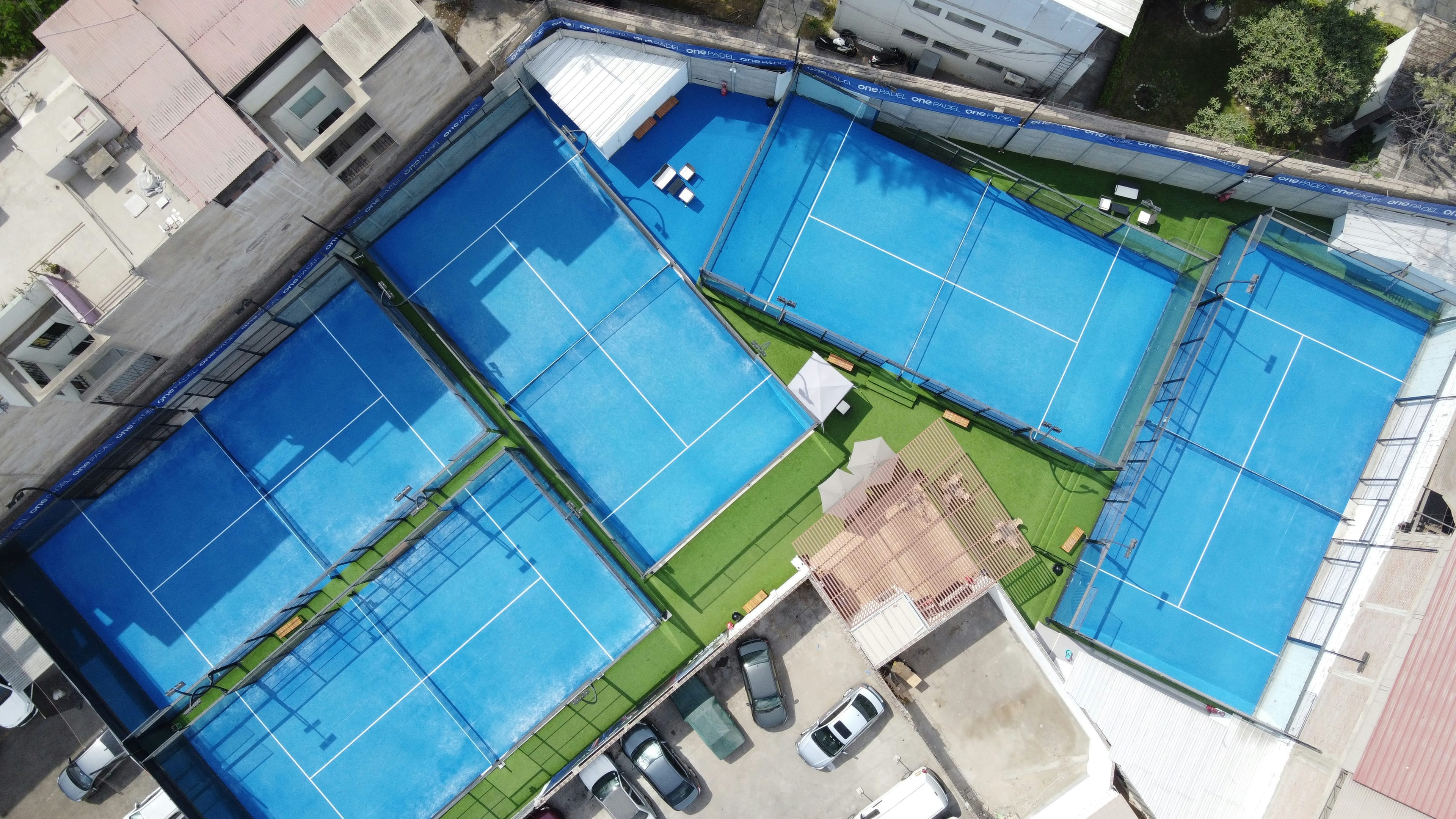
The Spanish names cause half the confusion, so let's fix them first. Facing the net, the right half of the court is the drive side and the left half is the revés side. Those labels describe where a right-handed player's forehand and backhand point along the outside line — they say nothing about who attacks.
The geometry says everything. A right-handed player on the right side has their backhand aimed at the middle. A right-handed player on the left side has their forehand aimed at the middle. Because most balls travel through the middle, that single difference decides who builds the point and who finishes it.
Right side (drive): the point builder
You will hit more backhands and more lobs than anyone else on court, and you are the one asked to reset a ball coming off the back glass with an opponent standing on the net. Your job is to survive the pressure and hand your partner something they can attack.
That brief wants a round or control-tuned hybrid head, a head-light balance so the racket turns over quickly in fast net exchanges, and a large, centered sweet spot that forgives contact made while stretched. Our breakdown of racket shapes covers why a centered sweet spot buys so much forgiveness.
Here is the part most "control racket" lists get wrong: do not buy the softest frame you can find. The right-side player hits the most lobs in the match, and depth on a lob from behind the service line takes ball output. A dead, ultra-soft core leaves your lobs short — which puts your partner under a smash instead of over one. You also need something back from the frame on chiquitas and low counters. Medium core, not mush.
Left side (revés): the finisher
Your forehand covers the middle, so the bandeja, the víbora, and the smash land in your lap. You close points.
That brief wants a teardrop or diamond head, higher balance to put mass behind the ball above shoulder height, and a grippy surface for the spin that keeps a víbora down. You accept a smaller, higher sweet spot in exchange for output. If your technique is not there yet, that trade goes badly — see our power racket guide for the honest version of that argument.
The left-handed exception (and why it matters)
A left-handed player almost always plays the right side. That is not a quirk — it is so both partners have their forehand pointing at the middle of the court, which is the whole reason sides exist.
Which means a lefty on the right side is the finisher, not the point builder. They should be shopping the left-side list on this page, not the right-side one, despite standing on the right. Any guide that files "best rackets for left-handed players" under soft, forgiving control frames has inverted the advice for the exact player it claims to help.
Best padel rackets for the right side
Control-forward frames with enough output to lob deep and counter hard. All prices and stock verified at Racket Central, a US retailer.

Head Radical Pro 2026
The closest thing to a purpose-built drive-side racket on the US market. Head pairs a hybrid teardrop mold with a head-light balance — exactly what the right side wants. The sweet spot sits low enough to help on shoulder-height backhands, but the frame still turns over fast at the net. The Control Foam core absorbs pace on defense, while the stiffer double-layer Carbon HS face gives you the output to lob deep instead of dropping it short.
Weight: 370g (±10g) | Shape: Hybrid teardrop | Balance: Head-light | Core: Control Foam | Level: Advanced

Siux Trilogy Elite 2026
The textbook drive-side frame: round head, low balance, sweet spot parked dead center where your hand can find it under pressure. What lifts it above the usual beginner rounds is the core — Siux rates the EVA at a medium 6–6.5 out of 10, firm enough that the ball leaves with intent rather than dying on the face. The 3K carbon face keeps it comfortable across long rallies.
Weight: 365g (±10g) | Shape: Round | Balance: Head-light | Core: EVA, medium feel | Level: Intermediate

NOX ML10 Ventus Control 3K 2026
The ML10 line has been the reference control pala for a decade, and the 2026 Ventus build keeps the recipe: control-oriented geometry, medium-to-low balance, and a soft 3K composite face that holds the ball long enough to place it. NOX rates it 93 control against 70 power, which tells you where it sits. The frame for a right-side player who wins by never missing — accepting that you will work harder for depth on the lob.
Shape: Control-oriented | Balance: Medium–low | Face: 3K composite | Level: Intermediate–Advanced

Bullpadel Ionic Control 26
Under $160 for a round, head-light frame with a real technology package is unusual. Bullpadel builds the Ionic on Glaphite — a fiberglass-and-carbon blend that is livelier and more forgiving than full carbon — with the XForce system stiffening the throat so the head does not twist on off-center contact. If you are not sure you will stay on the right side, this is the sensible amount of money to find out.
Shape: Round | Balance: Head-light | Face: Glaphite (fiberglass + carbon) | Level: Intermediate–Advanced
Best padel rackets for the left side
Attack frames with the balance and surface to finish above the net.

Head Coello Pro 2026
The most stable diamond you can buy in the US right now. A 272mm balance is genuinely head-heavy, and the 475cm² head gives more hitting surface than most frames in this class — useful, because a diamond's sweet spot is small and sits high. Auxetic 2.0 in the yoke keeps mishits from feeling like a hammer blow. A finisher's racket in the purest sense: it rewards a clean overhead and punishes everything else.
Weight: 370g | Shape: Diamond | Balance: 272mm (high) | Head size: 475cm² | Level: Tournament

NOX AT10 Genius Attack 18K Alum 2026
Agustín Tapia's signature frame, and Tapia is one of the few genuine left-side players whose racket matches the stereotype. The 18K aluminized carbon face is the firmest layup NOX makes — it stays connected at swing speeds where softer faces get vague, which is precisely what a víbora needs. NOX rates it 96 power against 78 control. Buy it only if you already finish points with your overhead; if you do not, the 12K version is more forgiving. Our carbon weave explainer covers the 12K/18K decision.
Shape: Attack-oriented | Balance: High | Face: 18K aluminized carbon | Level: Advanced

Babolat Viper Soft Juan Lebrón 3.0
The left side is where most club players over-buy. This is the antidote: Babolat keeps the Viper's diamond mold and high balance — so the leverage on your smash is real — but softens the impact so the ball comes off the face without perfect timing. You give up a little raw ceiling and get back a frame you can actually play a full match with. The 3D Spin surface does the work on víboras.
Shape: Diamond | Balance: High (head-heavy) | Feel: Soft-tuned impact | Level: Advanced

Bullpadel Ionic Power 26
The Ionic Control's twin, built the other way round: diamond head, high balance, inertia loaded above your hand. The Glaphite face keeps it lighter and more comfortable than a full-carbon diamond, which matters because head-heavy frames are the ones that find your elbow. The cheapest honest way to test whether the left side suits you before spending three times as much.
Shape: Diamond | Balance: High (head-heavy) | Face: Glaphite (fiberglass + carbon) | Level: Intermediate–Advanced
Best hybrid picks if you switch sides
Most American padel is open play, and open play means switching sides every game. These three handle both jobs.

NOX Ventus Hybrid 12K Lite 2026
A 78-power, 88-control rating is about as close to the middle as a real racket gets. The hybrid head puts the sweet spot between where a round and a diamond keep theirs, the medium balance keeps it quick at the net, and the Lite build stays easy to swing late in a session. If you play mixed doubles, social nights, or a rotating group where you never know your side until the first point, start here.
Shape: Hybrid | Balance: Medium | Face: 12K composite | Level: Intermediate–Advanced

Adidas Metalbone CTRL 3.4
The clever answer to the whole question. Adidas builds in a Weight and Balance System that lets you add or remove up to 11.2g — enough to shift the same racket from an even-balanced right-side frame to a head-heavier left-side one. The round head and 16K aluminized carbon face give a stiff, precise base to build from. The most expensive pick here, and the only one that adapts to a side change instead of splitting the difference.
Shape: Round | Balance: Even, adjustable ±11.2g | Face: 16K aluminized carbon | Level: Advanced

Siux Astra Go Hybrid 2026
Teardrop head, even balance, fiberglass face, high-responsive EVA core — the specification of a racket that refuses to have a weakness. Fiberglass flexes more than carbon, so it is forgiving on the right side, and the even balance still gives you something to hit with above your shoulder. Under $180 and the right first racket for anyone who has been playing under a year.
Weight: 355–375g | Shape: Teardrop / hybrid | Balance: Even | Core: EVA high-responsive | Level: Intermediate
What the pros' rackets actually tell you
If you check the signature frames against the sides those players occupy, the neat theory breaks down fast.
Arturo Coello plays the drive side — the "defensive" right — with a 272mm diamond rated 97 for power. Agustín Tapia plays the revés side with a diamond too. Juan Lebrón has played both sides across his career and kept the Viper through the switch. Miguel Lamperti built a career on the left side wielding one of the softest round palas ever made.
The lesson is not that side does not matter. It is that at the top of the sport, both players attack, so both players carry attacking frames and absorb the cost with technique you do not have. Club padel is different: roles are cleaner, rallies are longer, and the right-side player really does spend the match lobbing and resetting. The spec logic on this page holds for the game you are playing, not the game on the highlight reel.
Should you specialize at all?
Probably not yet, and here is the honest test.
Buy by side if: you have a regular partner, you play the same side in at least four out of five matches, and you have been playing for more than about eighteen months. That is when a side-specific frame starts returning more than it costs you.
Do not buy by side if: you play open play or club mixers, you rotate partners weekly, or you are still in your first year. Buy a hybrid, get better at both sides, and let a preference emerge. A right-side player who cannot hit a bandeja is a liability the moment their partner is pulled wide — and you learn that shot by being forced onto the left. Our positioning guide and doubles strategy primer are worth more to your results right now than a $400 pala.
How to test which side suits you
Four sessions, one question each.
- Can you lob under pressure? Have a partner feed you deep balls off the back glass while you lob cross-court. If you can land ten in a row past the service line, the right side is open to you.
- Can you hit a bandeja without stopping the point? Not a smash — a bandeja. The left side is unplayable without it.
- Where do you lose points? Track a set. If your errors cluster on backhands from the middle, the right side will grind you down. If they cluster on overheads, the left side will.
- Which side does your partner want? Padel is a two-person spec sheet. The pair only works if one of you is genuinely happy building.
Once you know, our full racket buyer's guide covers everything the side question does not — weight, grip size, and budget. For where to shop, we keep a US padel retailer guide current. And when you are ready to test all of this on court, find a club near you and check availability.
Frequently Asked Questions
Continue Reading
Best Padel Training Aids 2026: Rebounders & Reaction Tools
Best Padel Training Aids 2026: Rebounders & Reaction Tools
Court time is the scarcest thing in American padel, so the only training aids worth owning are the ones that buy you reps you cannot otherwise get. We checked stock and pricing directly against each US retailer's own product data. Nine picks, three budget builds, and a short list of what to skip.
How Much Does a Padel Racket Cost in the US? 2026 Prices
How Much Does a Padel Racket Cost in the US? 2026 Prices
Search results give you padel racket prices in euros. We checked the American shelf instead: 361 in-stock rackets across three US retailers. The median costs $250-$265, a third of inventory is $300-plus, and the cheap end is thinner than the listings suggest.
When to Replace Padel Shoes: Wear Signs & Real Lifespan
When to Replace Padel Shoes: Wear Signs & Real Lifespan
Padel shoes wear out on playing hours, not calendar months, and the 60-100 hour figure everyone quotes is a planning tool rather than a verdict. Here are the five wear signs that actually decide it, why the indoor-heavy US court mix changes the math, and what to buy next at verified 2026 US prices.