
Best Padel Ball Machines 2026: Complete US Buying Guide
Best Padel Ball Machines 2026: Complete US Buying Guide
Four padel-specific machines, verified US prices, and the one spec that decides whether you can actually drill a bandeja.
A ball machine is the one piece of padel equipment that changes how you practise rather than how you play. A better racket makes a good session marginally better. A machine turns an empty court and forty-five minutes into three hundred repeatable bandejas.
The problem is that the padel machine market is barely four years old, small, and full of tennis hardware wearing a padel sticker. This guide is built from manufacturers' published specifications and US prices verified on the sellers' own storefronts in August 2026. It is a buying guide, not a hands-on review, and where a number comes from a manufacturer we say so.
Why a Padel Ball Machine Is Different From a Tennis One
The ball is different. The International Padel Federation specifies a padel ball at 6.35–6.77 cm in diameter against a tennis ball's 6.54–6.86 cm, at a noticeably lower internal pressure. A smaller, softer ball behaves differently inside a throwing-wheel mechanism: the wheels have to be calibrated for it, or the grip varies and your feed depth wanders by a metre from ball to ball.
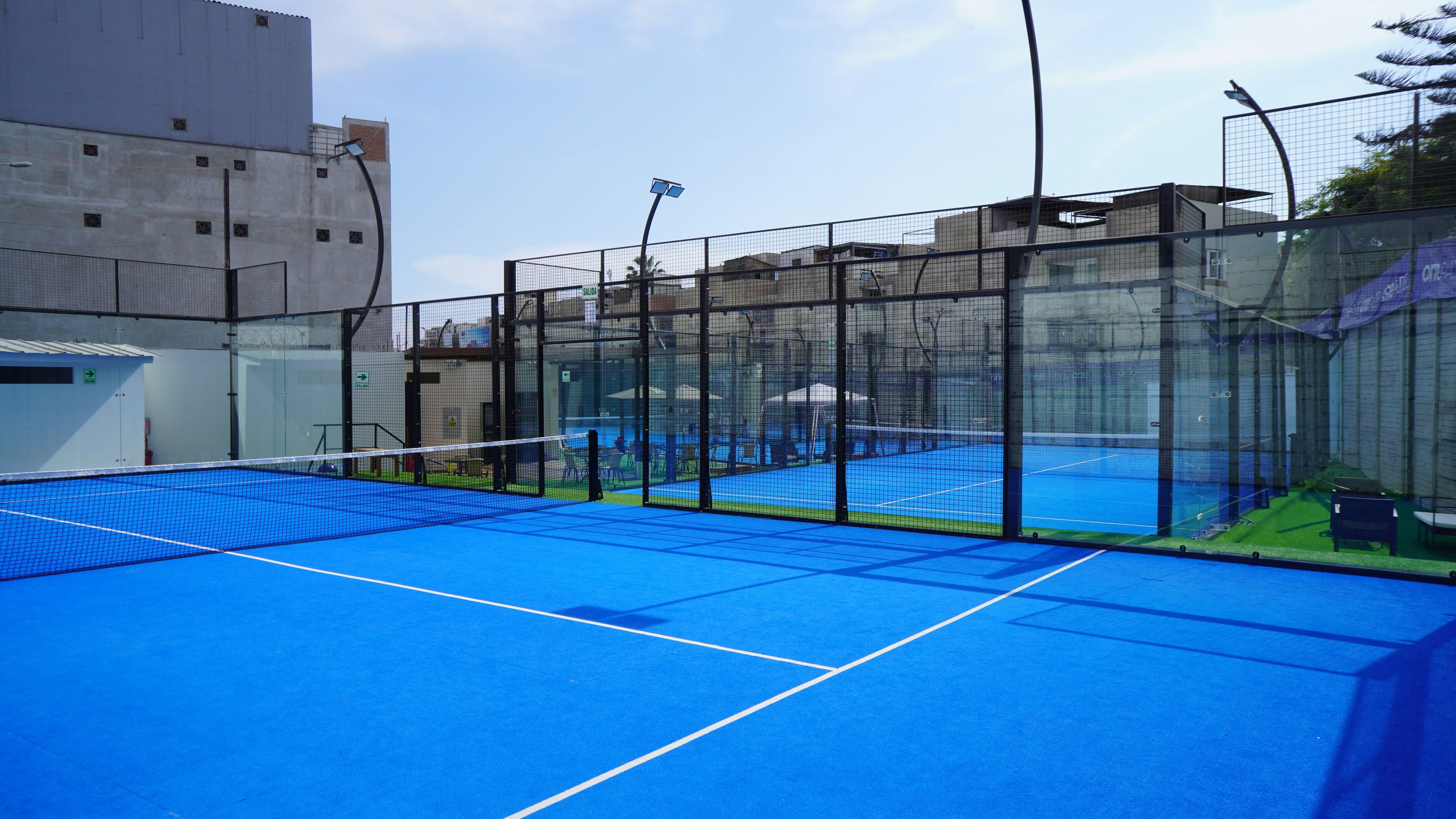
The court is enclosed. The machine sits inside the playing area, not eight metres behind a baseline. It occupies space you move through, it will get hit, and every feed has to be aimed with the glass in mind.
The shots that matter are different. Padel points are decided by the lob, the bandeja, the vibora and the ball coming off the back glass — not by a flat cross-court drive. Two of those need the machine to throw genuinely high; one needs it to throw deep and flat enough to rebound off the glass at a playable height. A machine that only feeds waist-high drives is an expensive way to practise the least important shot in the sport.
What to Look For
Lob capability and elevation
The most important spec, and the one most often left off the box. FIP rules require at least 6 m of clear height above a padel court, and a good lob dies within a metre of the back glass. If the machine cannot throw high, you cannot drill the bandeja or the smash at all.
Look for a stated elevation range in degrees. Lobster publishes 0–60°, which is properly lob-capable. Tennibot publishes 16.5–37°, which lifts a ball but will not produce a defensive moon-ball. PadelShooter does not publish degrees, but its comparison table says the MAX and Smart Pro "can reach the roof" while the entry-level Smart tops out about a metre above the side walls.
Battery life and portability
Padel courts have no power outlets, so battery is an operating constraint rather than a convenience. Published run times run from two hours (Padel Tutor Mini) to six or eight (PadelShooter MAX with the large external pack). Two hours sounds fine until you notice it covers three court bookings, not thirty.
FIP requires a court opening at least 1.05 m wide, so everything here fits through the door — but you are still carrying 24 to 53 lbs from a parking lot onto turf. Twice a week, weight becomes a feature.
Oscillation: horizontal, vertical, random
External oscillation swings the whole machine body, so the barrel telegraphs where the next ball is going. Internal oscillation moves the wheels inside a fixed housing — the machine sits still and you read the ball, not the machine. PadelShooter's entry-level Smart uses external; the Smart Pro and MAX use internal.
For padel, random beats a fixed two-line pattern. Movement here is diagonal and reactive, and a left-right metronome grooves a rhythm you will never see in a match.
Ball capacity and feed rate
Capacity sets the ratio of drilling to picking up balls. Sixty balls at one every four seconds is four minutes of feed and then five minutes on your knees; 140–150 balls is a real ten-minute block. Feed rates cluster in the same window across the market, so capacity is the number that actually separates these machines.
App control and programmable drills
Most of the gap between a $900 machine and a $2,500 one is software. PadelShooter's app maps the court on a 0–100 horizontal scale and chains shots into sequences such as volley-into-bandeja. Tennibot builds drills on-device from 4K camera tracking. Lobster's padel model has a two-function remote and no custom programming at all — which is precisely why it is the cheapest.
The Machines
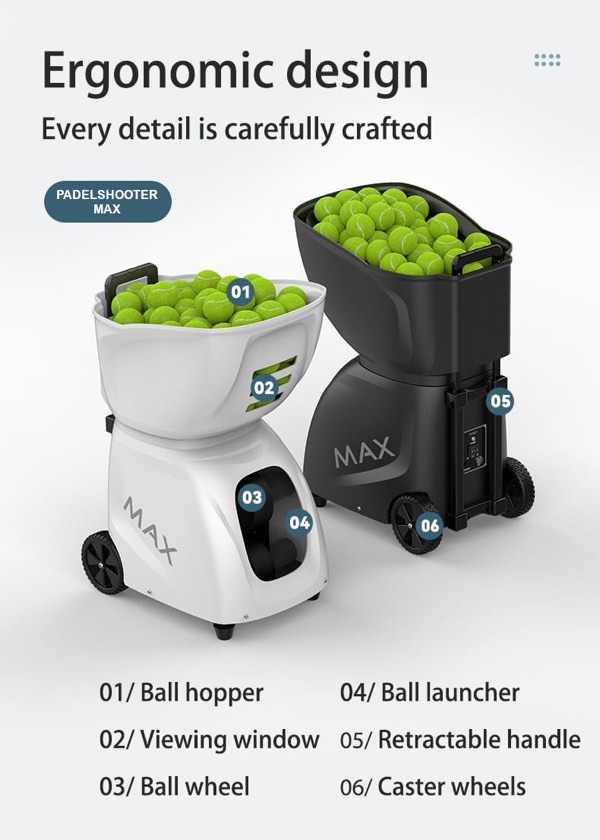
PadelShooter MAX
The most padel-specific machine on the market, and the only one whose spec sheet reads like it was written by someone who plays the sport. Widest shooting aperture in PadelShooter's range (45° of coverage against 35° on the Smart models), internal oscillation so the body stays still, and the biggest battery here at a published six to eight hours. The app is the real argument for it: you place shots on a numbered court grid and chain them into sequences, which is the difference between a machine that feeds balls and one that runs a session.
Two caveats before you order. There is no US distributor — you buy direct and it ships DDP with duties included, one to three weeks by air. And support is an email address in Hong Kong, not a phone number in California.
Weight: 53 lbs with battery | Capacity: 145 balls | Speed: to 140 km/h (87 mph, manufacturer figure) | Battery: 6–8 hrs
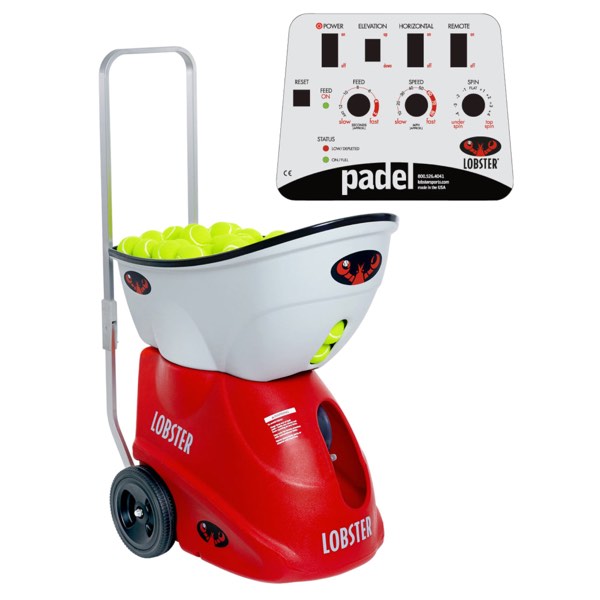
Lobster Padel
Lobster has been building ball machines in California for decades, and the padel model is the one machine here that is both purpose-built and genuinely cheap. It is also the pick if lob work is your priority: that 0–60° electronic elevation range is the widest in this guide, and it is the spec that lets you drill bandejas and back-glass defence rather than just drives.
What you give up is software — no pre-loaded drills, no app, just a two-function remote, random horizontal oscillation and manual dials. At $1,329 with a two-year warranty and a US phone line behind it, that is the correct trade for most players. An optional AC power pack lets it run indefinitely if your club has an outlet in reach of the cage.
Weight: 42 lbs | Capacity: 150 balls | Speed: 10–80 mph | Elevation: 0–60° electronic
Tennibot Partner V2
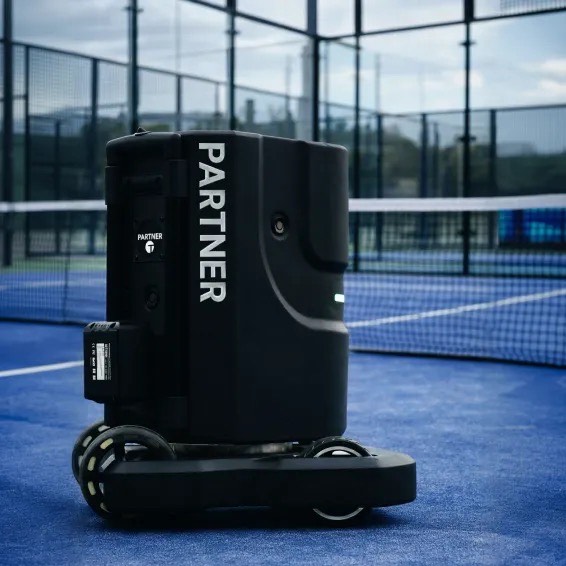
Tennibot is an Auburn, Alabama company, and the Partner V2 is the machine for anyone running sessions rather than doing them. It is tri-sport — tennis, pickleball and padel, with a 140-ball hopper in padel mode — and it generates drills on-device from 4K camera tracking instead of making a coach dial in every parameter. Three-year warranty, 60-day returns, free US shipping, built in the US.
The AI drill generation means a member can use it without staff setup, and Tennibot's Rover ball collector pairs with it to close the loop — though the Rover is listed as arriving Q3 2026 and currently takes a $99 reservation rather than shipping. Note that the published 16.5–37° elevation range is the narrowest here: this is a drive-and-volley machine that can lift a ball, not a dedicated lob trainer.
Weight: 35.4 lbs | Capacity: 140 padel balls | Speed: 10–70 mph | Battery: 4–5 hrs
Padel Tutor Mini
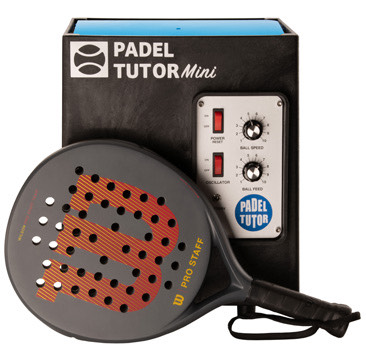
Sports Tutor has built the Tennis Tutor line in California for decades, and the Padel Tutor Mini is the machine to buy if the deciding factor is whether you will actually carry it. At 24 lbs it is roughly half the weight of the PadelShooter MAX, and the cheapest padel-specific machine sold in the US.
The compromises are real: 60–70 balls, a two-hour battery, manual elevation, and oscillation as a $90 option rather than a standard feature. If those bother you, the full-size Padel Tutor at $1,545 gets you 110 balls, electronic elevation from groundstroke to lob and three to four hours of court time — still under 36 lbs, still US-built, still a three-year warranty.
Weight: 24 lbs | Capacity: 60–70 balls | Speed: 15–80 kph | Battery: 2 hrs
Machines to Skip
Tennis ball machines. The failure is not dramatic, which is what makes it frustrating. A machine calibrated for a larger, higher-pressure ball grips padel balls inconsistently, so feed depth drifts between shots, and elevation tuned for a 78-foot court sends a lot of feeds into the back glass on the full. If you already own one, try it before spending anything — just do not buy one for padel.
Anything without a published elevation spec. Marketplace machines from unfamiliar brands almost never state a lob angle, and that is the number that decides whether you can practise the shots that matter.
Spinshot, for now. Worth naming because players ask: it is a well-regarded brand, but as of August 2026 its US store lists tennis and pickleball machines only, with no padel model.
What Balls to Use in a Machine
Not your match cans. Pressurised balls lose their bounce within a few sessions of normal play, and a machine accelerates it — every feed is a wheel compression the ball would never take from a racket.
Use pressureless or dedicated training balls instead. Thicker felt and a solid core keep size and weight consistent, which is what a throwing-wheel mechanism wants, and they last months rather than weeks. The bounce sits slightly duller than a match ball, which is fine for grooving technique. Our padel ball buying guide covers which brands hold up, and every retailer in our US gear guide sells by the case — the only sane way to feed a 150-ball hopper.
Drills Worth Programming
Bandeja repetition off a lob feed. Maximum elevation, slow feed at 8–10 seconds, same spot every time. The bandeja is a timing shot — you want fifty identical reps, not variety.
Back-glass defence. Deep, flat and fast into the back wall so you take the ball on the rebound rather than in the air. This is the hardest thing to practise without a partner and the best reason to own a machine. Pair it with our back-wall guide.
Net blocks. Fast feed at 2–3 seconds, low elevation, random horizontal. Trains hands and body position rather than power.
The transition ball. One deep feed, one short feed, alternating, so you rehearse moving up the court instead of standing still. Most club players never drill this, and it is where their points leak away.
A machine cannot replace a partner for anything tactical — see our solo and partner drill routines for the other half of your practice time.
What It Costs to Own vs. Rent at a Club
Renting is barely an option. Across the 360-plus active clubs in our directory, only a handful mention a ball machine at all, and those are tennis facilities with padel courts attached. Your practical alternative to owning is hiring a coach — roughly $50 to $120 an hour in most US markets.
Court time is the same either way, at about $25 to $60 per court-hour: top of that range in Florida and New York at peak, lower off-peak in Texas and Arizona. Drilling alone means paying for the whole court instead of splitting it four ways — the cost most people forget to model.
On a twice-weekly habit, a $1,329 Lobster pays for itself against eleven to twenty-seven private lessons: six to fourteen weeks. Even the $2,495 PadelShooter MAX clears break-even inside a season. The machine is not the expensive part of this hobby. The court is.
The honest counter-argument: a machine grooves whatever technique you bring to it. If repetition would cement a flaw, spend the first $1,300 on coaching and buy the machine second — our improvement guide covers the order to build skills in. If you are pricing one for a facility rather than yourself, our breakdown of what it costs to open a padel club puts it in context.
Once you have the machine you still need a court. Find padel clubs near you and book the off-peak hour nobody else wants.
Frequently Asked Questions
Continue Reading
Can You Wear Tennis Shoes for Padel? A 2026 US Guide
Can You Wear Tennis Shoes for Padel? A 2026 US Guide
Tennis shoes will get you on a padel court, and most US clubs are fine with it. But the useful question is which tennis shoes: clay-court models are close to the real thing, hard-court models slide when you need to stop, and running shoes are an ankle injury waiting to happen.
Best Diamond Padel Rackets 2026: Power & Attack Picks
Best Diamond Padel Rackets 2026: Power & Attack Picks
Diamond rackets put the balance point in the upper third of the head, which buys you leverage on overheads and costs you sweet spot everywhere else. Here are five diamond frames actually in stock at US retailers in 2026, with verified specs and prices - and a straight answer on whether you should buy one at all.
Best Round Padel Rackets 2026: Control & Forgiveness
Best Round Padel Rackets 2026: Control & Forgiveness
Round is the most forgiving shape in padel and the least rewarding on a smash. We checked live US stock at Racket Central and Padel USA, verified every shape against the manufacturer’s own spec sheet, and pulled the published power and control scores for all 41 round frames in the catalog. Here are five worth buying.