
Padel Strategy for Intermediate Players: Zones, Lobs, Net

Padel Strategy for Intermediate Players: Zones, Lobs, Net
Shot choice by court zone, the middle ball, and holding the net once you have it
Intermediate padel strategy comes down to one shift: you stop asking "can I get this back?" and start asking "what does this ball set up?" Most players reach that stage able to rally, volley and hit a passable lob, and still lose points they should win. The cause is rarely technique. It is shot choice from the wrong part of the court, a middle nobody owns, and a net position given away for nothing.
Everything below assumes evenly matched pairs. Against a pair clearly better than yours, a three-shot build rarely reaches its third shot, so read how to beat a stronger pair instead. If your pair still loses most points to balls into the net or smashes into the fence, start with our beginner doubles strategy.
What changes at intermediate level
At beginner level, points end on errors you make without help: a ball into the net, a smash into the fence. Intermediate points last longer, because both pairs can keep the ball in. Winning them takes building, usually over three or four shots: a defensive ball that buys time, a ball that moves an opponent, then the ball that ends the point.
The Padel School's list of the three most common tactical errors reads like an intermediate checklist. The first is hitting too hard: "When you play against someone that has more experience in padel, they will just allow that ball to come off the glass and play it back." The second is standing in no man's land. The third is smashing when you should not. Fix those three before adding new shots.
The three zones and what to hit from each
Babolat's tactics guide splits the court into three zones, and it is a useful way to think about shot choice. Treat it as one coaching model, not an official standard. The boundaries are approximate and Babolat says they shift with your opponents' position.
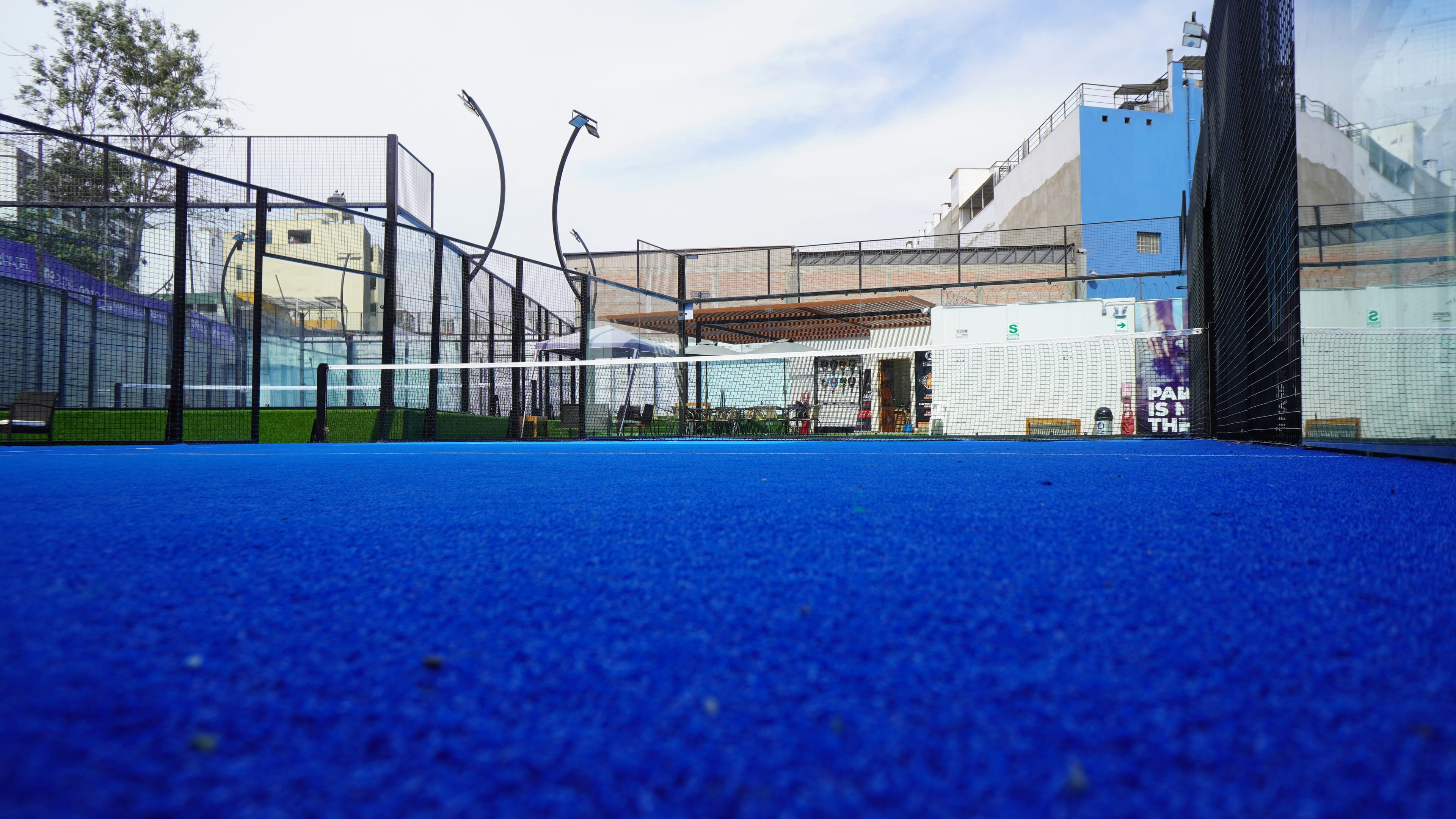
- Red zone (back of the court). Babolat places it "usually within 2 meters of the back glass." From here, stay in the rally. The guide lists the deep lob, the high ball to the centre and slow cross-court shots as the main options, with the goal to "neutralize your opponents’ pressure, not to win the point directly."
- Orange zone (mid-court). A transition area. A waist-high ball can go quicker, cross-court or down the middle; a low ball needs patience and a constructive shot at the opponents' feet.
- Green zone (the net). Babolat describes it as extending "from the net to about 3 meters back." This is where you finish points with volleys, bandejas and smashes.
The part most players miss is that ball height changes the zone. A high ball in mid-court can be attacked like a net ball, and a low volley close to the net still calls for a cautious shot. Before you swing, ask two questions: where am I, and how high is this ball?
The Padel School gives a simpler positional rule for the back: start one step behind the service line, and when you attack, move up to the second post of the side fence or closer. Everything between those two positions is no man's land, where balls land at your feet and you can neither defend nor attack.
The middle is your friend
Babolat calls the gap between the two net players the "divorce" zone, and it is the highest-percentage target at this level. A ball down the middle crosses the lowest part of the net, gives your opponents the least angle to work with, and asks two people to decide who takes it. It also pulls them together, which opens the side walls for the next ball.
From the back, the middle is also the safest place for a defensive ball. A high, deep ball to the centre takes away the wide angles a net player wants. Save the sharp angles for balls you can hit from mid-court or the net, when you have time to recover.
Lob vs drive vs chiquita: shot selection from the back
From the red zone, the lob is the default and the drive is the exception. A hard drive from deep only works if it lands at the feet of a net player. Anything higher is a free volley.
Where you aim the lob matters as much as when. The Padel School's lob-direction lesson sets out three options:
- Cross-court: easier, "because it is on the longest part of the court," and harder for the opponent to answer with an attacking overhead.
- Down the line: harder to hit, but the opponent ends up close to the fence, where smashes are difficult.
- Down the middle: "the easiest place for opponents to attack with a bajada," so play it faster rather than higher.
The chiquita is the third option, a slow, low ball at the net player's feet. The Padel School's advice is about which ball to choose: "There’s no point in playing the Chiquita when you’re with your back against the back glass." Play it off a comfortable ball, then follow it forward, because a good chiquita forces your opponent to lift the ball. Our lob guide covers the technique behind both lob types.
Winning the net and keeping it
The pair that holds the net longer usually wins the set, but at intermediate level the net is lost more often through impatience than taken through skill. Go forward behind a ball that makes the opponent hit up: a deep lob they have to play off the back glass, or a chiquita. The movement itself is in how to take the net.
Once there, stop trying to win every ball. The Padel School's setup volley is the pattern to learn: a softer, sliced volley that dies near the back glass, so the opponent has to dig it out and the next ball comes up to you. Hit it flat and hard, and it comes back off the glass with interest. Save the smash for balls where you can keep your net position afterwards. The Padel School's rule for that third error is "I will only smash when I know I can regain my net position."
When you get lobbed, let the lob come off the back glass if you are still moving backwards. A bandeja hit while retreating is a soft ball; a ball played off the glass in balance is a fresh start.
Pair patterns
The middle ball. The Padel School's answer to "whose shot is it?" is awareness rather than a fixed rule: know where your partner is, because a partner who has just played a ball near the side glass will struggle to cover the middle, and read where the rebound will take the ball. Most pairs default to the player with the forehand in the middle, then adjust for those cases. Agree your default before the match, and call every middle ball.
Switching sides on lobs. When a lob goes over one player down the line, the partner often has the better angle to chase it. The chaser runs diagonally across; the lobbed player crosses to cover the other side. It works only if the call is early and loud. Switch back at the next lob or a break in the rally.
Reading opponents
- A left-hander. Check which side they play. A lefty on the right side has their forehand in the middle; next to a right-hander on the left, the middle becomes a pair of forehands, so move your targets wider. A lefty on the left has the forehand on the side wall and both backhands meet in the middle, which makes the middle even better. Our left side vs right side post explains how pairs usually split.
- A weak side. Watch who turns their shoulders to avoid a backhand volley or lets the ball pass them at the back glass. Send them more balls, though not every one.
- A big smasher. Lob them less, keep the ball low, and when you do lob, go deep and cross-court so the ball comes off the back glass rather than sitting up at the net. If their overhead keeps winning, how to defend the smash covers the positioning.
- A pair that lobs everything. The Padel School's lesson on lobbers says a lob off your serve usually means the serve was too easy. Watch the hitter's body: getting under the ball means a lob is coming, so step back early.
Three drills to build these habits
- Zone call rally. Rally from the back while your coach or partner feeds. Before each shot, say "red", "orange" or "green" out loud, and hit only the shots that zone allows. It forces the zone question before the swing.
- Lob, follow, setup volley. Lob cross-court from the back, move to the net with your partner, then play one sliced setup volley before attacking anything. It builds the three-shot pattern of earning the net and keeping it.
- Middle-ball calls. Two players at the net, a feeder at the back sending balls down the middle at random. Call every ball, and change who has the forehand in the middle every ten balls by switching sides.
More routines, solo and with a partner, are in our padel drills guide. For where each player should stand in each of these situations, see the court coverage guide.
Frequently Asked Questions
Continue Reading
How to Book a Padel Court in Mexico: Playtomic & WhatsApp
How to Book a Padel Court in Mexico: Playtomic & WhatsApp
512 of the 600 Mexican clubs in our directory take bookings on Playtomic, which makes Mexico simpler to book than the US. The rest use their own apps or WhatsApp, and 74 are members-only. Here's how each route works, with club prices in pesos.
How to Beat a Stronger Pair in Padel: Tactics That Work
How to Beat a Stronger Pair in Padel: Tactics That Work
Against a pair that is visibly better than you, the instinct is to raise your level — and it is the most reliable way to lose 6–1. This guide covers how to diagnose why they are better, the five tactics that genuinely move the needle in a mismatch, and the tactical errors that hand the match over.
How to Hit a Gancho in Padel: The Overhead Hook Shot
How to Hit a Gancho in Padel: The Overhead Hook Shot
The gancho is padel's hook overhead — the shot for a lob that drifts over your non-dominant shoulder and leaves you no time to set up. Here is the step-by-step technique, when to pick it over a bandeja, and the drills that make it reliable.