



Padel Club Membership Cost in the US: $30–$350 a Month
Padel Club Membership Cost in the US: $30–$350 a Month
Dues, initiation fees, wallet credits and booking windows across 407 US padel clubs — and the arithmetic that tells you whether to join.
Most people assume a padel club membership works like a gym membership: pay monthly, play as much as you like. Across the 407 club entities Padel Browser tracks in the US, almost none of them work that way. Dues usually buy a discount, not access — and confusing the two is how players end up paying $150 a month to save $60.
This guide covers membership mechanics: what dues include, what initiation fees are for, how guest passes work, and the arithmetic that tells you whether to join. For per-hour court rates, read how much it costs to play padel in the US first — this post picks up where that one stops.
Every price below was checked against the club's own membership page on 11 October 2026. Padel pricing moves fast, so treat these as a dated snapshot, not a quote.
Two Ways Onto a US Padel Court
We record an access model for every club in the directory, and the split is lopsided:
| Access model | Clubs | Open now |
|---|---|---|
| Commercial — anyone can book | 308 | 266 |
| Members-only — you must join or be hosted | 62 | 53 |
| Not yet classified | 37 | 18 |
That is 407 club entities, 337 of them open today. Of the 370 we have classified, about one in six is members-only — a club where no amount of money gets you a court this weekend unless you join or know someone who has.
Those 62 clubs cluster hard: Florida has 15 and New York 11, between them more than 40% of the country's members-only padel. Most are racquet or country clubs that added padel to an existing membership rather than padel clubs that added a membership — see why country clubs are adding padel. If one of them is the only padel near you, the question is not "is this worth it" but "is this the price of playing at all."
At the other 308 clubs, membership is optional. Which means it has to earn its place.
The Three Things a Padel Membership Can Be
Lumping all dues together is the mistake. US padel clubs sell three structurally different products under the same word, and the break-even math differs for each.
The discount card
You pay dues, then pay a reduced rate every time you play. Bay Padel is the clean example: $139 a month for a single club, $159 for a region (the two San Francisco clubs or the two South Bay clubs), $199 for all of them. Members pay $20 for a peak hour against $40 for non-members, and $10 off-peak against $25 — priced per person, not per court, so the saving is per player, per hour.
DUS Padel in West Palm Beach runs the same model higher up the market: $225 a month on a six-month commitment, or $2,250 a year ($187.50 a month), for 40% off every court booking and open match. U-Padel Woodlands in Texas runs it lower, at $99 a month, cutting a 90-minute rental to $20 peak and $15 off-peak against $28 and $23 for non-members.
With a discount card, dues are a bet on your own volume. Play less than you projected and you have paid for nothing.
The wallet credit
Dues convert into spendable club credit, which you then burn on courts, clinics and open play. Charlotte Padel Club in North Carolina runs four tiers on this model:
- Club — $60/month, no credits, 40% off court fees and 50% off off-peak
- Plus — $150/month, $150 in monthly credits, 10-day booking window
- Premium — $250/month, $300 in monthly credits, 14-day booking window
- Signature — $350/month, $450 in monthly credits, 2 guest passes a month
Look closely at the top two tiers: Premium returns $300 of credit for $250 of dues, and Signature returns $450 for $350. The club is selling prepaid court time at a 20–29% premium to face value, with the member discounts stacked on top. That is a genuinely good deal if you were always going to spend that much — and if you were not, you are pre-buying padel you will never play. Check the expiry on unused credit before you pick a tier.
The all-inclusive pass
The rarest model, and the only one that behaves like a gym. Padel + Pickle in Olivette, Missouri, sells an All-Inclusive Padel+Pickle membership at $250 a month covering dues, court fees and open play — everything except leagues, tournaments, lessons and clinics. Its standard Individual membership is $60 a month, and you still pay for courts on top.
So all-inclusive costs $190 a month more than the basic tier. If your monthly court-and-open-play spend would clear $190, unlimited wins. Below that, it does not.
The same club publishes the two tiers most clubs hide: an Off-Peak membership at $30 a month for players who only want 7am–3pm weekdays, and a Junior membership at $10. Entry points like these are more common than headline pricing suggests — it is worth asking.
What You Are Really Buying: The Booking Window
Ask members why they joined and the honest answer is often not the discount. It is getting to the calendar first. Every club we checked gates booking by tier, and the spread is wide:
- Padel + Pickle: non-members 3 days out, members 7
- Bay Padel: non-members 7 days, members 14 — plus a 12-hour cancellation window against 24 hours
- DUS Padel: non-members 7 days, monthly members 10, annual members 14
- Charlotte Padel Club: 10 days on Plus, 14 on Premium
- Padel Haus: 14 days on Single Club and Multi-Club, 21 days on Multi-Club Pro
At a club with six courts and a packed 6pm slot, a 14-day window against 7 is the difference between playing after work and playing at 2pm on a Tuesday — the least advertised and most valuable item in most bundles. Both Playtomic and CourtReserve enforce these windows at the booking screen, so the advantage is real rather than nominal; we explain that plumbing in our guide to US padel booking platforms.
Guest Passes, and What They Do Not Cover
Guest passes are the most over-read line on a membership page. The allowances are smaller than people assume:
- Bay Padel: 1 per month
- DUS Padel: 3 per month
- Charlotte Padel Club: 2 per month, on the $350 Signature tier only
- Padel Haus: 6 per year on Single Club, 9 on Multi-Club, 12 on Multi-Club Pro
Then read what a pass is actually worth. DUS is explicit that its three monthly passes cover the locker rooms, spa, recovery room and gym — guests still book courts and programs at the standard non-member rate. A guest pass is frequently a building pass, not a court pass. If you plan to bring a regular partner who will not join, price their court time at the non-member rate and assume the pass saves nothing on it.
Initiation Fees and Founding-Member Deals
Initiation is a one-off charge for joining, and in US padel it is the most negotiable number on the page — because it is a marketing lever rather than a cost.
- Bay Padel charges none, and says so explicitly in its FAQ.
- Charlotte Padel Club charges $150 across all four tiers, advertised as reduced from $295. The club also runs a referral offer giving a new member $50 off initiation.
- M Padel Malden, the pre-opening Mouratoglou club in Massachusetts, lists a $199 initiation fee on its Individual ($149/month), Couple ($249/month), Family ($349/month) and Junior ($75/month) tiers — and waives it entirely for a Founding Member tier at $129 a month, capped at the first 100 members.
That last structure is the pattern worth recognising. A club that has not opened yet needs a signed roster to prove demand, so it discounts the one-time fee and the monthly rate together for early joiners. If a club near you is pre-opening, the founding tier is usually the cheapest it will ever be — against the risk that the opening date slips, which in US padel it regularly does.
One more wrinkle: not every club publishes dues at all. Padel Haus details its three tiers' benefits — booking windows, guest passes, a quarterly complimentary clinic, 20% off the pro shop and juice bar — but lists no prices, routing everyone through an application. Application-gated pricing is spreading at the premium end, and usually means dues are set per location.
When a Membership Pays Off
Here is the arithmetic. For a discount-card membership:
Monthly dues ÷ saving per session = sessions you need per month to break even
Run it on Bay Padel's $139 single-club tier. A member saves $20 on a peak hour, $15 off-peak, and $30 on a two-hour open play:
- Peak court time only: $139 ÷ $20 = 7 sessions a month
- Off-peak only: $139 ÷ $15 = 10 sessions a month
- Open play only: $139 ÷ $30 = 5 sessions a month
So roughly twice a week at peak, or a bit over once a week if you live on open play. Below that, you are subsidising the club.
For a wallet-credit membership the credit refunds the dues and the discount is your real margin, so the question is not whether you break even but whether you will spend the credit before it expires. For an all-inclusive pass, weigh the premium over the basic tier against your projected court spend — the $190 gap at Padel + Pickle.
Two adjustments people forget. Check whether rates are per person or per court — Bay Padel's are per person, which makes a member's saving larger than it looks. And read the commitment terms: DUS bills monthly dues through a six-month minimum even if you cancel, and Bay Padel's annual upfront payments are non-refundable. A membership that pays off over twelve months is still a bad deal if you move in month three.
When to Just Pay Per Court
Stay a non-member if any of these describe you:
- You play once or twice a month. Every break-even above needs five or more sessions. Occasional players lose on dues at every club we checked.
- You live in a multi-club metro. Single-club dues lock you to one location. In Florida and California there is usually a second club within reach, and paying list price wherever a court is free beats paying dues to one club and still driving across town.
- You are travelling, or your schedule is flexible. Day rates exist for this — Padel + Pickle sells a $40 one-time Visitor Pass — and off-peak rates are often less than half of peak, which blunts the main reason to join.
- You are still deciding whether you like padel. Intro sessions and clinics are the right spend at that stage, not dues.
And if you would rather not pay at all, there is a small but growing set of public padel courts in the US that need no membership.
The practical move: play somewhere four or five times at list price, log what you actually spent, then take that number to the club's membership page. Browse the full club directory to find what is near you and check availability before you commit to anything.
Frequently Asked Questions
Continue Reading
Padel Courts in Queens, NY: Where to Play (2026 Guide)
Padel Courts in Queens, NY: Where to Play (2026 Guide)
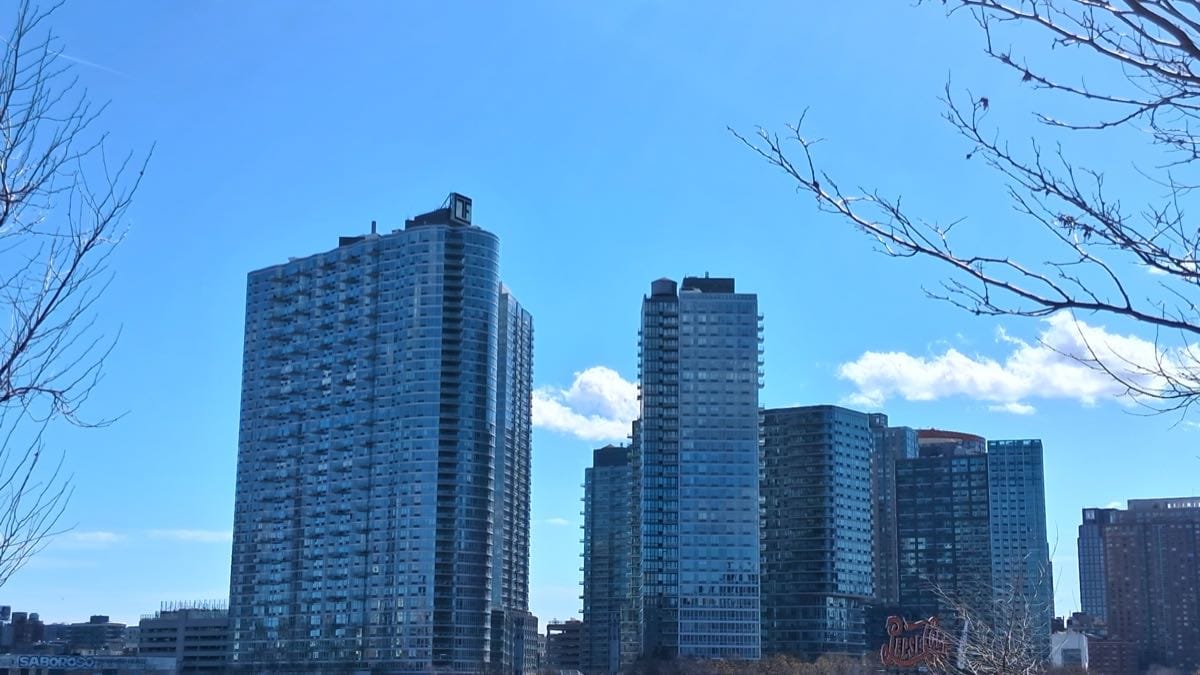
Queens has six padel courts across two venues, and they could not be more different: five indoor courts under a 50-foot bubble in Long Island City, and a single glass court at the Forest Hills club that hosted the US Open for sixty years. Here is what each one costs, who can actually book, and where to go instead.
Padel Court Ceiling Height: Tiers, Rules & US Clubs
Padel Court Ceiling Height: Tiers, Rules & US Clubs
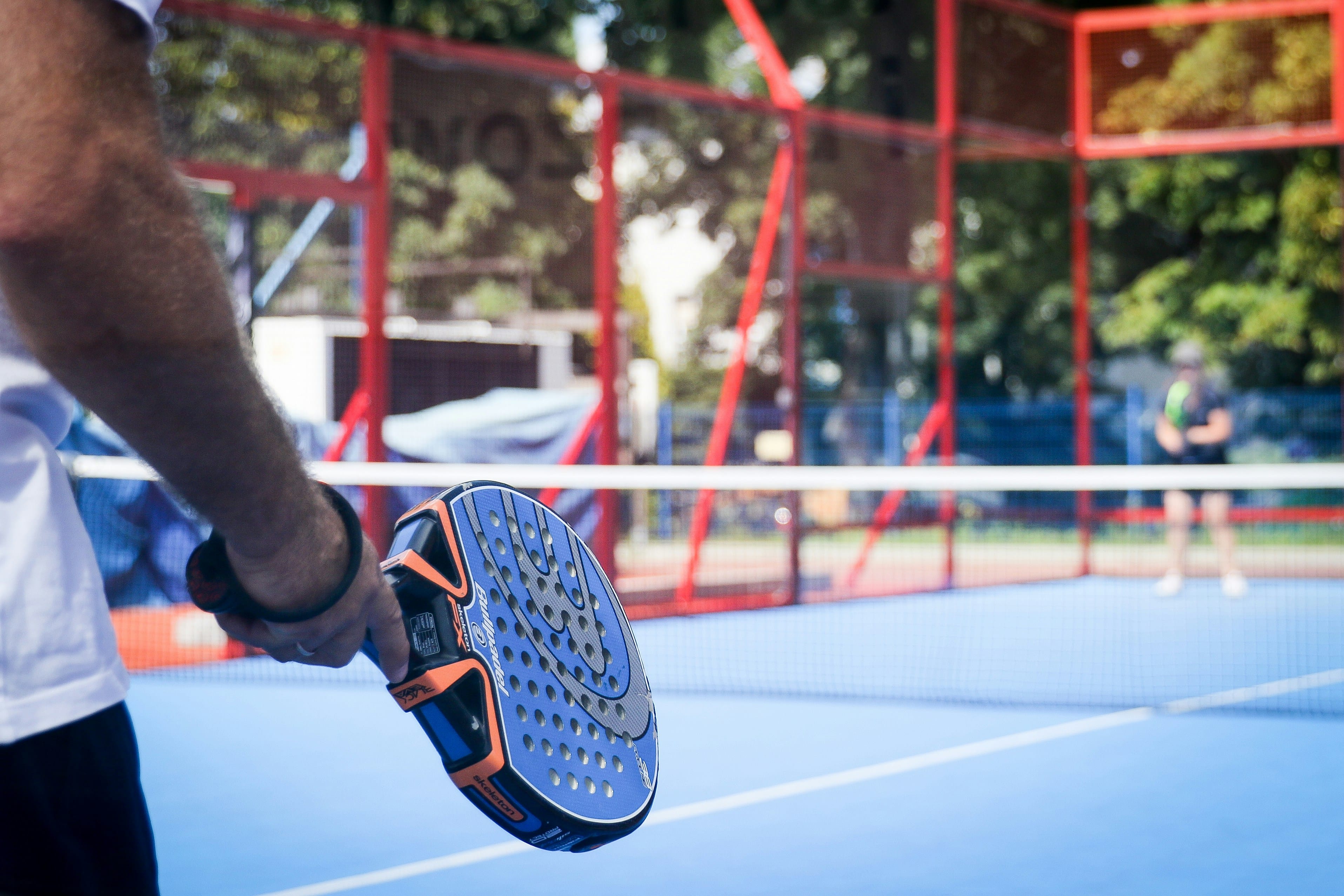
Padel's core defensive shot goes almost straight up, so ceiling height quietly decides how the game plays indoors. We track a verified clear height for 108 US clubs, from 20 ft to 85 ft, with a median of exactly 30 ft. Here is what the FIP rulebook really requires, and which clubs have the most room overhead.
Padel at US Resorts & Hotels: All 19 Venues (2026)
Padel at US Resorts & Hotels: All 19 Venues (2026)
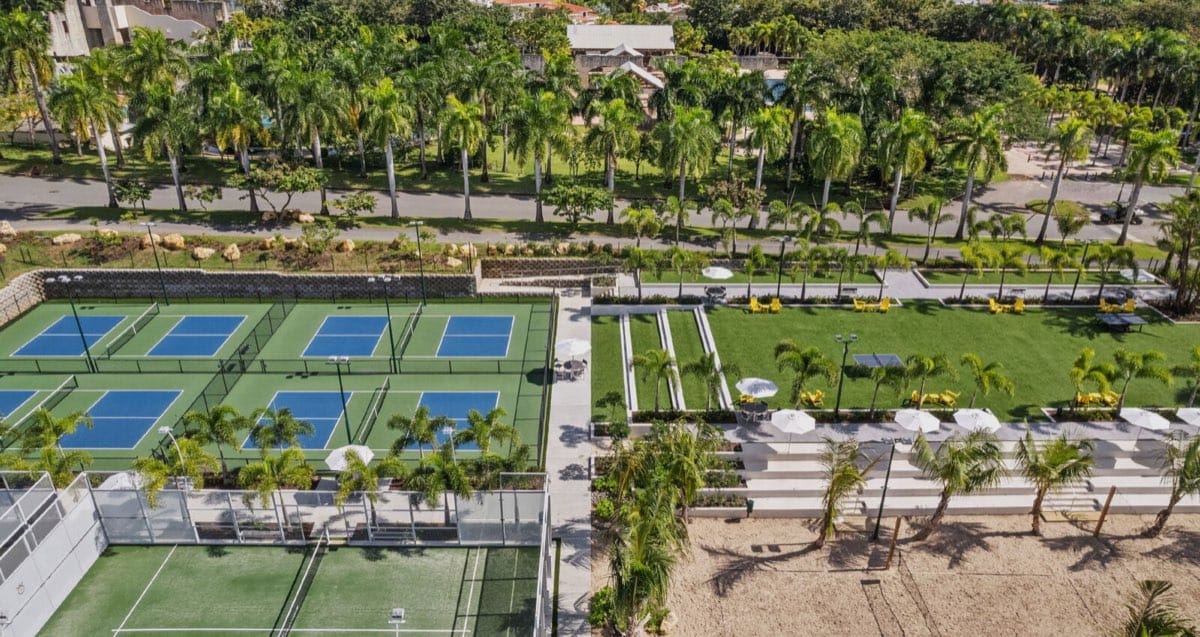
We pulled every resort, hotel and inn in the US with a padel court on site: 19 venues, 33 courts, and not one of them indoors. Here is what each property actually has, what it costs, and exactly which ones will let you book without a room or a membership.