
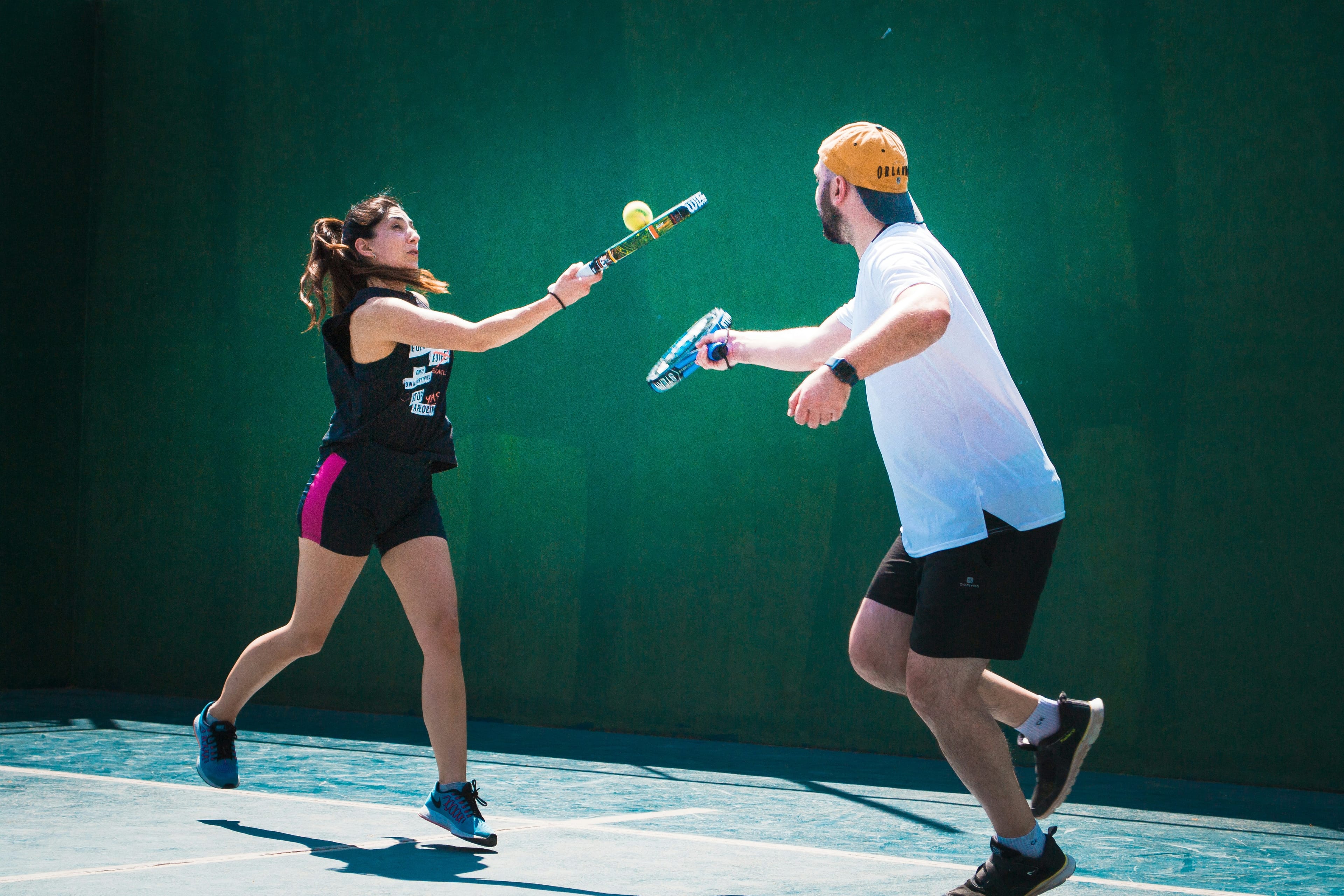
Padel Levels Explained: How to Rate Yourself (0 to 7)

Padel Levels Explained: How to Rate Yourself (0 to 7)
What each number looks like on court, a self-check before your first open match, and how your level moves afterwards
On Playtomic, padel levels run from 0 to 7. When you sign up, a questionnaire sets your starting level, and Playtomic's terms say that level "cannot be lower than 0.5 or higher than 5.7". From there your results move it. The number decides which open matches you can join, so a few minutes of careful self-assessment before your first booking saves three other people a lopsided evening.
This post is the practical half. For how the rating systems differ (USA Padel, FIP, NPRP), read our padel ratings explainer.
Why your level matters before you book
An open match is a court booking with empty spots, and the organizer usually limits it to a level range. Clubs band their open play, clinics and leagues the same way. Put yourself too high and you lose every point; too low and you spoil the game for the beginners you joined. If you're new to a club, our guide to finding a padel partner covers the sessions you can sign up for alone, and our US booking platforms guide shows which clubs use Playtomic at all.
What each level looks like on court
Playtomic publishes a level chart in its help centre, in the article on how levels go up and down. Read it in bands, not single numbers:
- 0 to 1.0 (initiation). No technique or tactics yet. A 0 has never played a racket sport; a 1.0 has had few or no lessons.
- 1.5 to 2.0 (initiation to intermediate). A few lessons, a couple of games a month. You can rally and return, but only at low speed.
- 2.5 to 3.5 (intermediate). You have most of the strokes. A 3.0 hits flat and drives the ball but makes many unforced errors; a 3.5 can also play slice on both sides and direct the ball, and still makes a lot of mistakes.
- 4.0 to 4.5 (intermediate high). You choose between slice and flat and put the ball where you want it. A 4.5 hits with pace but has trouble finishing points.
- 5.0 to 6.0 (intermediate advanced to advanced). Good tactical sense, matches at a high pace, solid defence off the walls and a reliable bajada off the back glass on both sides.
- 7.0 (elite). Professional players.
So a 1.5 keeps a slow rally going, a 3.0 can hit the ball well but gives away points, and a 4.5 controls the ball and struggles to put it away.
Ignore the 1-to-10 chart
Playtomic's own blog post on padel levels carries a different chart, with "Professional (Level 9-10)" at the top, a few paragraphs above its description of the app's scale "with 7 being the highest level". The app uses 0 to 7. If a club or friend quotes you a 7 or 8, ask which scale they mean.
A 10-question self-check
This is our own check, built on the descriptions in Playtomic's chart. Answer yes only if it's true in a real match, not in a warm-up.
- Can you keep a rally going at low speed, back and forth, without the ball dying?
- Can you return a normal serve into play most of the time?
- Do you have a forehand and a backhand you trust, even if both are flat?
- Can you hit a slice on at least one side when you choose to?
- Can you send the ball to a chosen side of the court (cross-court or down the line)?
- When the ball comes off the back glass, do you let it come to you and play it, rather than hitting it early in a panic?
- Can you volley at the net without the ball flying long?
- When you're lobbed at the net, can you play a bandeja and stay forward, instead of retreating every time?
- Can you lob back from the baseline to win the net?
- Do you finish points when you get a short, high ball?
Roughly: if you answer yes to questions 1 and 2 and little else, start around 1.0 to 1.5. Yes to 1 through 5 puts you around 2.5 to 3.0. Add 6 and 7 for 3.5. Players who can say yes to all ten, and mean it, are in the 4s. If you're unsure between two numbers, take the lower one: it's easier to climb than to come down (see below).
How Playtomic changes your level after matches
Only competitive matches count. Playtomic's help centre says the level updates after each one based on the result, your opponents' levels, your partner's level and your reliability score. Beating higher-rated players moves you up more; losing to lower-rated players moves you down more.
Reliability is how sure the system is about your number. New players have low reliability, so their level swings hard in the first matches and settles as they play. It's set by the system, and "neither you nor Playtomic Customer Care can adjust it manually". A leveling session with a coach at a certified club sets reliability to "medium (50%)".
A few rules catch people out:
- Casual matches don't count. Pick casual when you create or join a game if you want to play without your level moving.
- The score has to be valid. A set needs a two-game margin unless someone reached seven. Playtomic's example: "6-4 is valid, 6-5 is not".
- Draws still move levels. In a tie, the team with the higher combined level loses points and the other team gains.
- Someone on each team needs a level. In private bookings and open matches, at least one player per team must have one, and a level you get after joining a match doesn't apply to it.
Playtomic also runs a 10-Match Challenge for established players who think their number is wrong. It needs a confidence level of 85% or higher, and multiplies the effect of your next ten competitive matches by 2x, 3x or 4x. You can't leave after the first match, and there's a 3-month cooling period before you can take another.
Other scales you'll meet
USA Padel. The national federation adopted World Padel Rating (WPR) as its official rating, and USA Padel describes it as a system that "ranges from 0 to 21". That's the number tournament directors and some club leagues use. A WPR figure and a Playtomic level don't convert one to one, so give the one the event asks for. Our ratings explainer covers WPR and NPRP in detail.
Club bands. Some clubs label open play with words (beginner, intermediate) or with their own letters. Read the session description for the number behind the label before you register, and ask the front desk if there isn't one.
Mexico's fuerzas. Most Mexican clubs book through Playtomic, so open matches there use the same 0-to-7 level (our Mexico booking guide explains retas and booking). Federation tournaments use categories called fuerzas, and they count the other way: the current rulebook of the Mexican Padel Federation (FEMEPA) lists Open, then 1era Fuerza to 6ta Fuerza for adults (Mayores). Promotion runs from 6ta up toward 1ra, so 1ra is the strongest fuerza and 6ta the lowest. At the end of each year's ranking, the top 4 in each category move up a fuerza automatically. Players in the bottom 10% of their state's ranking who played both state tournaments may drop one.
Sandbagging and over-rating
Sitting below your level to win open matches is called sandbagging, and players notice. Playtomic's system works against it: wins over lower-rated players earn less than wins over stronger ones, and opponents can leave reviews after a match. Enough reviews saying you play above your number trigger a self-upgrade of up to 0.5 points, and the option disappears if you play another match before using it.
If you've been placed too high, lower your level in the app under Profile. Playtomic warns that once you lower it manually "you can't change it back" yourself; you can only climb again by winning competitive matches, by a self-upgrade or through a leveling session. That's why we said to start lower.
At the court, the etiquette is simple. If you know you're new to a level, tell the other three before the first serve, and offer to make it casual. If you're clearly the strongest player, play the partner's game, not your own: feed balls they can hit, and save your hardest smashes for players who can return them. To earn a higher number, our guide to getting better at padel lists what to work on first.
Frequently Asked Questions
Continue Reading
Padel in Mexico: The Spanish Words You'll Hear on Court
Padel in Mexico: The Spanish Words You'll Hear on Court
Mexican clubs say cancha, not pista, and book open matches as retas. This phrasebook covers the booking words, the Spanish score calls from iguales to punto de oro, the shot names Mexican clubs name themselves after, and why the racket is a pala.
Padel Strategy for Intermediate Players: Zones, Lobs, Net
Padel Strategy for Intermediate Players: Zones, Lobs, Net
Intermediate padel points are won by shot choice, not power. This guide covers what to hit from each zone of the court, where to aim lobs, how to keep the net once you win it, and the pair patterns that stop points slipping through the middle.

How to Book a Padel Court in Mexico: Playtomic & WhatsApp
How to Book a Padel Court in Mexico: Playtomic & WhatsApp
512 of the 600 Mexican clubs in our directory take bookings on Playtomic, which makes Mexico simpler to book than the US. The rest use their own apps or WhatsApp, and 74 are members-only. Here's how each route works, with club prices in pesos.