
Padel vs Pickleball: What's the Difference?
Padel vs Pickleball: What's the Difference?
Two of America's fastest-growing racquet sports, side by side
The Short Answer
Padel is played on a larger enclosed court with glass walls that are part of the game. Pickleball is played on a smaller open court similar to badminton. Both are social, doubles-friendly racquet sports, but they feel very different to play.
Court Design
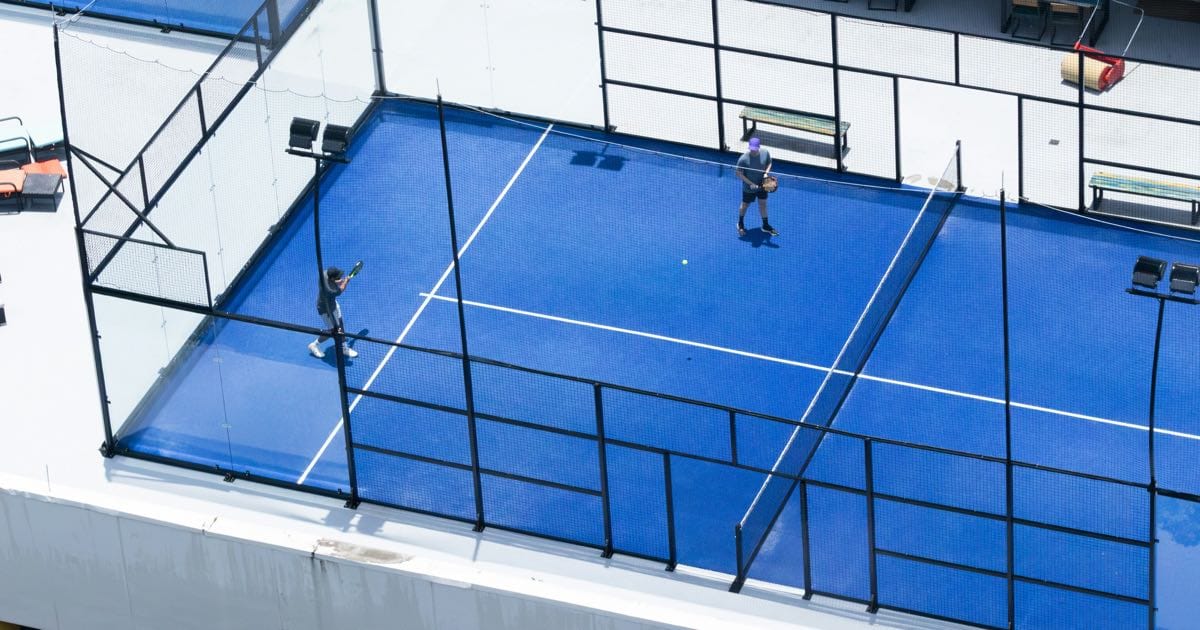
Padel: 20m x 10m, fully enclosed by glass walls and metal mesh. The walls are in play — balls can bounce off them and remain live. This adds a strategic dimension similar to squash.
Pickleball: 13.4m x 6.1m, open court with no walls, divided by a low net (86cm). Similar layout to badminton. The "kitchen" (non-volley zone) near the net is a unique feature.
Equipment
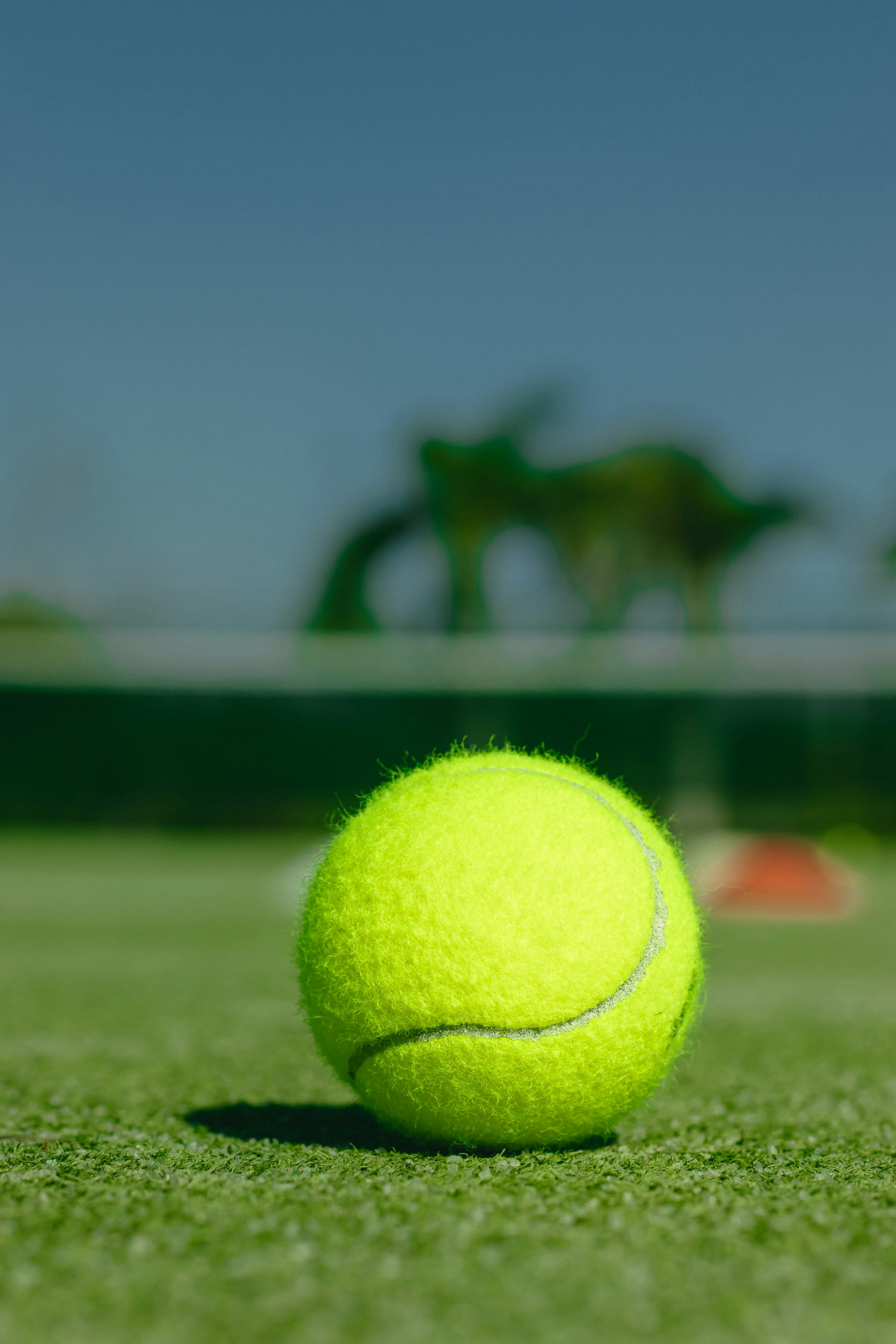
Padel: A solid, stringless racket with holes, about 45cm long. Uses a depressurized tennis ball that bounces lower than a standard tennis ball.
Pickleball: A solid paddle slightly larger than ping-pong but smaller than tennis. Uses a plastic ball with holes (similar to a wiffle ball).
Rules at a Glance
| Padel | Pickleball | |
|---|---|---|
| Format | Doubles only | Singles or doubles |
| Serving | Underhand, must bounce first | Underhand, diagonal |
| Scoring | Tennis scoring (15-30-40) | Rally scoring to 11 (win by 2) |
| Walls | In play | No walls |
| Net height | 88cm | 86cm |
| Court surface | Artificial turf | Hard court |
Which Is Easier to Learn?
Pickleball has a lower entry barrier. The smaller court, slower ball, and simpler scoring make it accessible within minutes. Many people play recreationally after one session.
Padel has a steeper learning curve but scales up in complexity and excitement more quickly. The wall play, faster ball speed, and larger court demand better footwork, positioning, and strategy. Most players say it takes a few sessions to feel comfortable, but the depth of gameplay keeps them coming back.
Which Is Growing Faster?
Both are booming, but the trajectories are different. Pickleball search interest actually declined ~10% in 2025, while padel hit an all-time high in US Google searches. The "padel courts near me" query grew 30% year-over-year.
Padel is earlier in its US growth curve, with new clubs opening monthly across Florida, New York, Texas, and California.
Which Should You Try?
Try pickleball if: You want something easy to pick up immediately, prefer singles play, or want lower-intensity exercise.
Try padel if: You enjoy strategic depth, love the social aspect of doubles, come from a tennis background, or want a more athletic workout. The wall play makes padel uniquely exciting — there's nothing else quite like it.
Better yet, try both. Many US facilities now offer both padel and pickleball courts.
Frequently Asked Questions
Continue Reading
Padel at US Resorts & Hotels: All 19 Venues (2026)
Padel at US Resorts & Hotels: All 19 Venues (2026)
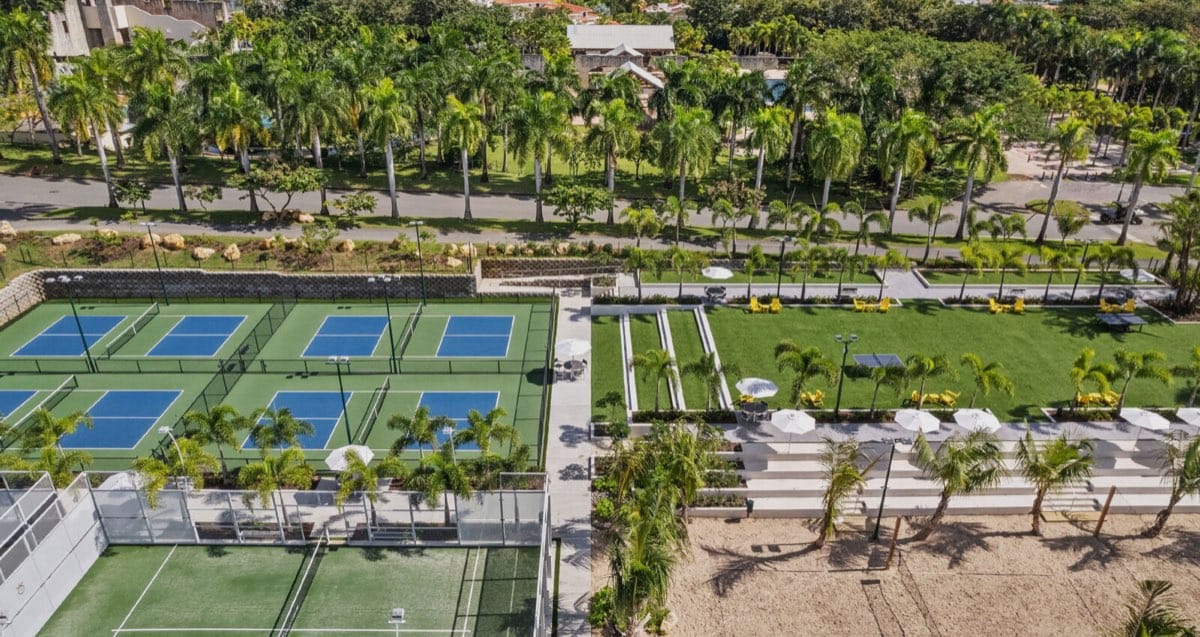
We pulled every resort, hotel and inn in the US with a padel court on site: 19 venues, 33 courts, and not one of them indoors. Here is what each property actually has, what it costs, and exactly which ones will let you book without a room or a membership.
Playtomic vs Playbypoint: How to Book US Padel Courts
Playtomic vs Playbypoint: How to Book US Padel Courts
Three apps take almost all US padel bookings, and they split the country by region rather than nationally. We recorded the booking platform on all 392 active US padel clubs to show which app you actually need in your metro — and the 45% of clubs no app can book at all.

Padel Courts in North Carolina: Where to Play in 2026
Padel Courts in North Carolina: Where to Play in 2026
North Carolina has six padel clubs across four cities, with 17 courts open today and 18 more announced. Charlotte holds 14 of them across three venues, all open to non-members, while Raleigh's only courts sit behind a country club membership. Here is every club, what it costs, and which announced projects are further off than the listings suggest.